
- 03 Nov 2026
How to Evaluate an LED Inground Light Manufacturer for Large Outdoor Projects?
How to Evaluate an LED Inground Light Manufacturer for Large Outdoor Projects?
Choosing the right LED inground light manufacturer is an important decision for large outdoor lighting projects. Whether you are working on a hotel landscape, commercial plaza, bridge, building facade, public garden or residential development, the quality of the lighting products and the reliability of the supplier can directly affect project performance, installation costs and long-term maintenance.
However, comparing LED inground light manufacturers based only on price, product appearance or catalog specifications is not enough. Buyers should also evaluate product testing, housing materials, optical performance, electrical specifications, delivery capability, customization services and warranty support.
A reliable manufacturer should be able to provide clear technical documentation, representative samples, relevant test reports and professional support throughout the project.
This guide explains 10 key factors to evaluate before selecting an LED Inground Light manufacturer for large outdoor projects.
1. Check the Manufacturer's Production and Quality Control Capabilities
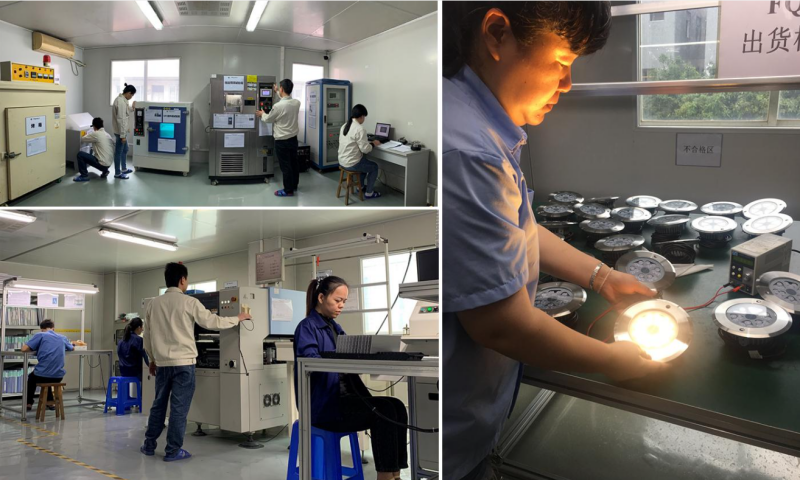
The first step is to understand whether the supplier has the production and quality control capabilities required for your project.
For large outdoor projects, product consistency is particularly important. If hundreds or thousands of LED inground lights are installed across the same site, differences in brightness, color temperature, beam distribution or housing finish can affect the overall lighting effect.
Before placing an order, ask the manufacturer about:
Production facilities and assembly processes
Incoming inspection of LED chips, drivers and other components
PCB assembly and electrical testing procedures
Waterproofing and sealing inspection
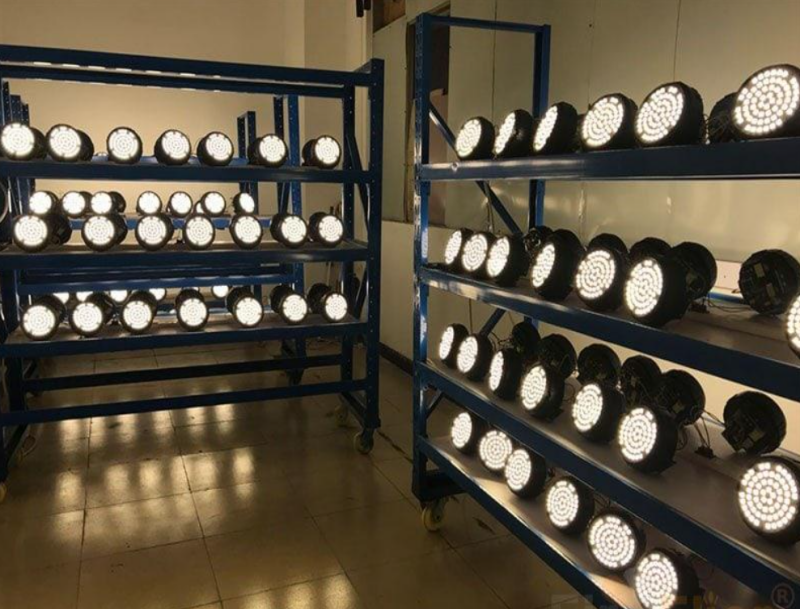
Aging test procedures
Final product inspection and packaging
Batch traceability and quality records
It is also useful to request factory photos, production videos or a remote factory inspection.
What buyers should look for: A manufacturer should be able to explain how product quality is controlled from incoming materials to finished products, rather than simply claiming that all products are high quality.
2. Evaluate Housing Materials and Corrosion Resistance
LED inground lights are installed in ground environments where they may be exposed to rain, irrigation water, soil moisture, temperature changes and, in some locations, corrosive conditions.
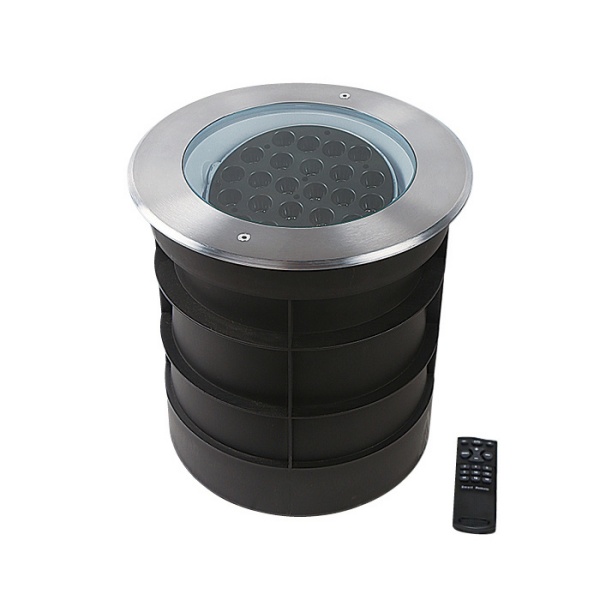
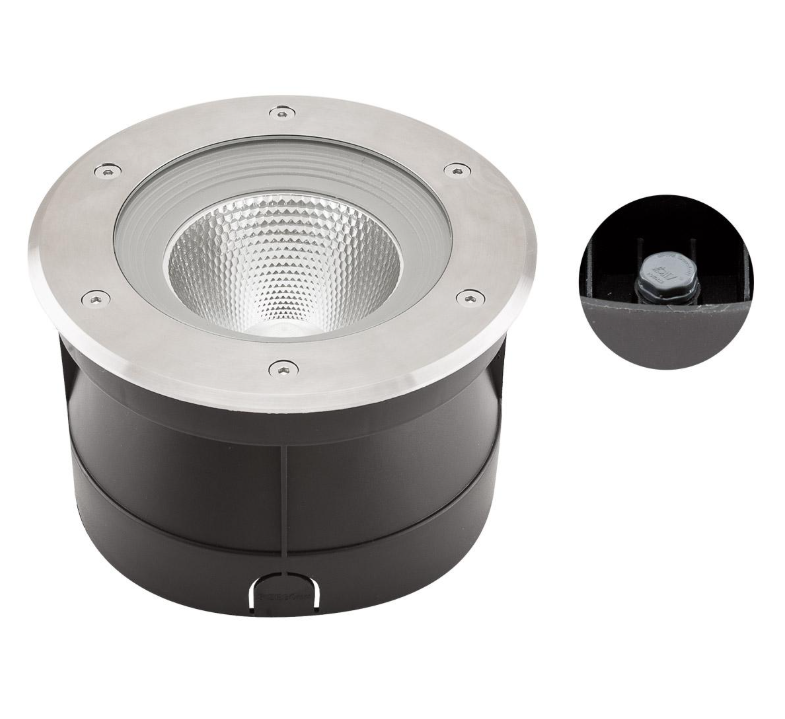
Housing material is therefore an important factor when evaluating an outdoor LED inground light manufacturer.
Common housing materials include:
Stainless Steel
Stainless steel is commonly used for exposed fixture surfaces and decorative trims. Its corrosion resistance depends on the stainless steel grade, surface finish, manufacturing quality and installation environment.
For coastal or high-salinity environments, buyers may consider 316 stainless steel for suitable components, but the complete fixture design and maintenance requirements must also be evaluated.
Aluminum Alloy
Aluminum alloy is widely used for LED inground light housings because of its relatively low weight and good thermal conductivity. Its outdoor durability depends on the alloy, surface treatment, coating quality and protection of exposed interfaces.
When comparing manufacturers, ask for:
Housing material and grade
Surface treatment or coating details
Lens material
Screw and fastener material
Corrosion-resistance information, if available
Material suitability for coastal or high-humidity environments
Do not evaluate corrosion resistance based on appearance alone. A good housing material cannot compensate for poor sealing, unsuitable fasteners or badly designed cable connections.
3. Review Optical Performance and Photometric Data
Optical performance directly affects the appearance and effectiveness of outdoor lighting.
For landscape and architectural projects, buyers need to consider not only wattage and lumen output but also beam angle, light distribution, optical efficiency and installation distance.
Important optical parameters include:
Beam Angle: Common options include 10°, 15°, 30°, 45° and 60°, depending on the product design.
Related Blog:How to Choose the Right Beam Angle for LED Inground Lights?
Lumen Output: Indicates the amount of light produced by the fixture.
Color Temperature (CCT): Common choices include 2700K, 3000K, 4000K and other project-specific options.
Color Rendering Index (CRI): Important when natural color appearance is required.
Optical Design: Lens, reflector and LED arrangement influence beam distribution and light control.
IES or LDT Files: Photometric files help lighting designers simulate fixture performance and evaluate lighting layouts.
For example:
Narrow beam angles can be suitable for accenting columns and selected architectural details.
Medium beam angles can be used for tree trunks, landscape features and some facade applications.
Wider beam angles may be suitable for broader surfaces and general landscape effects.
These are preliminary application guidelines. The correct selection depends on mounting distance, fixture output, target dimensions, surface reflectance and the required lighting effect.
What buyers should request: Ask the manufacturer for actual photometric data, IES/LDT files where available, and clear specifications for the exact model being considered.
Related Blog: How to Calculate LED Inground Light Spacing for Landscape Projects?
4. Verify Waterproofing and Outdoor Reliability
Waterproof performance is one of the most important considerations for LED inground lights.
Because these fixtures are installed at or below ground level, they may encounter rainwater, irrigation systems, accumulated water and moisture around underground cable connections.
Buyers should check:
IP protection rating of the complete fixture
Relevant waterproof test reports
Sealing structure and gasket materials
Cable glands and cable connection design
Lens and housing sealing methods
Drainage and installation requirements
Product suitability for the actual installation environment
IP67 and IP68 are commonly specified for outdoor inground lighting products, but buyers should not assume that every product carrying these ratings has identical waterproof performance.
For IP68 products in particular, confirm the manufacturer's stated test conditions, including the applicable water depth and test duration.
Also remember that an IP rating does not automatically guarantee that underground cable joints, junction boxes or external connections are waterproof. These components must be evaluated separately.
For projects with vehicle traffic, another important point is mechanical load capacity. Waterproof protection and load-bearing capacity are two different performance requirements. Ask for the relevant load rating and test documentation if vehicles will pass over the fixtures.
Related Blog: Why Do LED Inground Lights Fail After Heavy Rain?
5. Check Electrical Specifications and Control Compatibility
Electrical compatibility should be confirmed before selecting an LED inground light for a project.
Different projects may require different input voltages, power supplies and control systems.
Ask the manufacturer to confirm:
Rated input voltage, such as 12V, 24V or 220V Related Blog: 12V, 24V or 220V LED Inground Lights: How to Choose the Right Voltage?
AC or DC compatibility
Constant-voltage or constant-current requirements
Rated power and operating current
Driver or power supply specifications
Surge protection information, where applicable
Grounding and electrical protection requirements
Dimming and control compatibility
For color-changing projects, confirm whether the product supports RGB or RGBW control and whether it is compatible with the required controller or DMX512 system.
Related Blog:Warm White vs RGB vs RGBW LED Inground Lights: Which Is Best for Landscape Lighting?
Do not assume that every RGB or RGBW inground light supports DMX512. The fixture, driver, decoder and controller must be compatible.
For large installations, cable length, voltage drop, power supply location and circuit grouping should also be considered during the electrical design stage.
6. Request Product Test Reports and Quality Inspection Records
A professional LED inground light manufacturer should be able to explain which tests are performed and provide relevant documentation when available.
Depending on the product and project requirements, buyers may request:
| Test or document | What it helps verify |
|---|---|
| Waterproof test report | Resistance to water ingress under specified test conditions |
| Electrical safety test | Electrical safety performance under the applicable test standard |
| Aging test record | Product operation during a specified aging process |
| Thermal test data | Temperature performance under defined operating conditions |
| Photometric report | Light output and optical distribution |
| Material information | Housing, lens, gasket and fastener specifications |
| Corrosion test report | Corrosion resistance under the stated test method |
| Mechanical load test | Load-bearing performance for applicable drive-over models |
Not every test applies to every product. Buyers should identify the standards and documentation required by the project location, product type and contract.
When reviewing a test report, check:
Does the report identify the exact product model?
Is the tested sample representative of the supplied product?
Is the test standard clearly stated?
Is the test result traceable to a laboratory or testing organization?
Are the test conditions and limitations explained?
Is the report still relevant to the current product design?
A general company certificate is not necessarily proof that a specific LED inground light model has passed a particular test.
Also, an aging test is useful for checking product operation under defined conditions, but it does not by itself prove a specific number of years of service life.
Related Blog: Stainless Steel vs Aluminum LED Inground Lights: Which Is Better for Outdoor Projects?
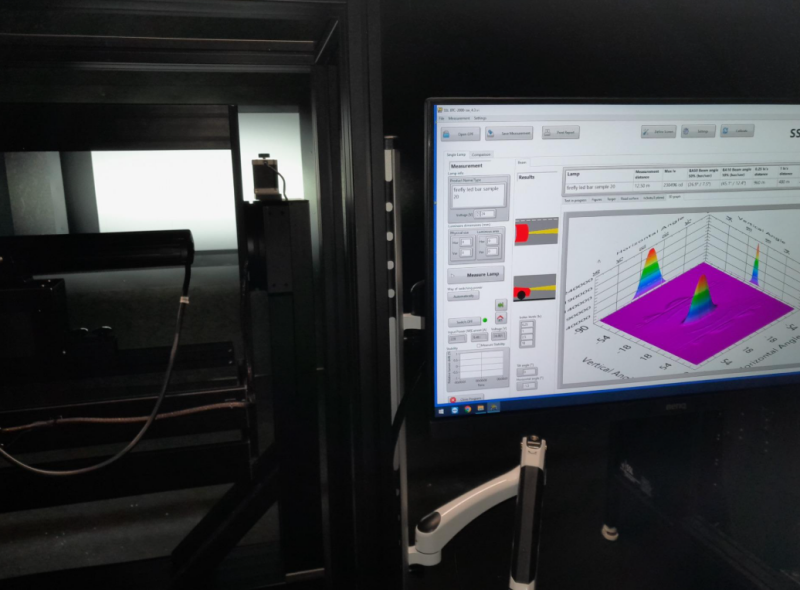
7. Test Samples Before Placing a Large Order
For large outdoor lighting projects, sample evaluation is one of the most practical ways to reduce procurement risk.
A product may look suitable in a catalog, but actual performance needs to be checked before mass production or bulk purchasing.
We recommend evaluating samples in the following areas:
Appearance and Construction
Housing finish and dimensions
Lens quality and surface condition
Cable length and connection structure
Gasket and sealing details
Installation accessories
Lighting Performance
Actual brightness
Beam angle and light distribution
Color temperature consistency
Color appearance and CRI, if required
Glare and light spill in the intended installation position
Electrical Performance
Input voltage compatibility
Power consumption
Driver operation
Control functions for RGB or RGBW models
Installation Suitability
Recessed dimensions
Mounting sleeve or installation housing
Cable routing
Drainage arrangements
Accessibility for future maintenance
For important projects, a sample mock-up or on-site lighting test is even better. It allows the project team to evaluate the actual lighting effect before confirming the final product specification.
8. Evaluate Customization and Project Support
Large outdoor lighting projects often have requirements that cannot be fully addressed by standard catalog products.
A capable manufacturer should be able to discuss project-specific requirements and confirm what can realistically be customized.
Possible customization requirements include:
Different wattages and lumen outputs
Specific beam angles
Different color temperatures
RGB or RGBW configurations
Different housing materials or finishes
Customized cable lengths
Special mounting sleeves or installation accessories
Control system compatibility
Project-specific product labels or packaging
However, not every customization is technically or commercially practical. Buyers should confirm the available options, development time, minimum order quantity, tooling requirements and any additional costs before proceeding.
For engineering projects, the manufacturer's ability to cooperate with lighting designers, electrical contractors and project managers is also important.
Useful project support may include:
Product selection based on application requirements
Technical datasheets and installation drawings
IES/LDT files for lighting simulation
Sample preparation
Product schedule and specification confirmation
Technical communication during installation
Replacement parts and after-sales coordination
A supplier that understands the project application can help reduce specification errors and unnecessary changes during installation.
9. Confirm Delivery Capability, Lead Time and Project Consistency
For large projects, delivery reliability is just as important as product performance.
A delayed lighting shipment can affect installation schedules, construction progress and project handover.
Before confirming an order, discuss:
Sample preparation time
Mass production lead time
Production capacity for the required quantity
Raw material availability
Packaging and transportation arrangements
Delivery schedule and partial shipment options
Spare parts availability
Batch consistency and production records
For projects with multiple construction phases, ask whether the manufacturer can maintain the same product specifications and appearance across different batches.
It is also important to confirm how changes to LED chips, drivers, lenses or housing materials will be communicated and controlled.
A clear production schedule and agreed product specification help both parties manage project expectations.
Related Blog: How to Design LED Inground Lighting for Hotel Entrances and Driveways?
Related Blog: LED Inground Lighting for Bridges, Columns and Architectural Structures
Related Blog: How to Use LED Inground Lights for Trees, Gardens and Landscape Features?
10. Review Warranty Terms and After-Sales Support
Warranty is an important part of long-term project risk management, but buyers should not compare suppliers based on warranty duration alone.
A meaningful warranty should clearly explain what is covered and how problems will be handled.
Before placing an order, confirm:
Warranty duration
Start date of the warranty period
Coverage for LED modules, drivers and other components
Exclusions and operating conditions
Required installation and maintenance conditions
Claim and inspection procedures
Replacement or repair arrangements
Availability of spare parts
Technical support after delivery
For large projects, it is especially important to understand how the manufacturer will respond if a batch of products has a recurring issue.
Buyers should request written warranty terms rather than relying only on verbal promises.
11. LED Inground Light Manufacturer Evaluation Checklist
Before selecting a supplier, use the following checklist to compare different manufacturers.
| Evaluation item | What buyers should request |
|---|---|
| Manufacturing capability | Factory information and production process |
| Quality control | Inspection procedures and quality records |
| Housing materials | Material grade and surface treatment |
| Optical performance | Beam angle, lumen output, CCT and IES/LDT files |
| Waterproof performance | IP rating and relevant test report |
| Electrical specifications | Voltage, driver and control details |
| Product testing | Relevant test reports and inspection records |
| Sample evaluation | Working samples for project testing |
| Customization | Available options, MOQ and development time |
| Delivery | Production schedule and delivery plan |
| Warranty | Written warranty terms and after-sales process |
The best supplier is not necessarily the one offering the lowest price or the longest warranty. It is the manufacturer that can provide the right product specifications, verifiable documentation, consistent production and dependable project support.
12. Questions to Ask an LED Inground Light Manufacturer
Before requesting a quotation or placing a bulk order, buyers can ask the following questions:
Can you provide the complete datasheet for the proposed LED inground light model?
What housing material, lens material and sealing structure does the product use?
Can you provide the waterproof test report for this exact model?
Are IES or LDT photometric files available?
What input voltage and driver configuration does the product require?
Can you provide working samples for evaluation?
Can the beam angle, wattage, CCT or cable length be customized?
What is the estimated lead time for the required quantity?
How do you maintain product consistency between production batches?
What are the warranty terms and after-sales procedures?
Clear answers to these questions help buyers compare suppliers based on technical capability and project reliability rather than price alone.
Conclusion: Choose a Manufacturer That Understands Your Project
Selecting the right LED inground light manufacturer requires more than comparing product prices and catalog specifications.Contact Us
For large outdoor projects, buyers should evaluate housing materials, optical performance, waterproof protection, electrical compatibility, product testing, sample quality, customization capability, delivery reliability and warranty support.
A professional supplier should be able to provide clear technical information and work with the project team to confirm the correct lighting solution before mass production.
At Always Lighting, we believe that successful outdoor lighting projects start with the right product specifications and clear technical communication.
If you are planning a hotel, landscape, bridge, commercial facade or other outdoor lighting project, contact our team to discuss your application requirements and LED inground light selection.
Frequently Asked Questions
1. What should I check before choosing an LED inground light manufacturer?
Check the manufacturer's production and quality control processes, housing materials, optical specifications, waterproof test reports, electrical compatibility, sample quality, customization options, delivery capability and warranty terms.
2. Which test reports should an LED inground light manufacturer provide?
Depending on the product and project requirements, buyers may request waterproof test reports, electrical safety documentation, photometric reports, thermal test data, aging test records, corrosion test reports and mechanical load test reports for applicable models.
3. Why should I request an LED inground light sample before bulk purchasing?
A sample allows buyers to check actual brightness, beam distribution, color temperature, housing finish, sealing structure, cable connections and installation dimensions before confirming a large order.
4. Are IP68 LED inground lights suitable for all outdoor projects?
Not automatically. Buyers should confirm the manufacturer's IP68 test conditions and evaluate drainage, underground cable connections, installation details and the actual site environment. IP protection alone does not guarantee suitability for every installation.
5. Can LED inground lights be customized for large projects?
Depending on the manufacturer's capabilities, customization may include wattage, beam angle, color temperature, RGB/RGBW configuration, housing finish, cable length and installation accessories. Buyers should confirm MOQ, development time and additional costs.
6. What is the difference between an LED inground light manufacturer and a supplier?
A manufacturer is directly involved in product development or production, while a supplier may provide products through its own factory or external manufacturing partners. Buyers should clarify who is responsible for technical design, quality control, product traceability, delivery and after-sales service.
7. How can I reduce quality risks when purchasing LED inground lights in bulk?
Confirm the final product specification, review relevant test documentation, approve a representative sample, agree on inspection requirements and maintain clear communication about any component or design changes before and during production.
8. What information should I provide when requesting an LED inground light quotation?
Provide the project application, required quantity, input voltage, wattage, beam angle, color temperature, IP rating, housing material, control requirements, installation environment and target delivery date. Drawings, photos or a BOQ can help the manufacturer recommend a more suitable solution.