
- 01 Nov 2026
How to Choose the Right Beam Angle for LED Inground Lights?
Introduction
Choosing the right beam angle is one of the most important factors in designing an effective LED inground lighting system. The beam angle determines how light is distributed across a target surface, directly affecting illumination coverage, lighting uniformity, visual impact, and energy efficiency.
For landscape lighting, architectural uplighting, hotel entrances, and outdoor building facades, selecting an incorrect beam angle can result in dark areas, excessive glare, uneven illumination, or unwanted light spill.
So, which beam angle should you choose for an LED inground light?
As a general guideline:
10°: Narrow beam for highlighting tall columns, architectural details, and distant targets.
15°: Focused beam for trees, columns, and narrow architectural features.
30°: A versatile option for tree uplighting, medium-height structures, and landscape features.
45°: Wider illumination for walls, low structures, and landscape areas.
60°: Broad light distribution for wider surfaces and general landscape illumination.
However, the best beam angle depends on three important factors: installation distance, target height, and the width of the area you want to illuminate.
This guide explains how to select the right LED inground light beam angle for different outdoor lighting applications.
1. What Is the Beam Angle of an LED Inground Light?
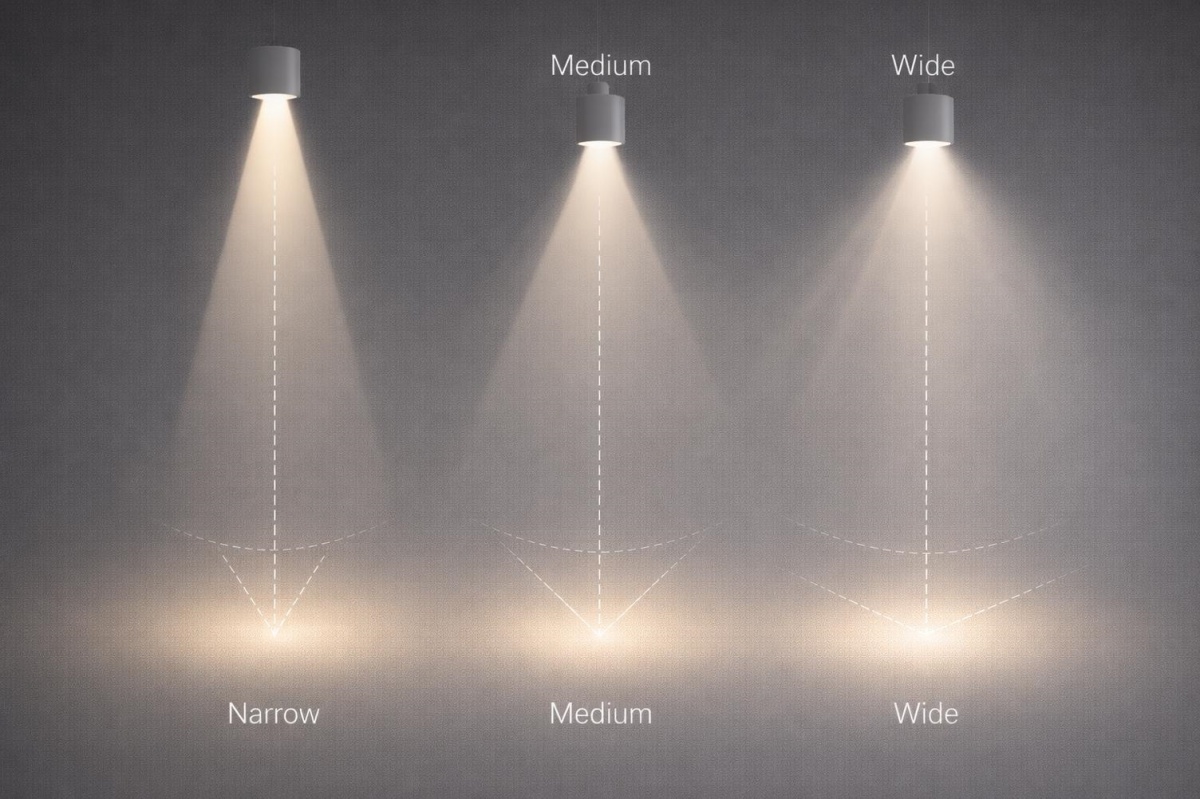
The beam angle refers to the angular width of light emitted by an LED optical system. It determines how widely or narrowly the light spreads from the fixture.
A narrow beam angle concentrates light into a smaller area, creating stronger visual emphasis. A wider beam angle distributes light over a larger area, providing broader coverage.
For example, a 10-degree LED inground spotlight produces a more concentrated beam than a 60-degree fixture when installed at the same distance.
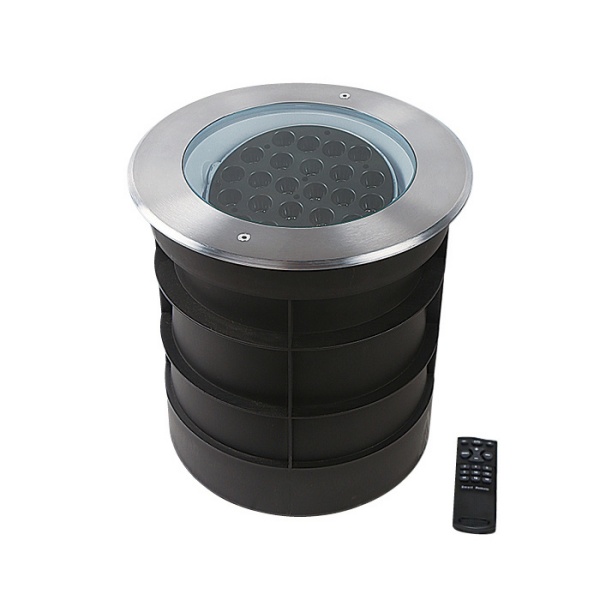
Beam angle selection is particularly important for recessed outdoor uplights because the fixtures are often installed directly into the ground, making their position and aiming direction difficult to adjust after installation.
Before selecting a fixture, consider:
The height of the tree, column, or building.
The horizontal distance between the fixture and the target.
The width of the target surface.
The desired lighting effect.
The required illumination level and light distribution.
Understanding these factors helps project designers select the appropriate LED inground light for each application.
2. Understanding Different LED Inground Light Beam Angles
Different beam angles create different lighting effects. The following table provides a practical reference for outdoor architectural and landscape lighting projects.
| Beam Angle | Light Distribution | Recommended Applications |
|---|---|---|
| 10° | Very narrow and concentrated | Tall columns, architectural details, narrow features |
| 15° | Narrow and focused | Trees, columns, sculptures, building details |
| 30° | Medium beam | Tree uplighting, medium-height structures |
| 45° | Wide beam | Walls, low buildings, landscape features |
| 60° | Very wide beam | Broad surfaces, low landscape areas |
10° LED Inground Light – Narrow Beam for Architectural Details
A 10-degree beam angle creates a concentrated light beam, making it suitable for highlighting specific architectural elements.
Typical applications include:
Tall building columns.
Narrow architectural structures.
Decorative pillars.
Sculptures and landscape objects.
Selected facade details.
For projects requiring a strong vertical lighting effect, a narrow beam can help concentrate light on the target rather than spreading it across surrounding areas.
However, a 10-degree beam may produce noticeable bright spots if the installation distance and aiming position are not carefully planned.
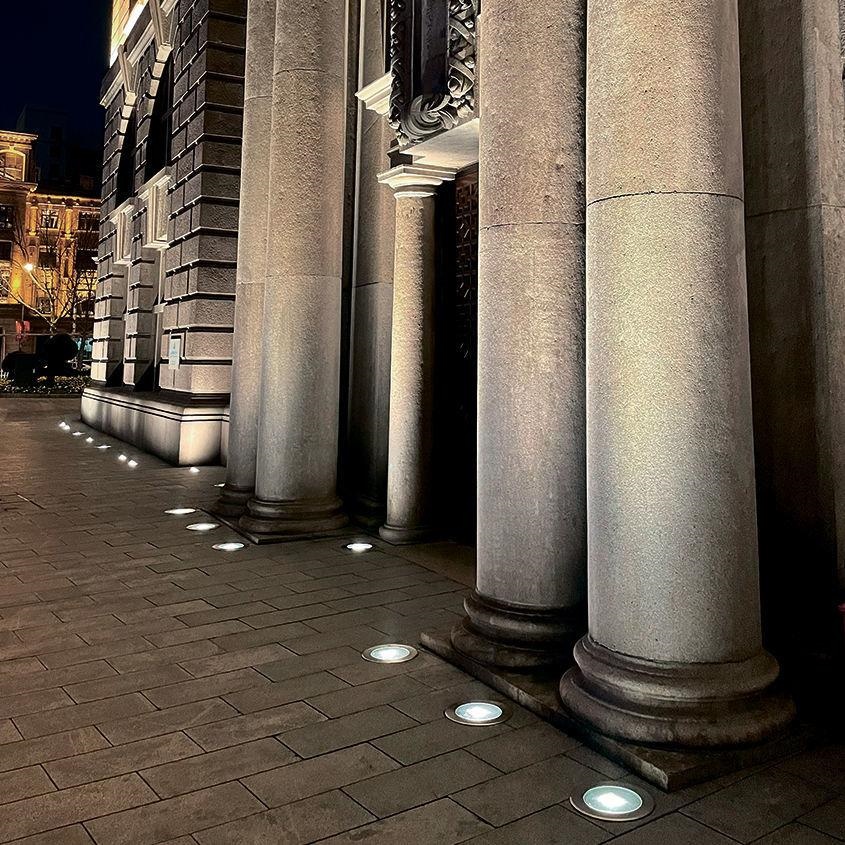
15° LED Inground Light – Focused Uplighting for Trees and Columns
A 15-degree beam angle provides slightly wider coverage while maintaining a focused lighting effect.
It is commonly suitable for:
Medium and tall trees.
Hotel entrance columns.
Architectural pillars.
Decorative outdoor structures.
Narrow facade sections.
For tree uplighting, a 15-degree beam can emphasize the trunk and selected branches without unnecessarily illuminating the surrounding landscape.
It is particularly useful when the project requires controlled illumination rather than broad area lighting.
30° LED Inground Light – Versatile Beam for Landscape Lighting
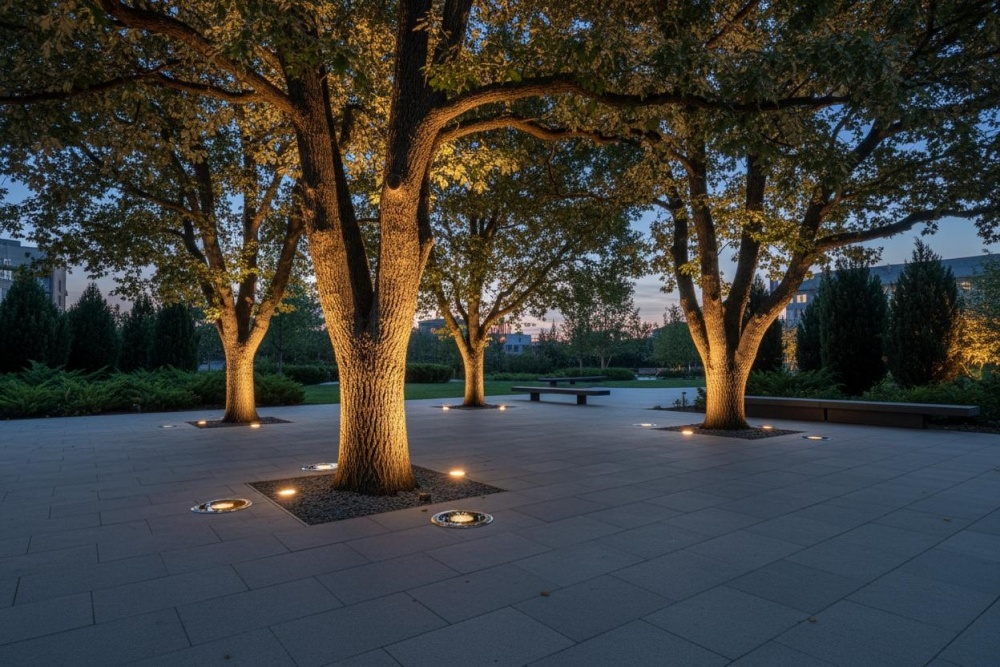
A 30-degree beam angle is a practical choice for many outdoor landscape and architectural lighting applications.
Typical applications include:
Tree uplighting.
Garden landscape features.
Building columns.
Medium-sized architectural structures.
Hotel and resort landscaping.
Compared with narrow-beam options, a 30-degree fixture provides a wider illuminated area while maintaining relatively good directional control.
For many outdoor projects, 30-degree LED inground lights offer a useful balance between coverage and visual emphasis.
45° LED Inground Light – Wider Coverage for Walls and Landscape Features
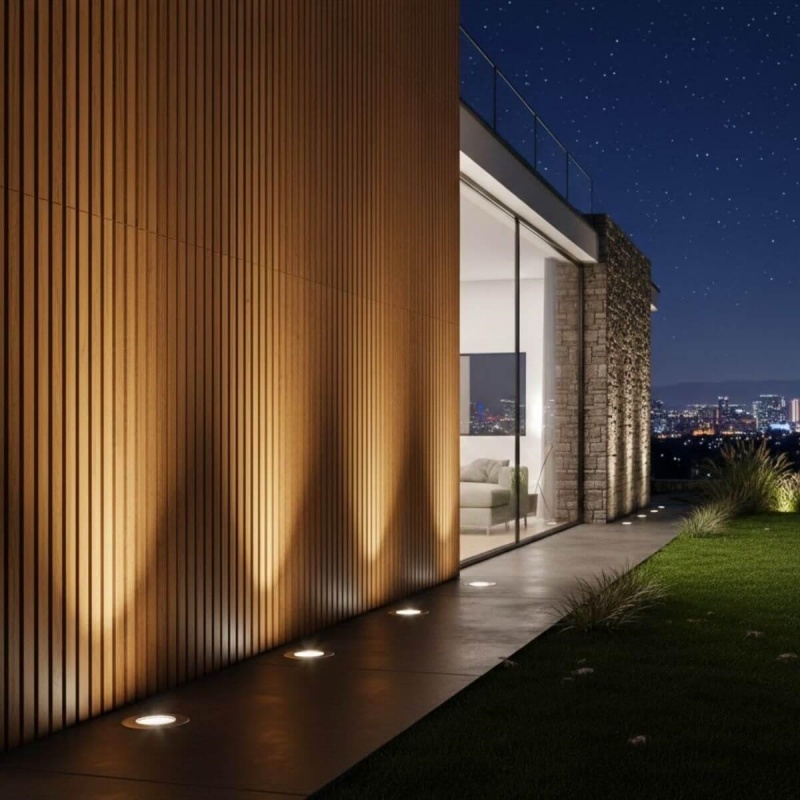
A 45-degree beam angle distributes light over a broader area.
It can be used for:
Low building facades.
Landscape walls.
Garden structures.
Wide tree canopies at suitable installation distances.
Outdoor decorative features.
When illuminating wider surfaces, a 45-degree beam may reduce the number of fixtures required compared with narrow-beam options. However, actual fixture quantities must be determined through lighting calculations and project layouts.
60° LED Inground Light – Broad Illumination for Wider Surfaces
A 60-degree beam angle provides relatively broad light distribution and is suitable for applications requiring wider coverage.
Common applications include:
Low landscape walls.
Wide decorative structures.
Ground-level landscape features.
Broad outdoor surfaces.
General landscape uplighting.
A wider beam is not always better. If the target is narrow or located far from the fixture, a 60-degree beam may create unnecessary light spill and reduce the desired visual contrast.
The correct selection should always consider the target dimensions and surrounding environment.
3. How Does Installation Distance Affect the Beam Angle?
Installation distance is one of the most important factors when selecting an LED inground light.
As the distance between the fixture and the target increases, the illuminated area becomes wider, assuming the beam angle remains unchanged.
For an idealized circular beam, the approximate beam diameter can be calculated using:
Beam Diameter = 2 × Distance × tan(Beam Angle ÷ 2)
This formula provides an initial estimate of the beam footprint. Actual illumination depends on the optical design, aiming direction, beam distribution, and installation conditions.
Approximate Beam Coverage at Different Distances
| Beam Angle | At 1m | At 2m | At 3m | At 5m |
|---|---|---|---|---|
| 10° | 0.17m | 0.35m | 0.52m | 0.87m |
| 15° | 0.26m | 0.53m | 0.79m | 1.32m |
| 30° | 0.54m | 1.07m | 1.61m | 2.68m |
| 45° | 0.83m | 1.66m | 2.49m | 4.14m |
| 60° | 1.15m | 2.31m | 3.46m | 5.77m |
For example:
If an LED inground light is installed 3 meters away from a building column:
A 10° beam produces an approximate 0.52m beam diameter.
A 30° beam produces an approximate 1.61m beam diameter.
A 60° beam produces an approximate 3.46m beam diameter.
This demonstrates why beam angle selection should be based on the target width and installation distance rather than simply choosing the widest available beam.
Important: These are geometric estimates, not guaranteed illuminated widths at a specified brightness. The actual useful beam should be verified using the manufacturer's photometric data, such as IES or LDT files.
4. How to Choose LED Inground Light Beam Angles for Different Applications
Different outdoor applications require different lighting effects. Below are practical recommendations for common landscape and architectural projects.
A. Tree Uplighting
Tree uplighting is one of the most common applications for LED inground lights.
The appropriate beam angle depends on tree height, trunk width, canopy shape, and the desired lighting effect.
Recommended starting points:
10°–15°: Tall, narrow trees or focused trunk lighting.
15°–30°: Medium-sized trees and selected branches.
30°–45°: Wider trees and broader canopy illumination.
For large trees, multiple fixtures may be required to illuminate different sides of the trunk and canopy.
Project designers should also consider the distance between the fixture and the tree to avoid excessive light spill.
B. Building Columns and Architectural Pillars
For building columns, narrow and medium beam angles are often preferred.
Recommended starting points:
10°: Narrow columns and tall architectural details.
15°: Medium-width columns.
30°: Wider columns or greater installation distances.
The objective is to create a clear vertical lighting effect while maintaining a balanced appearance across the building facade.
For symmetrical architectural structures, consistent fixture positioning and beam distribution are particularly important.
C. Building Facade Uplighting
Building facade lighting requires careful consideration of wall height, width, texture, and installation distance.
Recommended starting points:
15°–30°: Focused vertical architectural details.
30°–45°: Medium-width facade sections.
45°–60°: Wider or lower surfaces where broad coverage is required.
For large building facades, a combination of different beam angles may provide better visual results than using only one beam angle throughout the project.
Lighting simulation is recommended for complex facade projects.
D. Garden and Landscape Lighting
For gardens, parks, and outdoor landscape projects, beam angle selection depends on the size and position of the landscape features.
Recommended starting points:
15°: Small trees and decorative objects.
30°: Medium-sized plants and landscape features.
45°–60°: Wider and lower landscape elements.
The goal is to create depth and visual contrast rather than illuminate every area with the same brightness.
5. How to Select the Right Beam Angle Based on Target Width?
Another important consideration is the width of the object you want to illuminate.
A narrow beam is generally suitable for narrow targets, while a wider beam is more appropriate for larger surfaces.
For example:
| Target Width | Suggested Starting Beam Angle | Typical Application |
|---|---|---|
| 0.3–0.5m | 10°–15° | Narrow columns, decorative details |
| 0.5–1.0m | 15°–30° | Small trees, medium columns |
| 1.0–2.0m | 30°–45° | Wider trees, facade sections |
| 2.0m or wider | 45°–60° | Wide walls and landscape surfaces |
These ranges are preliminary selection references, not fixed engineering specifications.
The final beam angle should be confirmed by considering the actual installation distance, mounting position, optical distribution, required illuminance, and potential light spill.
6. Common Mistakes When Choosing LED Inground Light Beam Angles
Even high-quality LED inground lights may produce unsatisfactory results if the beam angle is incorrectly selected.
Here are five common mistakes to avoid.
Mistake 1: Choosing a Wide Beam for Every Application
A 60-degree beam may cover a large area, but it can also produce unwanted light spill when used for narrow columns or tall trees.
Solution: Match the beam angle to the target width and installation distance.
Mistake 2: Using a Narrow Beam Too Close to the Target
A narrow beam installed too close to a wall may create an intense bright spot rather than balanced illumination.
Solution: Evaluate the fixture position and required coverage before installation.
Mistake 3: Ignoring Tree and Building Height
The same beam angle can produce different lighting effects depending on the target height and distance.
Solution: Consider the entire lighting geometry, not just the beam angle.
Mistake 4: Ignoring Glare and Light Spill
Incorrect positioning may cause direct glare for pedestrians, drivers, and building occupants.
Solution: Consider fixture shielding, aiming direction, installation depth, and surrounding viewing positions.
Mistake 5: Selecting Fixtures Without Photometric Data
Two LED inground lights with the same nominal beam angle may produce different light distributions and illumination levels.
Solution: Request IES or LDT files and review the photometric distribution before finalizing the lighting design.
7. How to Choose the Right LED Inground Light for Your Project?
Before selecting an LED inground light, project engineers and lighting designers should evaluate the following specifications:
| Selection Factor | What to Consider |
|---|---|
| Beam Angle | 10°, 15°, 30°, 45°, or 60° |
| Power | Depending on target height and required illumination |
| Color Temperature | 2700K, 3000K, 4000K, or other project requirements |
| Light Source | LED chip brand, efficacy, and lumen output |
| Housing Material | Stainless steel or suitable outdoor-grade aluminum |
| Waterproof Rating | Appropriate IP rating for the installation environment |
| Optical Design | Lens quality and light distribution |
| Installation | Recessed depth, mounting sleeve, drainage, and cable access |
| Photometric Data | IES or LDT files for lighting calculations |
For professional outdoor lighting projects, beam angle should never be considered separately from lumen output, optical efficiency, and installation conditions.
A complete lighting specification helps ensure consistent illumination, reliable operation, and lower maintenance requirements.
8. Why Choose Always Lighting LED Inground Lights?
Always Lighting provides outdoor LED lighting products for architectural, landscape, and commercial lighting applications.
Our LED inground lighting solutions can be considered for projects requiring different beam distributions, lighting effects, and installation configurations.
For project-based requirements, selecting the appropriate fixture involves more than choosing wattage. Beam angle, optical performance, installation environment, housing material, and electrical specifications all need to be considered.
Whether you are planning lighting for a hotel entrance, landscape garden, building facade, bridge, or architectural column, the right product configuration can help achieve the desired lighting effect.
Contact Always Lighting for LED Inground Lighting Solutions
If you are planning an outdoor lighting project, our team can help you evaluate suitable LED inground light options based on your project requirements.
Please share the following information:
Application: Trees, columns, building facades, or landscape areas.
Target height and width.
Installation distance.
Required beam angle or lighting effect.
Power and color temperature requirements.
Project drawings or site photos.
Our team can help recommend suitable LED inground lighting products for your application.
Frequently Asked Questions (FAQ)
1. What is the best beam angle for LED inground lights?
There is no single best beam angle for every application. A 10°–15° beam is suitable for focused architectural details, 30° is versatile for many landscape applications, and 45°–60° is useful for wider surfaces.
2. What beam angle is best for tree uplighting?
A 15°–30° beam angle is a useful starting point for many tree uplighting applications. Narrower beams work well for tall, narrow trees, while wider beams may be more suitable for larger canopies.
3. What beam angle should I use for building columns?
A 10°–30° beam angle is commonly considered for building columns. The final choice depends on column width, height, fixture distance, and the desired lighting effect.
4. Is a 30-degree beam angle suitable for landscape lighting?
Yes. A 30-degree beam angle is a versatile option for tree uplighting, garden features, columns, and medium-sized architectural structures.
5. What is the difference between 15-degree and 45-degree LED inground lights?
A 15-degree beam produces more concentrated illumination, while a 45-degree beam distributes light across a wider area. The 15-degree option is generally better for focused lighting, whereas 45 degrees is useful for broader surfaces.
6. Does a wider beam angle always provide better lighting?
No. A wider beam covers a larger area but may also cause light spill and reduce visual emphasis. The correct beam angle depends on the target dimensions and installation conditions.
7. How do I calculate the beam diameter of an LED inground light?
You can estimate the beam diameter using this formula:
Beam Diameter = 2 × Distance × tan(Beam Angle ÷ 2).
For accurate project planning, use the manufacturer's IES or LDT photometric files to evaluate actual illumination distribution.
8. Can I use different beam angles in the same landscape lighting project?
Yes. Combining 10°, 15°, 30°, and 45° LED inground lights can create different lighting layers and highlight various landscape elements. The final combination should be determined through lighting design and simulation.
9. What information should I provide when requesting LED inground light recommendations?
Provide the target height, width, installation distance, desired lighting effect, power requirements, color temperature, and project drawings or photos. These details help the manufacturer recommend suitable beam angles and product specifications.
Conclusion
Choosing the right LED inground light beam angle is essential for achieving effective outdoor architectural and landscape lighting.
From narrow 10-degree beams for architectural details to wider 60-degree beams for broad surfaces, each optical distribution serves a different purpose.
By evaluating target height, installation distance, target width, and desired lighting effects, project designers can select the right LED inground lighting solution for better illumination, visual balance, and project performance.
Looking for the right LED inground lights for your next project? Contact Always Lighting to discuss your lighting requirements.