
- 03 Nov 2026
Hotel Inground Lighting Design for Entrances & Driveways
How to Design LED Inground Lighting for Hotel Entrances and Driveways?
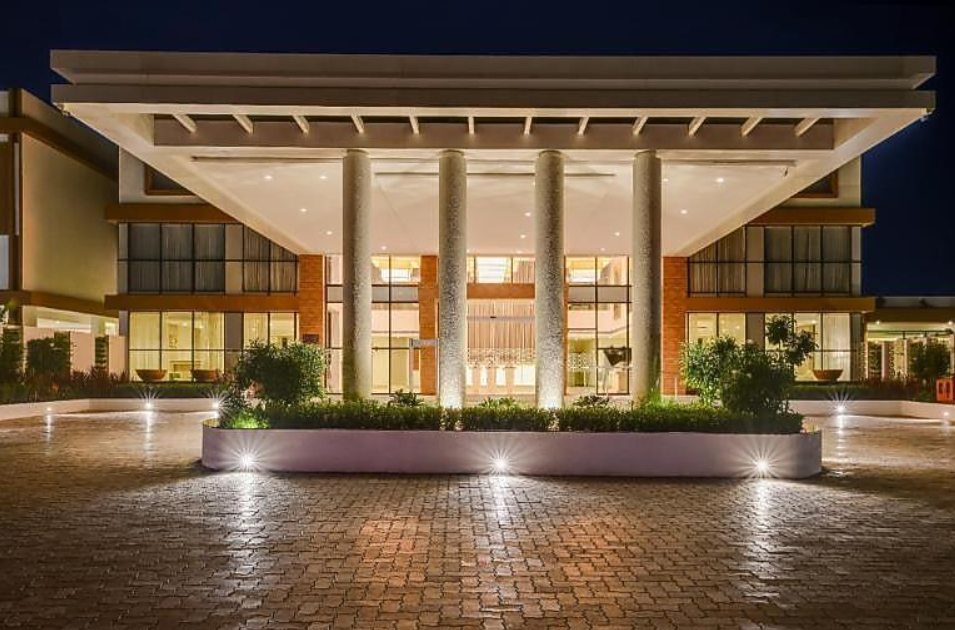
Hotel entrances and driveways are among the most important outdoor areas in hospitality lighting design. They create the first impression for guests, guide vehicles safely toward the entrance and highlight the hotel's architectural and landscape features.
LED inground lights are widely used in hotel entrance lighting, driveway lighting, landscape uplighting and building facade illumination. However, a successful design requires more than selecting attractive fixtures. Lighting designers and contractors must consider vehicle traffic, visual comfort, beam direction, installation conditions, waterproof protection and long-term maintenance.
A well-designed hotel inground lighting system should balance visual impact, vehicle safety, lighting comfort and fixture durability. This guide explains how to plan LED inground lighting for hotel entrances and driveways, from the arrival area to landscape features and architectural facades.
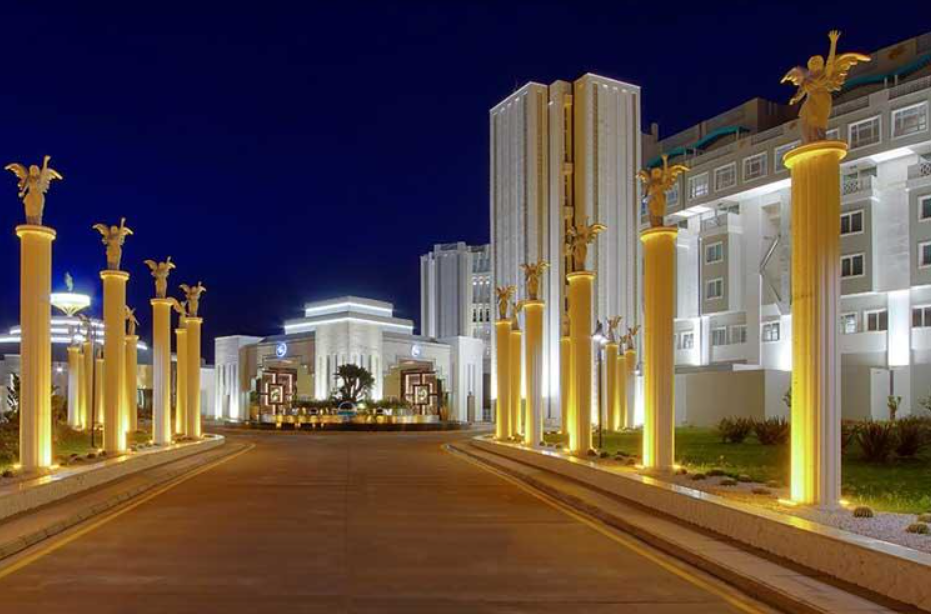
1. Why Use LED Inground Lights for Hotel Entrances and Driveways?
Hotel entrances need to look welcoming, elegant and easy to navigate. Traditional pole lights or wall-mounted fixtures may provide general illumination, but they cannot always create the subtle architectural effects required by premium hotels.
LED inground lights offer several advantages:
Clean architectural appearance: Fixtures are installed flush with or integrated into the ground, helping maintain an uncluttered landscape.
Directional lighting: They can illuminate columns, walls, trees and decorative features from below.
Visual guidance: Carefully positioned lights can help define driveway edges and pedestrian areas.
Flexible lighting effects: Different beam angles and color temperatures can create different architectural and landscape effects.
Outdoor application options: Suitable products are available for areas exposed to rain, moisture and outdoor environmental conditions.
For hotel projects, inground lighting should complement the main lighting system rather than replace all general or functional lighting. Vehicle circulation areas may also require appropriate roadway, canopy or area lighting to achieve the required visibility.
2. Divide the Hotel Entrance into Four Lighting Zones
Before selecting fixtures, divide the outdoor entrance area into functional lighting zones. Each zone has different lighting objectives and installation requirements.
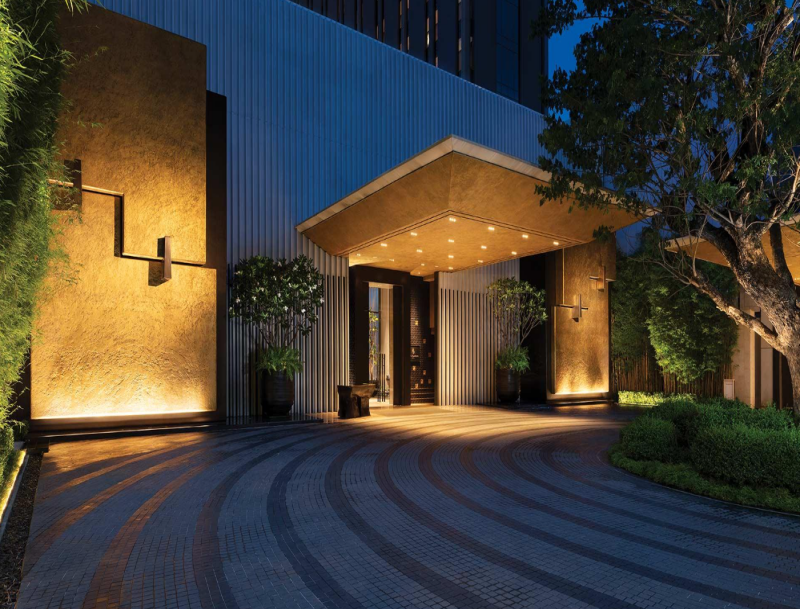
Zone 1: Main Hotel Entrance
The main entrance is the visual focal point of the hotel. Lighting should make the entrance recognizable, welcoming and visually balanced.
LED inground lights can be installed near entrance columns, architectural edges and decorative structures to create a subtle uplighting effect.
Design recommendations:
Highlight important entrance columns and architectural details.
Use suitable beam angles to avoid excessive brightness on nearby surfaces.
Coordinate inground lights with canopy downlights and facade lighting.
Avoid directing strong beams toward drivers, guests or the main entrance doors.
Maintain a consistent color temperature across visually connected areas.
Warm white lighting, such as 2700K or 3000K, is often considered for luxury hotels and hospitality environments. The final choice should match the architectural materials, interior lighting and overall design concept.
Zone 2: Hotel Driveway and Vehicle Drop-Off Area
The driveway is a functional area where vehicles enter, stop, turn and leave. Lighting design must support visibility and clear circulation while maintaining the hotel's visual identity.
Driveway LED inground lights can be used to define selected edges, highlight entrance transitions or provide subtle visual guidance.
Design recommendations:
Position fixtures outside the main wheel paths wherever possible.
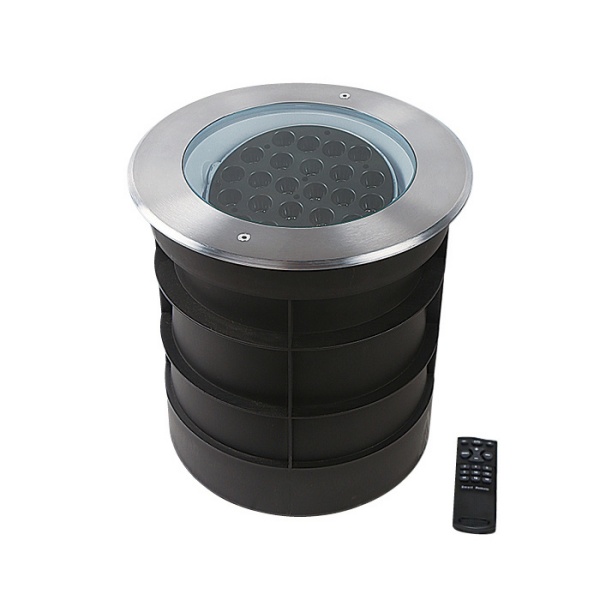
Use vehicle-rated products when fixtures must be installed in areas exposed to vehicle traffic.
Avoid excessive brightness and direct glare toward drivers.
Keep the fixture layout consistent with driveway geometry.
Coordinate inground lights with bollards, canopy lighting and other functional lighting.
Important: A decorative inground light is not automatically suitable for a driveway. If vehicles may pass directly over the fixture, confirm the product's rated load, test conditions, installation sleeve and supporting foundation. The rating of the fixture alone does not guarantee that the complete installation can withstand actual vehicle loads.
Related Blog:Drive-Over Inground Lights: Load Ratings, IP67/IP68 and Installation Mistakes That Kill Uplights
Zone 3: Landscape Trees and Garden Areas
Landscape trees and planting areas help create a relaxing atmosphere around hotels, resorts and hospitality properties.
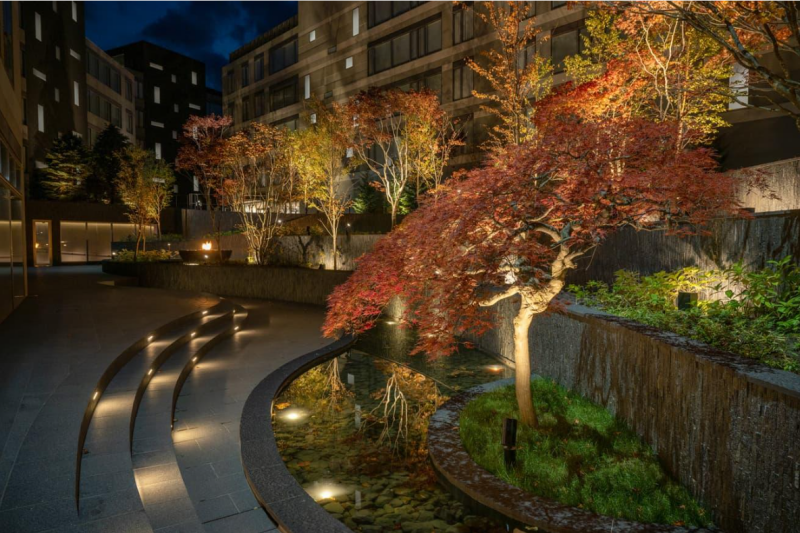
LED inground lights can illuminate tree trunks, selected branches, sculptures and landscape features.
Design recommendations:
Use narrow or medium beam angles for selected tree trunks and architectural landscape features.
Consider adjustable fixtures when tree shapes or aiming requirements are irregular.
Avoid directing light unnecessarily into guests' eyes or nearby hotel rooms.
Use consistent color temperatures for visually connected landscape areas.
Consider the tree's growth and maintenance requirements when choosing fixture positions.
For larger trees, one fixture may not provide the desired effect. The number and position of fixtures should be determined by tree size, canopy shape, beam distribution and the intended lighting appearance.
Zone 4: Building Facade and Architectural Columns
Building facades and columns help define the hotel's architectural identity, especially at night.
LED inground lights can create vertical illumination on facade surfaces and emphasize the shape of columns, entrances and decorative structures.
Design recommendations:
Choose beam angles according to facade height and fixture-to-wall distance.
Use fixed fixtures for predictable and repetitive architectural layouts.
Consider adjustable inground lights for irregular surfaces or restricted installation positions.
Check the facade material and color because different surfaces reflect light differently.
Coordinate the inground lighting layout with wall washers and other facade lighting fixtures.
For tall facades, inground lights may be combined with wall washers or other architectural luminaires to achieve more consistent illumination.
3. How to Plan Driveway LED Inground Lights for Vehicle Traffic
Vehicle traffic is one of the most important considerations when designing hotel driveway lighting.
A driveway may be used by passenger cars, taxis, hotel shuttles, delivery vehicles and occasionally heavier service vehicles. The selected fixture must be suitable for the actual traffic conditions.
3.1 Check the Vehicle Load Requirement
Before selecting a Driveway LED Inground Light, identify:
The types of vehicles using the driveway
Whether vehicles will drive directly over the fixtures
Expected traffic frequency
Whether buses or service vehicles may enter the area
Whether vehicles may turn, brake or stop above the fixtures
Do not select a fixture based only on its appearance or IP rating.
Ask the manufacturer for the rated load, test method, applicable installation conditions and supporting technical documentation.
3.2 Understand the Difference Between IP Rating and Load Rating
These two specifications describe different performance characteristics.
| Specification | What It Indicates | Why It Matters |
|---|---|---|
| IP65 | Protection against dust and water jets under specified test conditions | Suitable only when its protection level matches the installation environment |
| IP67 | Protection against dust and temporary immersion under specified test conditions | Useful for certain outdoor environments |
| IP68 | Protection against dust and immersion under manufacturer-defined conditions | Requires confirmation of the actual test conditions |
| Mechanical load rating | Resistance to specified mechanical loads under defined test conditions | Important when vehicles or other loads may pass over the fixture |
IP67 or IP68 does not mean a fixture is suitable for vehicle traffic. A driveway installation requires a suitable mechanical load rating as well as appropriate ingress protection.
The load rating must also be considered together with the mounting sleeve, concrete foundation, surrounding paving and installation method.
3.3 Avoid Installing Decorative Fixtures in Main Wheel Paths
Whenever the lighting design allows, position decorative inground lights along driveway edges, landscape borders or other areas outside regular wheel paths.
If the design requires fixtures in vehicle paths, select products specifically designed and tested for the expected traffic loads.
The installation must follow the manufacturer's requirements for foundation support, fixture positioning and surrounding pavement construction.
3.4 Consider Drainage and Ground Conditions
Hotel driveways are exposed to rainwater, cleaning water and sometimes standing water.
Before installation:
Provide suitable drainage around underground fixtures.
Avoid locations where water naturally accumulates.
Check the soil and pavement structure.
Protect cable connections and underground junctions.
Follow the manufacturer's requirements for the mounting sleeve and sealing system.
Good drainage and correct installation are essential for long-term outdoor performance.
4. How to Create Comfortable Lighting Without Glare
Visual comfort is especially important at hotel entrances because drivers and pedestrians share the same space.
A lighting design may look attractive in a rendering but still cause discomfort if the beam direction, brightness or fixture position is poorly planned.
Use Appropriate Beam Angles
Different beam angles produce different lighting effects.
| Beam Angle | Typical Application |
|---|---|
| 10°–15° | Narrow architectural details and selected tree trunks |
| 30° | Columns and medium-sized landscape features |
| 45° | Wider architectural surfaces and selected landscape areas |
| 60° | Broader illumination where the optical design supports the application |
These are general planning examples, not universal specifications. Actual results depend on fixture output, optical distribution, mounting distance and target dimensions.
Related Blog: How to Choose the Right Beam Angle for LED Inground Lights?
Related Blog:Fixed vs Adjustable LED Inground Lights: Which Design Is Better for Architectural Uplighting?
Avoid Direct Glare
A light source that is directly visible from a driver's normal viewing direction can create discomfort.
To reduce glare:
Avoid aiming beams toward approaching vehicles.
Select suitable optical designs and shielding where available.
Position fixtures carefully near turning and stopping areas.
Consider the viewing direction of pedestrians and hotel guests.
Review the lighting effect from actual vehicle approach angles.
Maintain a Balanced Lighting Environment
A very bright entrance surrounded by dark driveways and landscape areas can create an uncomfortable visual transition.
Coordinate inground lights with canopy lighting, wall lighting, landscape lighting and other functional luminaires.
The goal is not to make every area equally bright, but to create a comfortable visual hierarchy while meeting the project's functional lighting requirements.
Related Blog:Why Do LED Inground Lights Fail After Heavy Rain?
5. How to Choose LED Inground Lights for Hotel Projects
Different areas of a hotel entrance may require different fixture designs.
| Application Area | Suggested Fixture Type | Main Selection Considerations |
|---|---|---|
| Main entrance columns | Fixed or adjustable LED inground light | Beam angle, output and aiming direction |
| Driveway edges | Vehicle-rated LED inground light where exposed to traffic | Mechanical load rating, IP protection and installation |
| Landscape trees | Fixed or adjustable LED inground light | Beam distribution, color temperature and aiming |
| Building facade | Architectural LED inground uplight | Beam angle, optical performance and surface distance |
| Decorative garden features | Mini LED inground light | Compact dimensions and suitable light distribution |
| Pedestrian entrance paths | Suitable low-glare ground lighting | Visual comfort, guidance and safe positioning |
For project buyers, the following specifications should be confirmed before ordering:
Power and lumen output: Select according to the target and required lighting effect.
Beam angle: Confirm the optical distribution and available photometric data.
Color temperature: Coordinate with the hotel's architectural and landscape design.
IP rating: Match the environmental exposure and installation conditions.
Mechanical load rating: Essential when vehicles may pass over the fixture.
Housing material: Consider corrosion resistance and the surrounding environment.
Installation dimensions: Confirm diameter, depth, sleeve and cable access.
Maintenance method: Understand how the fixture can be removed, inspected and replaced.
For professional projects, IES or LDT photometric files can help designers simulate the lighting distribution before installation.
6. Installation Planning: What Should Contractors Check?
Correct installation has a direct impact on the reliability and appearance of hotel inground lighting.
Before construction, contractors should confirm the following:
Fixture Position and Layout
Mark the fixture locations according to the approved lighting plan. Check the distance from the building, columns, driveway edges and landscape features.
Avoid making last-minute position changes without considering their effect on the lighting distribution and vehicle circulation.
Related Blog:How to Calculate LED Inground Light Spacing for Landscape Projects?
Foundation and Mounting Sleeve
Prepare the foundation and mounting sleeve according to the product's installation instructions.
For vehicle-accessible areas, the supporting structure must be designed to transfer the expected loads safely. Do not assume that surrounding paving alone provides sufficient support.
Cable Routing and Electrical Connections
Plan cable routes, junction boxes, power supplies and maintenance access before paving work begins.
Use electrical components and connection methods suitable for the installation environment. Electrical work should comply with local codes and be completed by qualified personnel.
Drainage
Provide an appropriate drainage solution based on the site conditions and the manufacturer's installation requirements.
Do not assume that an IP-rated fixture eliminates the need for proper drainage and cable connection protection.
Testing Before Final Handover
Before completing the project:
Test all fixtures and control systems.
Check beam directions and lighting effects at night.
Inspect visible glare from vehicle approach directions.
Confirm that fixtures are correctly installed and securely supported.
Check drainage and cable connection arrangements.
Record fixture locations and model information for future maintenance.
A night-time mock-up or sample installation can help identify problems before the full lighting system is completed.
7. How to Maintain Hotel LED Inground Lighting Systems
Hotel entrances and driveways are high-visibility areas. Lighting failures can affect both the guest experience and the property's appearance.
A practical maintenance plan should include:
Regular inspection of fixture lenses and visible surfaces
Checking for cracks, loose components or signs of corrosion
Inspecting cable connections and junction boxes
Checking drainage around underground fixtures
Testing the lighting output and control system
Replacing damaged fixtures with compatible models
For vehicle-accessible installations, inspect the surrounding paving and fixture support for movement, settlement or damage.
Any fixture removal or electrical inspection should follow the manufacturer's instructions. Isolate the power before electrical work and restore all seals correctly before returning the fixture to service.
8. Hotel Inground Lighting Design Checklist
Use this checklist when planning a hotel entrance or driveway lighting project.
| Design Item | Key Question |
|---|---|
| Entrance appearance | Which columns, architectural details and surfaces should be highlighted? |
| Vehicle circulation | Where do cars enter, stop, turn and leave? |
| Load requirement | Will vehicles pass directly over the fixtures? |
| Visual comfort | Can drivers see the light source directly? |
| Beam direction | Are fixed or adjustable fixtures more suitable? |
| Color temperature | Does the lighting match the hotel's design concept? |
| Waterproof protection | Is the IP rating suitable for the actual installation environment? |
| Drainage | Can rainwater drain away from the fixture and underground connections? |
| Installation | Are the foundation, sleeve and cable routes correctly designed? |
| Maintenance | Can the fixture be accessed and replaced when necessary? |
9. Create a Welcoming Hotel Entrance with the Right LED Inground Lighting
A successful hotel inground lighting design combines architectural appearance, vehicle circulation, landscape illumination and long-term reliability.
Fixed LED inground lights can provide consistent lighting for regular architectural structures, while adjustable models offer more flexibility for complex columns, trees and facade details. For driveways, vehicle-rated fixtures and correctly engineered installation structures are essential wherever vehicles may pass over the lights.
By planning the entrance, driveway, landscape and facade as connected lighting zones, hotel owners and project contractors can create a welcoming outdoor environment without compromising safety or maintenance.
Always Lighting provides outdoor LED lighting solutions for architectural and landscape applications. If you are working on a hotel entrance, resort driveway or hospitality landscape project, share your drawings, installation conditions and lighting requirements with our team.
Contact Us Always Lighting to discuss the right LED inground lighting solution for your hotel project.
Frequently Asked Questions
1. What are LED inground lights used for at hotel entrances?
LED inground lights are used to highlight entrance columns, architectural details, landscape trees, garden features and selected driveway areas. They create a clean ground-level appearance while adding architectural and landscape lighting effects.
2. Can LED inground lights be installed in hotel driveways?
Yes, but fixtures installed where vehicles may pass over them must be specifically suitable for the expected mechanical loads. Confirm the rated load, test conditions, mounting sleeve and foundation requirements before installation.
3. What IP rating is suitable for hotel driveway LED inground lights?
The required IP rating depends on the exposure to rain, cleaning water and possible immersion. IP67 or IP68 may be considered for certain outdoor conditions, but the manufacturer's test conditions must be checked. IP protection does not indicate vehicle load capacity.
4. How do you prevent glare from hotel driveway inground lights?
Use appropriate beam angles, optical shielding where available and carefully planned fixture positions. Avoid directing beams toward approaching drivers, pedestrians or hotel guests.
5. What color temperature is best for hotel entrance lighting?
Warm white options such as 2700K or 3000K are commonly considered for welcoming hospitality environments. The final choice should match the building materials, landscape design and other lighting fixtures.
6. How far apart should LED inground lights be installed along a hotel driveway?
There is no universal spacing. It depends on fixture output, beam angle, driveway width, target surfaces, desired visual effect and whether the lights provide decorative guidance or functional illumination. Photometric data and a site lighting simulation are recommended.
7. Are stainless steel LED inground lights suitable for hotel outdoor projects?
Stainless steel fixtures can be suitable for outdoor projects, but the actual corrosion resistance depends on the stainless steel grade, surface finish, surrounding environment and construction details. Coastal hotels may require additional attention to chloride exposure and material selection.
8. What information should I provide when requesting a hotel inground lighting quotation?
Provide the project location, entrance and driveway drawings, vehicle types, installation positions, target surfaces, required color temperature, beam angles and expected fixture quantities. Photos of the site can also help the manufacturer recommend suitable products.
Planning a large outdoor lighting project? Read our guide on How to Evaluate an LED Inground Light Manufacturer for Large Outdoor Projects.
How to Evaluate an LED Inground Light Manufacturer