
- 03 Nov 2026
Architectural LED Inground Lighting for Bridges & Columns
LED Inground Lighting for Bridges, Columns and Architectural Structures
Architectural structures such as bridges, building columns, entrance pillars and decorative landscape features often require carefully planned outdoor lighting to reveal their shape, scale and structural details at night.
Architectural LED inground lighting is an effective solution for illuminating these structures from the ground upward. By positioning LED inground lights at the base of a structure, lighting designers can create vertical illumination, highlight architectural textures and emphasize important structural elements without adding visually intrusive fixtures to the building facade.
However, large architectural projects require more than simply installing high-power ground lights. Beam angle, projection distance, optical performance, fixture positioning, waterproof protection and long-term reliability must all be considered.
A successful architectural LED inground lighting design combines suitable beam distribution, sufficient light output, accurate fixture positioning and reliable outdoor construction. This guide explains how to use LED inground lights for bridges, columns, building entrances and landscape structures.
1. Why Use LED Inground Lights for Architectural Lighting?
LED inground lights are widely used in architectural and landscape lighting because they can be integrated into the ground while directing light toward vertical structures.
Unlike some wall-mounted fixtures, inground lights can illuminate architectural elements from below, creating a different visual effect and keeping the surrounding facade visually clean.
Key advantages include:
Ground-level installation: Fixtures can be integrated into paving, landscape areas and selected architectural surroundings.
Directional uplighting: Light can be projected upward to highlight columns, bridge piers and building surfaces.
Architectural emphasis: Narrow or medium beam angles can emphasize selected structural details.
Flexible optical options: Different beam angles and optical designs can serve different architectural applications.
Outdoor applications: Properly specified products can be used in outdoor environments exposed to rain, dust and changing temperatures.
Architectural LED inground lighting is particularly useful when the lighting objective is to emphasize vertical structures, create visual depth or highlight selected building features.
2. LED Inground Lighting for Bridges and Bridge Piers
Related Blog:Drive-Over Inground Lights: Load Ratings, IP67/IP68 and Installation Mistakes That Kill Uplights
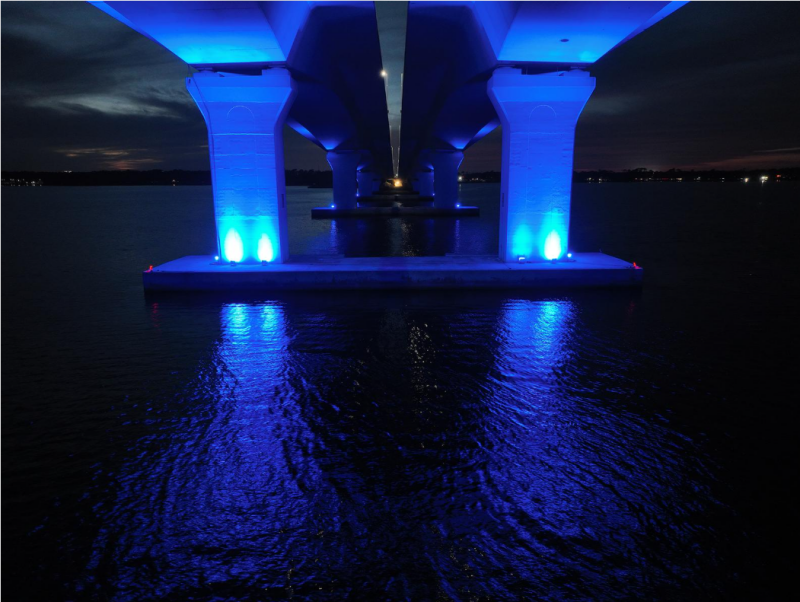
Bridges are important architectural and infrastructure structures. At night, lighting can highlight bridge piers, columns, arches and selected structural details, making the bridge more visually recognizable.
LED inground lights can be installed around the base of bridge piers or in suitable surrounding areas to create upward illumination.
Lighting Design for Bridge Piers
Bridge piers are often tall and visually prominent. Their dimensions and surface materials influence the required beam distribution and light output.
Design considerations include:
Measure the height and width of each pier.
Evaluate the distance between the proposed fixture position and the illuminated surface.
Select a suitable beam angle for the target area.
Consider whether narrow-beam or medium-beam optics are more appropriate.
Position fixtures to reduce unwanted light spill.
Coordinate uplighting with bridge railing, deck and surrounding landscape lighting.
For tall and relatively narrow piers, narrow-beam optics may help concentrate light on the vertical surface. Wider structures may require multiple fixtures or a broader optical distribution.
Lighting Arches and Curved Structures
Bridge arches and curved structural elements require careful fixture positioning.
A single ground-level fixture may not illuminate the entire structure evenly. Multiple lighting positions or different beam distributions may be needed to reveal the shape of the arch.
The lighting designer should evaluate the structure from different viewing angles, especially from roads, pedestrian areas and nearby public spaces.
Important Considerations for Bridge Projects
Bridge lighting installations may face challenging environmental conditions, including rainwater, vibration, moisture, temperature changes and restricted maintenance access.
Before selecting LED inground lights, confirm:
Suitable ingress protection for the actual exposure conditions
Corrosion resistance of the housing and exposed components
Appropriate cable and connection protection
Drainage and underground installation conditions
Access for inspection and replacement
Compatibility with the project's electrical and control systems
For bridges near rivers, coastal areas or other high-moisture environments, material selection and drainage design deserve additional attention.
3. LED Inground Lighting for Architectural Columns and Pillars
Columns and pillars are common features in hotels, commercial buildings, government buildings, museums and public spaces.
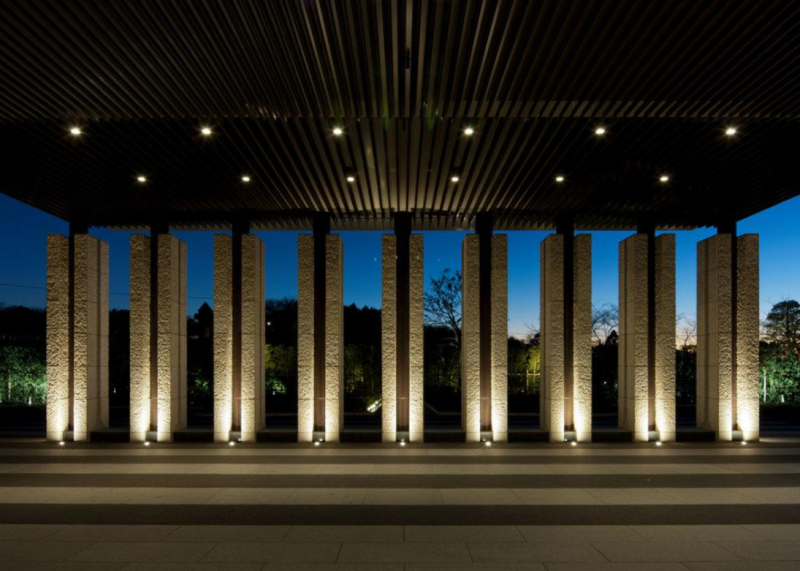
Architectural column lighting can create a strong vertical visual effect by illuminating the structure from its base.
Narrow-Beam Uplighting for Tall Columns
Narrow-beam LED inground lights are often considered for tall and relatively narrow columns.
They help concentrate light toward a specific vertical area instead of spreading it too widely across the surrounding facade.
Typical beam angle options may include:
| Beam Angle | General Lighting Application |
|---|---|
| 5°–10° | Very narrow architectural accents and selected tall, narrow surfaces |
| 10°–15° | Narrow column uplighting and concentrated structural details |
| 30° | Medium-width columns and architectural surfaces |
| 45° | Wider columns and broader vertical illumination |
| 60° | Broad surfaces where wider light distribution is required |
These are general planning references, not guaranteed performance ranges. The actual illuminated area and intensity depend on fixture output, optics, installation distance and target geometry.
Related Blog: How to Calculate LED Inground Light Spacing for Landscape Projects?
Highlighting Column Textures
Some architectural columns use stone, concrete, metal or decorative finishes.
The direction of the light can influence how these materials appear at night.
For textured stone or concrete, carefully positioned uplighting may reveal surface depth and texture. For smooth surfaces, a more uniform lighting distribution may be preferred.
Lighting designers should consider the material's reflectance, surface finish and color before finalizing the beam direction.
Single Fixture or Multiple Fixtures?
The number of fixtures depends on column size, height, desired uniformity and optical performance.
A small column may be illuminated by one fixture when the output and beam distribution are suitable. Wider or taller columns may require multiple fixtures positioned around the base.
For symmetrical columns, a balanced fixture layout can help create a consistent appearance. A night-time mock-up is recommended for important architectural projects.
4. Architectural LED Inground Lighting for Building Entrances
Building entrances are important visual features in commercial buildings, hotels, museums and public architecture.
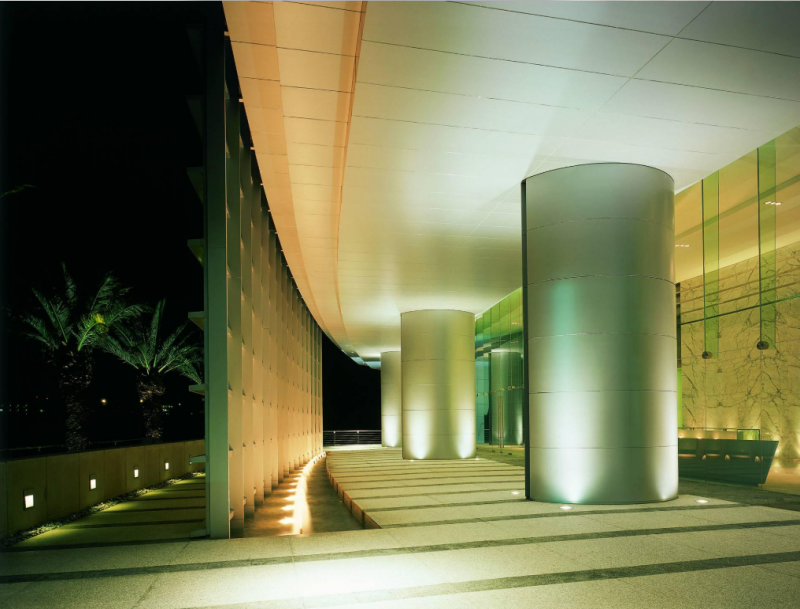
LED inground lights can highlight entrance columns, recessed walls, decorative structures and architectural details.
A good entrance lighting design should create visual emphasis without causing excessive brightness or glare.
Recommended design considerations:
Highlight the main entrance columns or architectural features.
Use narrow beams for selected details and wider beams for broader surfaces.
Coordinate ground uplighting with canopy lights and wall washers.
Avoid directing light toward approaching pedestrians and drivers.
Maintain a consistent color temperature across connected architectural elements.
Consider the visual effect from both close-up and distant viewing positions.
For entrances with irregular architectural structures, adjustable LED inground lights may provide additional aiming flexibility.
For regular and symmetrical structures, fixed LED inground lights may be a practical option when the beam direction is clearly defined before installation.
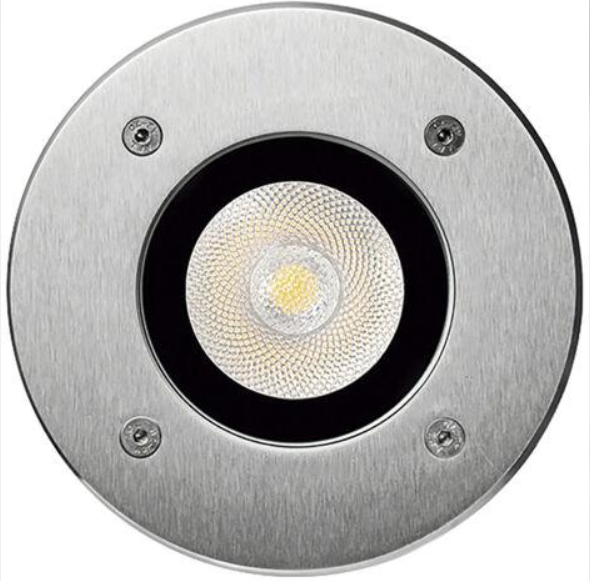
5. LED Inground Lighting for Landscape and Decorative Structures
Architectural lighting is not limited to buildings and bridges. LED inground lights can also be used to illuminate sculptures, stone features, landscape walls, garden structures and other decorative elements.
Landscape Walls and Stone Structures
For landscape walls, the fixture position and beam distribution determine how much of the vertical surface is illuminated.
A narrow beam may emphasize a selected feature, while a wider distribution can cover a larger surface.
For stone walls with irregular textures, the lighting direction can be used to reveal the surface details.
Sculptures and Decorative Features
Sculptures often have irregular shapes and different viewing angles.
Adjustable LED inground lights can help direct light toward specific parts of a sculpture. Multiple fixtures may be required to reduce unwanted shadows and improve the overall visual effect.
Landscape Columns and Entrance Features
Landscape columns, garden pillars and decorative structures can be highlighted with ground-level uplighting.
Fixture selection should consider the dimensions of the feature, surrounding plants, drainage and future landscape maintenance.
6. How to Choose the Right Beam Angle for Long-Distance Architectural Uplighting
Beam angle is one of the most important factors in architectural LED inground lighting.
A narrow beam concentrates light into a smaller area, while a wider beam distributes light across a larger area.
However, choosing a narrow beam alone does not guarantee sufficient illumination at a long distance.
The actual result also depends on:
LED power and lumen output
Optical efficiency
Lens or reflector design
Beam intensity distribution
Distance between the fixture and target
Target surface dimensions and reflectance
Ambient lighting conditions
Related Blog:How to Choose the Right Beam Angle for LED Inground Lights?
Understanding Beam Spread
For an idealized symmetrical beam, the approximate beam diameter can be estimated using:
Beam Diameter = 2 × Distance × tan(Beam Angle ÷ 2)
For example, a 10° beam has an approximate diameter of 1.05 m at a distance of 6 m.
This is a simplified geometric estimate based on the stated beam angle. It does not represent the complete light distribution or guarantee a specific illuminance level.
For tall columns, bridge piers and large building structures, designers should review the manufacturer's IES or LDT photometric files to evaluate actual light distribution and target illuminance.
Narrow Beam vs Medium Beam
| Lighting Requirement | Possible Optical Choice |
|---|---|
| Tall, narrow architectural column | Narrow beam |
| Selected bridge pier details | Narrow or medium beam |
| Medium-width building entrance column | Medium beam |
| Broad architectural surface | Medium or wide beam |
| Irregular decorative structure | Suitable adjustable optical arrangement |
The final beam angle should be selected according to the actual structure and lighting effect rather than using the same specification for every installation position.
7. How to Improve Lighting Uniformity and Reduce Light Spill
Architectural uplighting should emphasize the structure without creating unnecessary glare or excessive light spill.
Common lighting problems include:
Excessive brightness near the bottom of a column
Dark areas near the top of a tall structure
Uneven illumination across a bridge pier
Light spilling onto nearby windows or roads
Direct glare from visible light sources
Overlapping beams that create unwanted hotspots
To reduce these problems:
1. Check the fixture-to-target distance.
The distance between the fixture and the illuminated structure influences beam spread and light intensity.
2. Select suitable optics.
The beam angle and optical distribution should match the target width and height.
3. Plan multiple fixture positions when necessary.
Large structures may need several lighting points to achieve the desired visual balance.
4. Consider shielding and aiming.
Use suitable optical accessories where available, and avoid directing light toward unwanted viewing areas.
5. Review the lighting at night.
A sample installation or lighting mock-up can reveal problems that may not be obvious in daytime drawings.
For important projects, lighting simulation and on-site testing should be used together to verify the final result.
Related Blog: Why Do LED Inground Lights Create Uneven Lighting on Walls and Trees?
8. Outdoor Reliability: What Should You Check Before Selecting LED Inground Lights?
Architectural LED inground lights are installed close to the ground and may be exposed to rain, moisture, dust, temperature changes and physical impact.
For large outdoor projects, reliability depends on the complete fixture design and installation system.
Waterproof Protection
Check the fixture's IP rating and confirm that it is appropriate for the actual installation conditions.
IP67 and IP68 products may be considered for different outdoor exposure conditions, but the exact test conditions and manufacturer's installation requirements should be reviewed.
An IP rating alone does not guarantee that every underground cable connection, junction box or installation detail is protected.
Housing Material and Corrosion Resistance
The housing material should be selected according to the project environment.
For coastal or high-humidity locations, consider the material grade, surface treatment, exposed fasteners and potential galvanic corrosion between dissimilar metals.
Do not evaluate corrosion resistance based on material names alone. The complete construction and finishing process also matter.
Thermal Management
LED performance and service life are influenced by operating temperature.
Inground fixtures have limited space for heat dissipation, and the surrounding ground or mounting structure may affect operating conditions.
Check the manufacturer's thermal design, rated operating temperature and installation requirements. Avoid covering heat-dissipation surfaces or installing the fixture contrary to the specified instructions.
Cable Connections and Drainage
Water may enter through damaged cables, poorly protected connections or unsuitable underground junction arrangements.
Good installation practice should include:
Suitable cable glands and connection systems
Correctly protected underground junctions
Appropriate drainage around the fixture
Proper mounting sleeve and foundation preparation
Inspection access for future maintenance
For bridge and large architectural projects, these details should be included in the construction drawings rather than left entirely to the final installation stage.
9. How to Select LED Inground Lights for Architectural Projects
Before purchasing LED inground lights for bridges, columns or architectural structures, project designers and contractors should evaluate the following specifications.
| Selection Item | What to Confirm |
|---|---|
| Power and lumen output | Is the light output suitable for the target structure? |
| Beam angle | Does the distribution match the target height and width? |
| Optical performance | Are IES or LDT files available? |
| Color temperature | Does it match the architectural lighting concept? |
| CRI | Is accurate color rendering important for the illuminated material? |
| Input voltage | Is the fixture compatible with the project's electrical system? |
| IP rating | Is it suitable for the actual outdoor exposure? |
| Housing material | Is it suitable for the local environment? |
| Installation dimensions | Are diameter, depth and mounting requirements compatible with the site? |
| Control system | Is dimming or RGB/RGBW control required? |
| Maintenance | Can the fixture be accessed, inspected and replaced? |
For large architectural projects, it is recommended to confirm the fixture specifications, photometric files and installation details before mass production or installation.
A sample fixture can also be tested on the actual structure to verify the beam direction and visual effect.
Related Blog: Fixed vs Adjustable LED Inground Lights: Which Design Is Better for Architectural Uplighting?
Related Blog: Why Do LED Inground Lights Fail After Heavy Rain?
10. Architectural LED Inground Lighting Solutions for Your Project
Bridges, architectural columns, building entrances and landscape structures all require different lighting approaches.
Narrow-beam LED inground lights can help concentrate illumination on selected vertical structures, while medium or wider beam options may be more suitable for broader surfaces. Multiple fixtures and carefully planned installation positions can help achieve a balanced architectural lighting effect.
However, successful outdoor performance also depends on suitable waterproof protection, thermal management, corrosion resistance, cable connections and drainage.
At Always Lighting, we provide outdoor LED lighting solutions for architectural and landscape applications.
If you are planning a bridge lighting project, building facade, entrance column or landscape structure, share your project drawings, target dimensions, installation conditions and lighting requirements with our team.
We can help evaluate suitable LED inground lighting options for your application.
Contact Us Always Lighting to discuss your architectural LED inground lighting project.
Frequently Asked Questions
1. What is architectural LED inground lighting?
Architectural LED inground lighting uses ground-recessed LED fixtures to illuminate buildings, bridges, columns, entrance structures and landscape features from below. It is commonly used to highlight vertical surfaces and architectural details.
2. Which beam angle is best for architectural LED inground lighting?
The suitable beam angle depends on the target structure and fixture distance. Narrow beams such as 5°, 10° or 15° may be considered for selected tall and narrow structures, while 30°, 45° or wider beams may be more suitable for broader surfaces. Actual photometric performance should be checked before selection.
3. Can LED inground lights illuminate tall bridge piers?
Yes. LED inground lights can be used to illuminate bridge piers from the ground upward. Designers should evaluate pier height, fixture distance, beam intensity, environmental conditions and maintenance access.
4. How do you illuminate tall architectural columns from the ground?
First, measure the column dimensions and the distance available for fixture installation. Then select suitable beam optics and light output. Depending on column height and width, one or multiple fixtures may be required. Photometric simulation and on-site testing can help verify the result.
5. Are narrow-beam LED inground lights suitable for long-distance lighting?
They can be suitable when concentrated illumination is required. However, a narrow beam alone does not guarantee sufficient brightness at a long distance. Lumen output, beam intensity, optical efficiency and target reflectance must also be considered.
6. What IP rating is recommended for outdoor architectural LED inground lights?
The required IP rating depends on the actual exposure conditions and installation design. IP67 or IP68 may be considered for different outdoor environments, but buyers should confirm the manufacturer's test conditions and installation instructions.
7. Can LED inground lights be used for coastal bridge lighting?
Yes, if the selected fixtures and installation system are suitable for the coastal environment. Material grade, corrosion protection, cable connections, sealing and maintenance should all be evaluated.
8. What information is needed to select LED inground lights for an architectural project?
Useful information includes structure height and width, installation distance, target surface material, required lighting effect, beam angle, color temperature, installation environment, input voltage and control requirements. Drawings and site photos can help manufacturers evaluate suitable models.
9. Should fixed or adjustable LED inground lights be used for architectural structures?
Fixed fixtures are suitable when the lighting direction is clearly defined and the structure has a regular layout. Adjustable fixtures may be more useful for irregular structures or locations where aiming flexibility is required. The actual adjustment range and maintenance method should be confirmed with the manufacturer.
Planning a large outdoor lighting project? Read our guide on How to Evaluate an LED Inground Light Manufacturer for Large Outdoor Projects.