
- 03 Nov 2026
LED Landscape Inground Lighting for Trees and Gardens
How to Use LED Inground Lights for Trees, Gardens and Landscape Features?
Landscape lighting plays an important role in creating attractive outdoor environments for hotels, resorts, residential gardens, parks and commercial properties. Among the different outdoor lighting options, LED inground lights are widely used to illuminate trees, shrubs, garden features and selected landscape structures from the ground upward.
With the right fixture position, beam angle and color temperature, LED landscape inground lighting can reveal tree textures, highlight plant shapes and create depth throughout a garden.
However, different landscape elements require different lighting approaches. A tall tree with a wide canopy does not need the same lighting arrangement as a small shrub or a garden pathway.
The best LED landscape inground lighting design combines suitable beam distribution, carefully selected fixture positions and balanced light levels to highlight natural features without creating excessive glare or light pollution.
This guide explains how to use LED inground lights for tree trunks, tree canopies, shrubs, garden features and pathways.
1. Why Use LED Inground Light for Landscape Lighting?
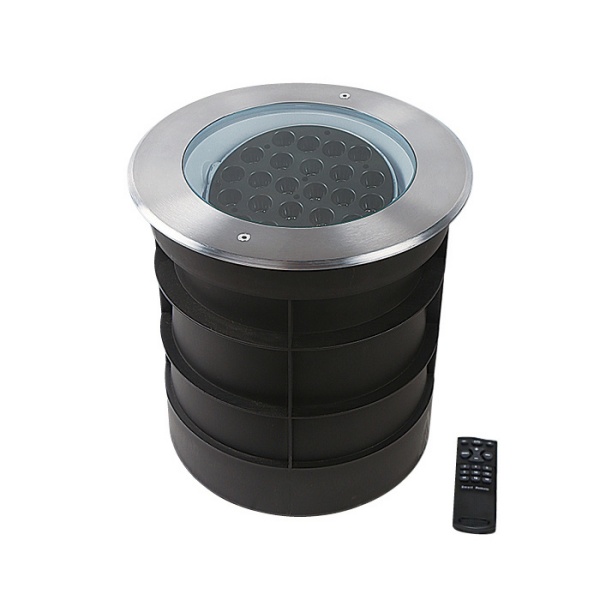
LED inground lights are designed to be installed in the ground or integrated into suitable outdoor surfaces. They direct light upward and can create attractive lighting effects on natural and architectural landscape features.
They are commonly used in:
Hotel and resort gardens
Residential landscape projects
Public parks and outdoor green spaces
Commercial building landscapes
Garden pathways and entrances
Trees, shrubs and decorative landscape features
Key advantages include:
1. Discreet installation
Ground-recessed fixtures can be integrated into paving, planting areas and landscape surroundings, helping maintain a clean daytime appearance.
2. Directional uplighting
LED inground lights can direct light toward tree trunks, branches, garden walls and selected landscape features.
3. Flexible lighting effects
Different beam angles, power levels and color temperatures can create different visual effects for various plants and garden structures.
4. Architectural and natural integration
Landscape inground lighting can work together with wall washers, bollard lights, garden spotlights and pathway lighting to create a coordinated outdoor lighting design.
2. How to Illuminate Tree Trunks with LED Inground Lights
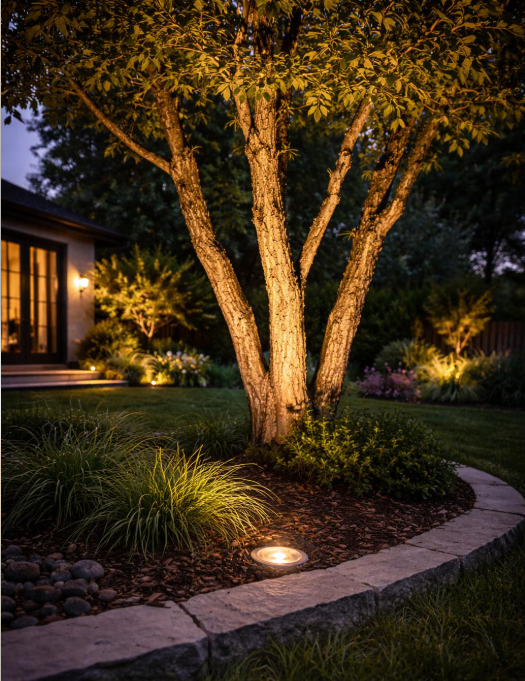
Tree trunk uplighting is one of the most common applications of LED landscape inground lighting.
It helps emphasize the height, shape and surface texture of a tree, making it a visual focal point at night.
Lighting Design for Tree Trunks
For trees with straight and relatively narrow trunks, a carefully positioned narrow or medium-beam LED inground light can create a concentrated vertical lighting effect.
For wider trunks or trees with irregular shapes, multiple fixtures or wider beam distributions may be more suitable.
Recommended considerations:
Position the fixture near the tree base while allowing enough space for root protection.
Select the beam angle according to trunk width and target height.
Consider the bark texture and surface color.
Avoid directing light toward nearby windows or pedestrian viewing positions.
Keep fixtures accessible for inspection and maintenance.
Related Blog: How to Choose the Right Beam Angle for LED Inground Lights?
One Light or Two Lights for a Tree?
The number of fixtures depends on the tree's size, trunk shape, lighting effect and fixture output.
| Tree Type | Possible Lighting Approach |
|---|---|
| Small ornamental tree | One suitable LED inground light |
| Medium-sized tree | One or two fixtures, depending on trunk dimensions |
| Large tree | Multiple fixtures around selected sides |
| Wide or irregular trunk | Multiple aiming positions may be needed |
| Decorative specimen tree | A combination of trunk and canopy lighting |
These are preliminary design ideas rather than fixed installation standards. The final fixture quantity should be confirmed through photometric planning and an on-site lighting test
.
3. How to Illuminate Tree Canopies and Branches
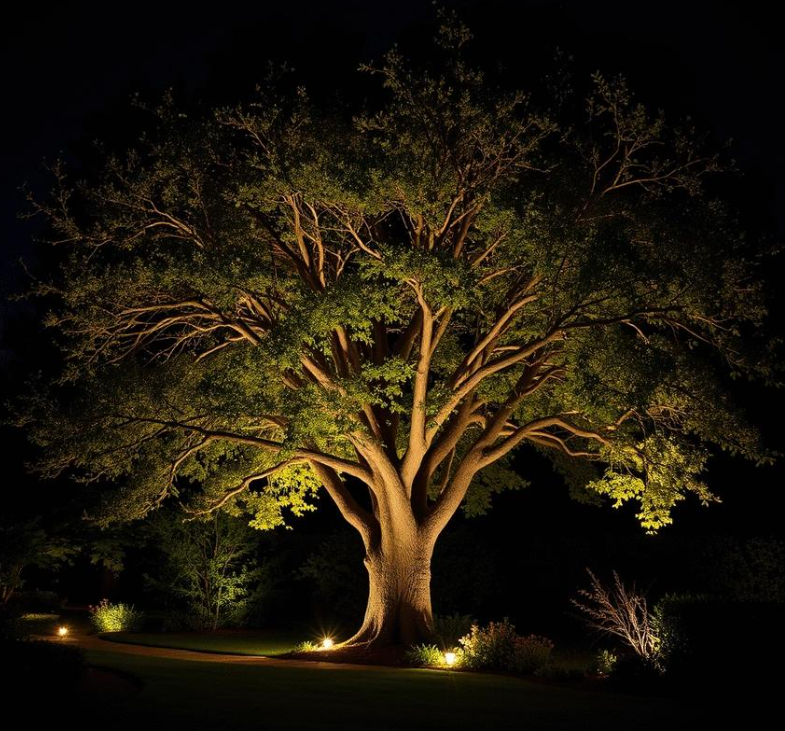
Tree canopy lighting creates a different visual effect from trunk uplighting.
Instead of focusing only on the trunk, canopy lighting emphasizes branches, leaves and the overall shape of the tree.
This approach is especially useful for large landscape trees in hotel gardens, resorts, parks and outdoor public spaces.
Use Suitable Beam Distribution
A narrow beam may highlight selected branches or create a focused lighting effect.
A medium or wider beam may be more suitable for trees with broad canopies.
The actual choice depends on:
Tree height and canopy width
Branch density
Leaf coverage
Fixture-to-tree distance
Desired lighting effect
Surrounding viewing positions
Consider Seasonal Changes
Deciduous trees change significantly throughout the year.
In summer, dense leaves may block light and create shadows. In winter, the branches become more visible, producing a completely different lighting appearance.
When designing canopy uplighting, consider how the tree will look in different seasons.
Related Blog: Why Do LED Inground Lights Create Uneven Lighting on Walls and Trees?
Avoid Excessive Light Spill
Tree canopy lighting should highlight the tree without unnecessarily illuminating nearby buildings, roads or windows.
Careful fixture aiming and suitable optical control can help reduce unwanted light spill.
For projects near residential areas or environmentally sensitive locations, consider local lighting regulations and measures to limit light pollution.
4. How to Illuminate Shrubs, Bushes and Garden Plants
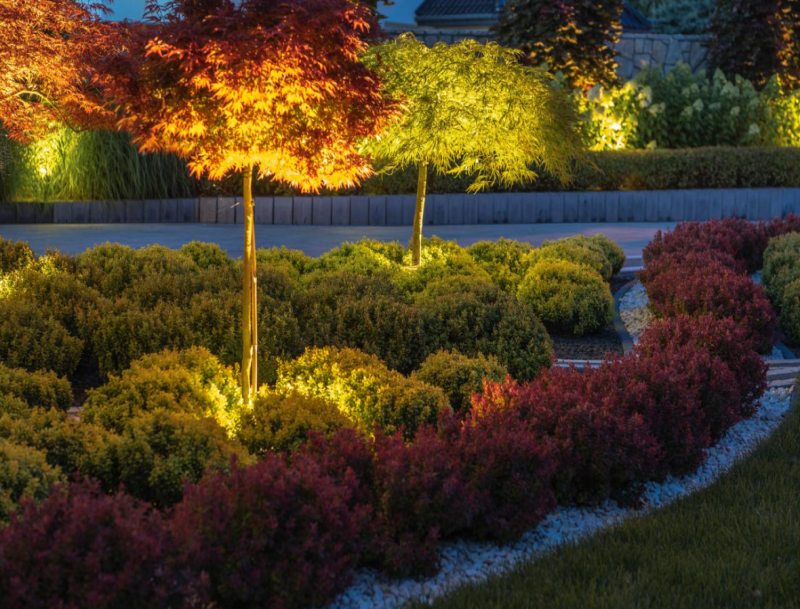
Shrubs and low-growing plants help create depth and visual layers in landscape design.
LED inground lights can be positioned near selected planting areas to highlight plant shapes, foliage textures and garden borders.
Lighting Small Shrubs
Small shrubs generally require a controlled and relatively low-level lighting effect.
A suitable wider beam may help illuminate the foliage without creating excessive brightness in a small area.
Lighting Decorative Bushes
For decorative bushes with distinctive shapes, lighting from one side can reveal the plant's outline and create natural shadows.
The fixture should be positioned to avoid unnecessary light shining directly toward pedestrians.
Lighting Garden Borders
For planting borders along walls, paths or entrances, a coordinated arrangement of fixtures can help create a consistent landscape appearance.
However, avoid placing lights too close to plants where growing roots, irrigation systems or regular gardening activities may affect the fixtures.
Important: Plants grow and change over time. Fixture locations should allow for future pruning, irrigation, soil maintenance and replacement.
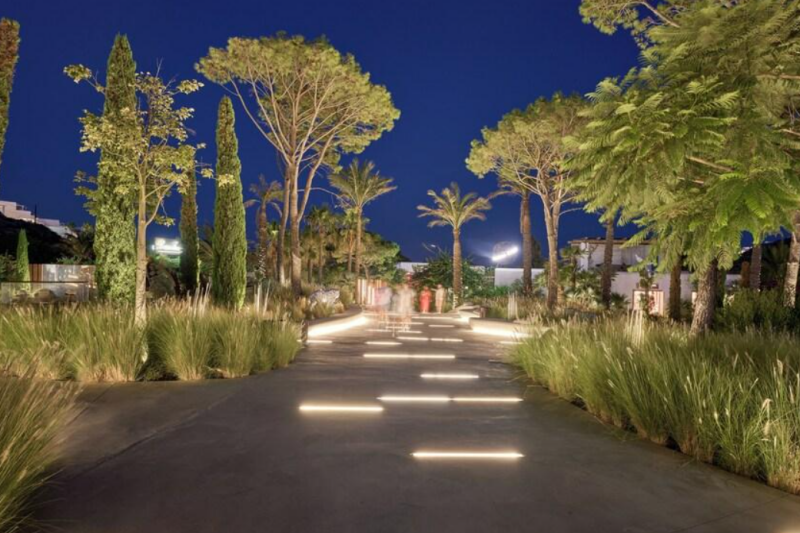
5. How to Use LED Inground Lights for Garden Pathways
Garden pathway lighting has both decorative and functional purposes.
LED inground lights can be used to highlight pathway edges, nearby planting areas and selected landscape features.
They can create a subtle visual guide through the garden, especially when combined with bollard lights or other low-level luminaires.
Recommended design considerations:
Position fixtures outside the main walking line where possible.
Avoid directing bright beams toward pedestrians.
Maintain a consistent visual rhythm along the pathway.
Consider the walking surface and surrounding landscape.
Use additional functional lighting when required for safe navigation.
Avoid creating excessive bright and dark transitions.
LED inground lights should not automatically be treated as a replacement for all pathway lighting. If the pathway requires a defined functional illuminance level, the complete lighting design should be evaluated using suitable photometric data.
6. How to Choose the Right Beam Angle for Landscape Inground Lighting
Beam angle determines how widely the light is distributed.
Different landscape elements require different lighting distributions.
| Beam Angle | Possible Landscape Application |
|---|---|
| 10° | Narrow tree trunks and selected branches |
| 15° | Focused tree uplighting and landscape accents |
| 30° | Medium-sized trees, shrubs and garden features |
| 45° | Wider planting areas and selected landscape surfaces |
| 60° | Broad landscape features where wider distribution is needed |
These are general starting points, not fixed rules. The actual illuminated area depends on light output, optical design, fixture distance and target dimensions.
Understand Beam Spread
For an idealized symmetrical beam, the approximate beam diameter can be estimated using:
Beam Diameter = 2 × Distance × tan(Beam Angle ÷ 2)
For example, a 30° beam has an approximate diameter of 1.07 m at a distance of 2 m.
This calculation provides a preliminary geometric estimate. It does not represent the complete beam distribution or guarantee a specific illuminance level.
For larger landscape projects, IES or LDT photometric files can help lighting designers evaluate the actual light distribution and plan fixture positions more accurately.
Related Blog: How to Calculate LED Inground Light Spacing for Landscape Projects?
7. How to Create a Layered Landscape Lighting Effect
A well-designed garden should not look flat or uniformly bright at night.
Instead, different landscape elements can be illuminated at different levels to create visual depth.
A practical landscape lighting plan may include four layers:
Layer 1: Focal Point Lighting
Highlight important trees, sculptures, decorative stones or distinctive landscape features.
Use carefully aimed LED inground lights to create visual emphasis.
Layer 2: Vertical Landscape Lighting
Illuminate selected tree trunks, garden walls and architectural elements to create depth and structure.
Layer 3: Planting and Garden Lighting
Use suitable low-level lighting to reveal shrubs, planting borders and garden textures.
Layer 4: Pathway and Navigation Lighting
Provide visual guidance along garden paths and pedestrian routes.
Coordinate inground lights with bollards or other functional lighting where necessary.
The goal is to create a balanced relationship between focal points, background elements and circulation areas rather than making every landscape feature equally bright.
8. How to Choose Color Temperature for Trees and Gardens
Color temperature influences the atmosphere of outdoor landscape lighting.
Warm white is commonly used in hospitality and residential gardens, while neutral white may suit certain contemporary architectural landscapes.
| Color Temperature | Typical Landscape Effect | Possible Applications |
|---|---|---|
| 2700K | Warm and intimate | Luxury gardens, resorts and residential landscapes |
| 3000K | Warm and balanced | Hotel gardens, trees and landscape features |
| 4000K | Neutral and modern | Contemporary commercial landscapes |
| RGB | Dynamic color effects | Decorative landscape features and selected event areas |
| RGBW | Color effects plus a dedicated white channel | Flexible landscape and architectural lighting scenes |
For most natural landscape applications, warm white lighting is often a suitable starting point.
RGB or RGBW fixtures can be considered when the project requires dynamic color scenes. For RGBW products, confirm the white-channel CCT, CRI, output and control compatibility.
The selected color temperature should also consider plant colors, nearby architectural materials and the overall landscape design.
9. Outdoor Installation and Maintenance Considerations
Landscape inground lights are exposed to rain, soil moisture, irrigation water, dust and temperature changes.
Their long-term performance depends on both fixture quality and installation conditions.
Waterproof Protection
Check the IP rating and confirm that it matches the actual environmental conditions.
IP67 and IP68 products may be suitable for different outdoor exposure conditions, but their exact test conditions and installation requirements should be verified.
An IP rating does not automatically protect every cable connection or underground junction box.
Drainage and Ground Conditions
Avoid installing fixtures in locations where water regularly accumulates unless the product and installation system are specifically designed for those conditions.
Check soil drainage, underground cable routing and the manufacturer's mounting sleeve requirements.
Housing Material
Consider corrosion resistance according to the environment.
For coastal gardens or areas with irrigation and fertilizer exposure, evaluate the housing material, surface treatment and exposed metal components carefully.
Thermal Management
LED inground lights operate in a relatively confined installation environment.
Check the manufacturer's operating temperature specifications and installation requirements. Do not block designed heat-dissipation structures.
Landscape Maintenance
Garden maintenance can affect underground fixtures.
Allow for:
Root growth
Soil movement
Irrigation and drainage systems
Lawn mowing and gardening equipment
Seasonal pruning and plant replacement
Future fixture inspection and replacement
Plan fixture locations to minimize conflicts with routine landscape maintenance.
Related Blog: Why Do LED Inground Lights Fail After Heavy Rain?
10. How to Select LED Inground Lights for Landscape Projects
Before choosing products for a garden, park or resort, consider the following specifications.
| Selection Item | What to Check |
|---|---|
| Power and lumen output | Suitable for the size and type of landscape feature |
| Beam angle | Appropriate for trunk, canopy, shrubs or pathway applications |
| Optical distribution | IES or LDT files where available |
| Color temperature | Consistent with the landscape design concept |
| CRI | Important when accurate color appearance is required |
| IP rating | Suitable for outdoor exposure and installation conditions |
| Housing material | Appropriate for soil, moisture and local environmental conditions |
| Input voltage | Compatible with the electrical system |
| Fixture dimensions | Suitable for the available installation space |
| Maintenance | Accessible for cleaning, inspection and replacement |
| Control options | Dimming, RGB or RGBW when required |
For professional projects, it is recommended to test representative fixtures on-site before installing the complete lighting system.
A night-time mock-up can help designers evaluate the lighting effect on actual trees and landscape materials.
Related Blog: Fixed vs Adjustable LED Inground Lights: Which Design Is Better for Architectural Uplighting?
11. Create Beautiful Outdoor Spaces with LED Landscape Inground Lighting
LED landscape inground lighting can transform trees, gardens and outdoor spaces by revealing natural textures, emphasizing landscape features and creating visual depth.
For tree trunks, narrow or medium beams can create focused vertical illumination. For broad tree canopies and shrubs, wider optical distributions may be more suitable. Garden pathways require careful attention to visual comfort and functional navigation.
A successful landscape lighting design should combine suitable beam angles, fixture positions, color temperatures and outdoor protection.
At Always Lighting, we provide outdoor LED lighting solutions for landscape and architectural applications.
If you are planning a hotel garden, resort landscape, park lighting or residential outdoor project, share your landscape drawings, tree dimensions, installation conditions and lighting requirements with our team.
We can help evaluate suitable LED inground lighting options for your application.
Contact UsAlways Lighting to discuss your LED landscape inground lighting project.
Frequently Asked Questions
1. What is LED landscape inground lighting?
LED landscape inground lighting uses ground-recessed LED fixtures to illuminate trees, shrubs, garden features, landscape walls and selected outdoor structures from below. It is commonly used in gardens, parks, hotels and resorts.
2. Which beam angle is best for tree uplighting?
The best beam angle depends on tree height, trunk width, canopy size and fixture distance. Narrow beams such as 10° or 15° may suit selected trunks and branches, while 30° or wider beams may be more suitable for broader landscape features.
3. How many LED inground lights are needed for one tree?
The number depends on tree size, shape, fixture output and the desired lighting effect. A small tree may need one fixture, while a large or irregular tree may require multiple fixtures. A site test is recommended for important landscape projects.
4. Can LED inground lights illuminate tree canopies?
Yes. LED inground lights can illuminate branches and canopies from below. Suitable beam distribution and fixture positions are important because dense foliage may block light and create shadows.
5. What color temperature is best for garden landscape lighting?
2700K and 3000K are commonly considered for warm and welcoming garden environments. 4000K may suit certain modern commercial landscapes. The final choice should match the plants, architecture and overall lighting design.
6. Can LED inground lights be used along garden pathways?
Yes. They can highlight pathway edges and nearby landscape features. However, designers should consider glare, walking comfort and the required functional illumination. Additional pathway lighting may be needed.
7. How do you prevent glare in landscape inground lighting?
Use suitable beam angles, carefully selected fixture positions and appropriate optical shielding where available. Avoid directing light toward pedestrian viewing positions, nearby windows or roads.
8. Are LED inground lights suitable for gardens with irrigation systems?
They can be used when the fixture and installation system are suitable for the exposure conditions. Confirm the IP rating, cable connection protection, drainage and installation requirements. Avoid assuming that an IP-rated fixture eliminates all water-related installation risks.
9. What should I consider when buying LED landscape inground lights?
Check power, lumen output, beam angle, color temperature, IP rating, housing material, installation dimensions, cable connections and maintenance requirements. For larger projects, request photometric files and technical drawings.
Looking for professional LED inground lighting solutions? Contact Always Lighting to discuss your project requirements and product selection.Request LED Inground Lighting Solutions