
- 02 Sep 2026
How to Choose the Right LED Flood Light for Building Facade Lighting?
How to Choose the Right LED Flood Light for Building Facade Lighting?
Introduction
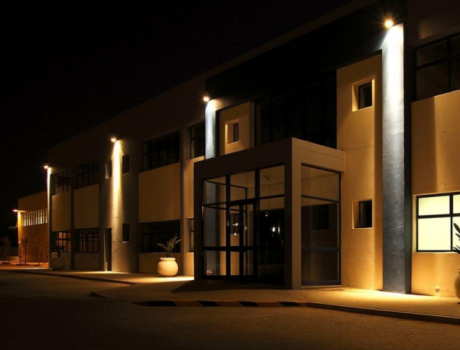
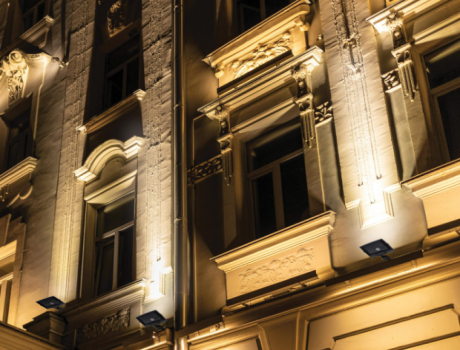
Choosing the right LED flood light for building facade lighting is important for achieving uniform illumination, highlighting architectural details and reducing unnecessary energy consumption. Different buildings require different lighting solutions depending on facade size, building height, installation distance, beam angle, brightness, color temperature and environmental conditions.
For commercial buildings, hotels, government buildings, bridges and landmark architecture, the right LED flood light should provide sufficient brightness, suitable beam distribution, reliable outdoor protection and flexible control options.
This guide explains the key factors to consider when selecting an architectural LED flood light for building facade lighting projects.
What Is an LED Flood Light for Building Facade Lighting?
An LED flood light for building facade lighting is an outdoor lighting fixture designed to illuminate large exterior surfaces, architectural structures and building details.
Compared with traditional floodlights, modern LED flood lights offer higher energy efficiency, longer service life and more flexible optical and control options.
For architectural projects, LED flood lights can be used for:
Building facades
Hotels
Commercial buildings
Government buildings
Bridges
Museums
Historical buildings
Villas
Monuments and landmarks
Landscape structures
For projects requiring dynamic effects, RGB and RGBW LED flood lights with DMX512 control can create color-changing and programmed facade lighting effects.
7 Key Factors When Choosing an LED Flood Light for a Building Facade
1. Choose the Right LED Flood Light Wattage
Wattage is one of the first specifications considered when selecting an outdoor LED flood light.
However, higher wattage does not always mean better lighting.
The required power depends on:
Building height
Facade size
Installation distance
Surface material and color
Required illuminance
Beam angle
Number of fixtures
For example, a small villa facade may require lower-power fixtures, while a high-rise commercial building may require higher-output LED flood lights.
Therefore, lighting designers should consider lumens and beam distribution together with wattage, rather than choosing a fixture based only on watts.
2. Check Lumens and Lighting Efficiency
Lumens indicate the amount of visible light produced by an LED flood light.
For building facade lighting, the required lumen output depends on the size and reflectivity of the facade and the desired lighting effect.
A high-quality architectural LED flood light should provide:
Stable light output
High luminous efficiency
Good color consistency
Long-term performance
Suitable optical distribution
For example, a 36W architectural LED flood light with approximately 3600 lumens can be suitable for certain building facade applications, depending on mounting height, beam angle and project requirements.
Important: Lumens alone do not determine whether a flood light is suitable. Beam angle and installation distance are equally important.
How to Choose the Right Beam Angle?
Beam angle is one of the most important factors in facade floodlighting.
A narrow beam concentrates light into a smaller area, while a wider beam distributes light across a larger facade.
Typical beam angle applications
| Beam Angle | Typical Application |
|---|---|
| 7°–15° | Columns, architectural details, long-distance accent lighting |
| 15°–25° | Narrow facades and vertical architectural elements |
| 25°–40° | Building facades and medium-distance lighting |
| 40°–60° | Wide facade illumination |
| 60°–90° | Large-area and short-distance lighting |
For example:
Narrow beam:
Suitable for highlighting columns, towers and architectural details.
Medium beam:
Suitable for general building facade illumination.
Wide beam:
Suitable for large walls and short installation distances.
You can create a dedicated supporting article:
How to Choose Beam Angle for LED Flood Light?
Then link this article to your LED Flood Light product pages.
Choose the Correct IP Rating for Outdoor Facade Lighting
Building facade lighting fixtures are exposed to rain, dust, humidity and changing outdoor temperatures.
Therefore, the IP rating is an important consideration.
For outdoor architectural projects, IP65, IP66 and IP67 LED flood lights may be considered depending on the installation environment.
IP Rating Comparison
| IP Rating | Typical Use |
|---|---|
| IP65 | Outdoor areas with dust and water jets |
| IP66 | More demanding outdoor facade environments |
| IP67 | Applications requiring temporary water immersion protection |
For exposed building facades, IP66 is often a practical choice where strong weather protection is required.
When selecting a fixture, don't consider IP rating alone. Housing construction, cable glands, connectors, thermal management and installation quality also affect long-term reliability.
Choose the Right Color Temperature
Color temperature has a major impact on the appearance of a building at night.
Common choices include:
2700K–3000K
Warm white lighting creates a warm and elegant atmosphere.
Suitable for:
Hotels
Villas
Historic buildings
Restaurants
Premium commercial buildings
4000K
Neutral white provides a clean and modern appearance.
Suitable for:
Office buildings
Commercial buildings
Government buildings
Modern architecture
5000K–6500K
Cool white produces a brighter and more energetic appearance.
It may be suitable for certain modern commercial and industrial applications.
The correct color temperature should be selected according to the architectural style and overall lighting design.
AC220V vs DC24V LED Flood Light
The power supply is another important factor for outdoor building lighting projects.
AC220V LED Flood Light
Advantages:
Direct connection to mains power
Suitable for long-distance power distribution
Simple installation for some large projects
DC24V LED Flood Light
Advantages:
Low-voltage operation
Suitable for projects requiring low-voltage systems
Convenient for certain RGB/RGBW control systems
Useful for applications where safety and centralized control are important
The best voltage depends on project requirements, cable distance, power distribution, control system and local electrical regulations.
For Middle East projects and other hot outdoor environments, thermal management and power supply selection should also be considered carefully.
RGB, RGBW or Single Color?
Not every facade lighting project requires color-changing lighting.
Single Color LED Flood Light
Best for:
Professional architectural lighting
Hotels
Government buildings
Commercial buildings
Permanent facade illumination
RGB LED Flood Light
RGB fixtures can produce multiple colors and are suitable for:
Bridges
Landmarks
Entertainment venues
Festivals
Dynamic architectural lighting
RGBW LED Flood Light
RGBW adds a dedicated white LED channel, providing more accurate white light while maintaining dynamic color effects.
RGBW is particularly useful when a project needs both:
Architectural white lighting + dynamic color-changing effects.
Consider DMX512 Control for Dynamic Facade Lighting
For projects requiring synchronized lighting effects, DMX512 LED flood lights are a practical solution.
DMX512 can be used to control:
Color
Brightness
Color-changing speed
Dynamic effects
Fixture synchronization
Different lighting scenes
This makes DMX512 particularly suitable for:
Bridges
Hotels
Commercial buildings
Landmark buildings
Entertainment venues
Large architectural lighting projects
For simple single-color facade lighting, DMX512 may not be necessary.
How to Select LED Flood Light Based on Building Height?
Building height affects both beam angle and required light output.
Low-rise buildings
For villas and small commercial buildings, lower-power fixtures with medium or wide beam angles may be sufficient.
Medium-height buildings
Hotels and commercial buildings often require carefully selected beam angles and higher-output fixtures.
High-rise buildings
High-rise projects may require:
Higher lumen output
Narrower beam angles
Longer projection distances
Multiple fixture positions
Professional lighting calculations
Instead of simply increasing wattage, designers should optimize fixture position + beam angle + lumen output.
Why Beam Angle and Installation Distance Must Be Considered Together
One of the most common mistakes is selecting an LED flood light only according to wattage.
For example, if the fixture is installed far away from the building, a very wide beam may distribute light over an excessively large area.
A narrow or medium beam may provide better light concentration.
If the fixture is installed close to a wide facade, a wider beam can provide more uniform coverage.
Therefore:
Building height + installation distance + facade width + beam angle + lumen output
should be considered together.
Common Mistakes When Choosing LED Flood Lights
Choosing Only by Wattage
A 100W fixture is not automatically better than a 50W fixture.
The optical system and lumen output are equally important.
Using the Wrong Beam Angle
A beam angle that is too narrow can create hot spots.
A beam angle that is too wide may produce insufficient brightness on the target facade.
Ignoring IP Rating
Outdoor fixtures require suitable protection against water and dust.
Using the Wrong Color Temperature
Color temperature should match the architectural design.
Ignoring Glare
Poor fixture positioning can create uncomfortable glare for pedestrians, drivers and surrounding buildings.
Choosing Products Without Considering Installation Conditions
The environment, mounting position, cable distance, ambient temperature and maintenance requirements should all be considered before final selection.
LED Flood Light Selection Checklist
Before selecting an LED flood light for a building facade project, check:
☑ Building height
☑ Facade width
☑ Installation distance
☑ Required lumen output
☑ Wattage
☑ Beam angle
☑ Color temperature
☑ IP rating
☑ AC or DC voltage
☑ Single color / RGB / RGBW
☑ DMX512 control requirements
☑ Ambient temperature
☑ Glare control
☑ Installation method
☑ Maintenance requirements
This checklist can help lighting designers, contractors and project managers select the right fixture for their application.
Recommended LED Flood Light for Building Facade Projects
For professional architectural lighting projects, Always Lighting provides outdoor LED flood light solutions for different building and facade applications.
The product range can be configured according to:
Power
Lumen output
Beam angle
Color temperature
IP protection
Voltage
RGB/RGBW
DMX512 control
For project-based applications, customers can select different optical configurations according to building height, installation distance and facade design.
Related products
https://www.always-lighting.com/led-flood-light/BuildingFacadeLEDFloodLight/
https://www.always-lighting.com/led-flood-light/architectural-led-flood-light/
https://www.always-lighting.com/led-flood-light/bridge-led-flood-light/
https://www.always-lighting.com/led-flood-light/rgbw-led-flood-light/
Frequently Asked Questions
What is the best LED flood light for building facade lighting?
The best LED flood light depends on building height, facade size, installation distance, required brightness, beam angle, IP rating and lighting effect. There is no single wattage or beam angle suitable for every building.
What beam angle is best for building facade lighting?
A 25°–40° beam angle can be suitable for many building facade applications, while narrower beams are useful for architectural details and wider beams can cover larger surfaces.
How many watts should an LED flood light be for a building facade?
The required wattage depends on building height, installation distance, facade size and required illuminance. Wattage should be evaluated together with lumen output and beam angle.
Is IP66 enough for outdoor LED flood lights?
IP66 can be suitable for many exposed outdoor facade applications because it provides strong protection against dust and powerful water jets. Project conditions should always be considered.
Should I choose RGB or RGBW LED flood lights?
Choose RGB when the project mainly requires dynamic color effects. RGBW is a better option when the project requires both high-quality white lighting and color-changing effects.
Can LED flood lights be controlled by DMX512?
Yes. DMX512-compatible LED flood lights can be integrated into architectural lighting control systems for synchronized brightness, color and dynamic effects.
Is DC24V or AC220V better for building facade lighting?
Neither is universally better. The correct choice depends on the project power distribution, cable distance, control system, installation conditions and local electrical requirements.
How do I choose an LED flood light for a high-rise building?
For high-rise buildings, consider lumen output, narrow or medium beam angles, projection distance, fixture position, glare control and the number of fixtures. Professional photometric calculations are recommended.
Related Blog
https://www.always-lighting.com/Blog/how-to-choose-beam-angle-led-flood-light/