
- 21 Oct 2026
LED Cabinet Lighting Buying Checklist for Display Cabinet Manufacturers
LED Cabinet Lighting Buying Checklist for Display Cabinet Manufacturers
Choosing the right LED cabinet lighting is an important purchasing decision for display cabinet manufacturers, jewelry showcase factories, retail fixture suppliers, and commercial lighting distributors.
The wrong fixture dimensions, incompatible drivers, inconsistent color temperature, or unsuitable light distribution can cause installation problems, additional costs, and delays during cabinet production.
For manufacturers supplying jewelry stores, watch retailers, cosmetic displays, museums, and commercial showrooms, lighting must fit the cabinet design and meet the requirements of the end customer.
The best way to purchase LED cabinet lighting is to confirm five areas before placing a bulk order: mechanical compatibility, optical performance, electrical requirements, supplier capabilities, and product quality.
This guide provides a practical LED cabinet lighting buying checklist to help B2B buyers compare products, request accurate quotations, evaluate samples, and standardize specifications for repeat orders.
1. Define the Application and Cabinet Design
Before requesting quotations, identify exactly where the lighting will be installed and what the cabinet needs to achieve.
Different display applications may require different fixture designs, optical characteristics, and installation arrangements.
Identify the Display Type
Determine whether the project involves:
Jewelry and gold display cabinets.
Diamond and gemstone showcases.
Watch and luxury accessory cabinets.
Cosmetics and beauty product displays.
Museum and exhibition display cases.
General retail shelving and glass showcases.
The displayed merchandise influences the preferred color temperature, color-rendering requirements, beam distribution, and mounting position.
Confirm the Cabinet Structure
Prepare the cabinet drawings or technical dimensions before selecting the lighting.
Important details include:
Cabinet length, depth, and height.
Shelf positions and internal compartments.
Available mounting space.
Glass panel locations and viewing angles.
Frame and panel materials.
Wiring routes and power supply locations.
Access requirements for maintenance.
For custom cabinetry, lighting specifications should be coordinated with cabinet drawings before production begins.
This helps prevent a common purchasing mistake: selecting a fixture based on appearance before confirming whether it can actually fit the cabinet.
2. Choose the Right Type of LED Cabinet Light
Display cabinet lighting is not a single product category. Different fixtures serve different purposes.
LED Cabinet Linear Light
Linear cabinet lights are suitable for consideration when a longer shelf or counter needs continuous illumination.
They can be used in jewelry counters, glass display cases, retail shelves, and cabinet interiors.
When purchasing, check the fixture length, dimensions, mounting method, light distribution, and electrical configuration.
View the Always Lighting LED Cabinet Linear Light.
Mini LED Cabinet Spotlight
Mini spotlights direct light toward selected products or smaller display areas.
They may be appropriate for highlighting rings, pendants, watches, and other featured merchandise.
Buyers should confirm the mounting-hole diameter, installation depth, beam angle, rated power, and driver requirements.
View the Always Lighting 1W Recessed LED Cabinet Spotlight.
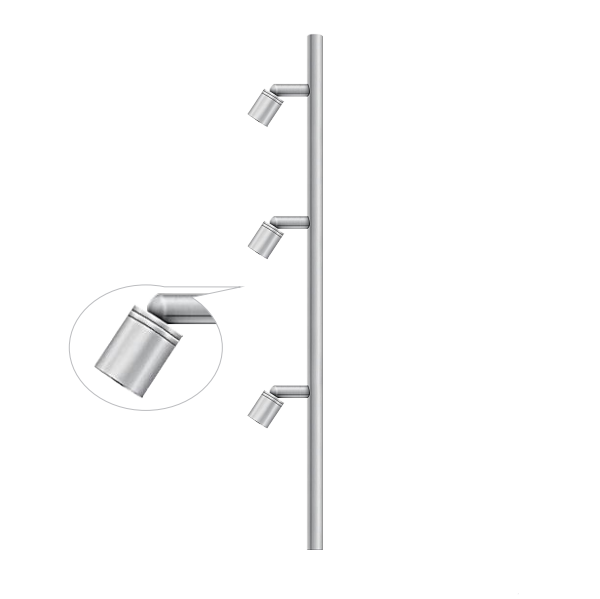
LED Showcase Gantry Light
Gantry lights can integrate illumination with a supporting showcase structure, depending on the cabinet design.
They may suit manufacturers who want to coordinate the lighting fixture, mounting position, frame design, and wiring during production.
View the Always Lighting LED Showcase Gantry Light.
Which Fixture Should You Buy?
| Project Requirement | Fixture Type to Evaluate |
|---|---|
| Long jewelry counter | LED cabinet linear light |
| Focused illumination of individual products | Mini LED cabinet spotlight |
| Lighting integrated into a showcase frame | LED showcase gantry light |
| Mixed jewelry display | Linear lights combined with spotlights |
| Standardized multi-cabinet production | Fixtures with confirmed dimensions and repeatable specifications |
The best choice depends on the cabinet design and intended lighting effect. Test the selected fixture in the actual application before finalizing the specification.
3. Confirm CRI and Color Temperature
For jewelry and premium retail displays, optical requirements should be confirmed before bulk purchasing.
Two important parameters are Color Rendering Index (CRI) and correlated color temperature (CCT).
CRI: How Accurately Does the Light Render Colors?
CRI describes how accurately a light source renders colors compared with a reference source under specified conditions.
For color-sensitive jewelry showcases, CRI 90 or higher is worth evaluating. However, the required value depends on the application and the verified performance of the selected product.
Before ordering, check:
The actual CRI value in the datasheet.
Whether different product models have different CRI specifications.
Whether additional R9 or TM-30 information is available when needed.
Whether the lighting renders the actual merchandise as expected.
Do not assume that every product marketed as a High CRI LED Cabinet Light has the same color-rendering performance.
Review Always Lighting High CRI LED Cabinet Light and confirm the latest specification for the model being considered.
For a more detailed explanation, read What CRI Is Best for Jewelry Display Lighting?.
CCT: Which Color Temperature Should You Specify?
Common color temperature options include 3000K, 4000K, and 6000K.
| Color Temperature | Visual Appearance | Purchasing Consideration |
|---|---|---|
| 3000K | Warm white | May suit gold jewelry displays and warm retail interiors |
| 4000K | Neutral white | Worth evaluating for mixed merchandise |
| 6000K | Cool white | May suit selected contemporary display designs |
These are general starting points, not universal rules. The preferred color temperature should be confirmed using the actual merchandise and cabinet materials.
For multi-store projects, specify the approved CCT in the purchase order so that subsequent batches follow the same requirement.
Read the related guide: 3000K vs 4000K vs 6000K: Best Jewelry Display Lighting.
4. Check Beam Angle, Brightness, and Light Distribution
A cabinet light can meet the required CRI and color temperature yet still produce an unsuitable lighting effect.
Beam angle, luminous output, fixture position, and cabinet geometry must be evaluated together.
Beam Angle
A narrower beam may be suitable for accent lighting, while a wider beam may be useful for illuminating a larger display area.
Before purchasing, confirm the available beam angles and whether they suit the required mounting distance.
Brightness and Luminous Output
Do not compare products using wattage alone.
Wattage measures electrical power consumption. It does not independently establish how much light reaches the merchandise.
Where available, request verified luminous output and photometric information to compare products more accurately.
Uniformity and Glare Control
Ask whether the proposed layout provides appropriate illumination across the display area.
Check for:
Dark areas between fixtures.
Excessive bright spots.
Unwanted reflections on glass.
Shadows from shelves or cabinet frames.
Uneven appearance between adjacent products.
For larger installations, use a sample cabinet or suitable lighting simulation before approving the final layout.
Related reading: How to Plan an LED Lighting Layout for Jewelry Display Cabinets and How to Reduce Glare and Reflections in Glass Display Cabinets.
5. Verify Dimensions and Mounting Requirements
Mechanical compatibility is especially important for display cabinet manufacturers because a fixture that does not fit can delay production.
Before ordering, confirm the following.
Fixture Dimensions
Check the complete technical drawing, not just the visible dimensions shown in a product photograph.
Confirm the fixture length, width, height, installation depth, and cable exit position.
Installation Method
Identify whether the product requires recessed mounting, surface mounting, clips, brackets, or an integrated showcase frame.
Do not assume different models use the same cutout or mounting hardware.
Cutout Dimensions
For recessed spotlights, confirm the exact mounting-hole diameter and required clearance for the selected model.
If the cabinet includes tempered glass or other structural glass, do not drill or modify it without approval from the cabinet manufacturer and an appropriately qualified specialist.
Maintenance Access
Consider how the fixture, driver, and wiring will be accessed after the cabinet is assembled.
For mass production, this should be resolved during the design stage rather than after installation.
6. Confirm Voltage, Driver Type, and Power Supply Requirements
Electrical compatibility should be documented before the purchase order is approved.
LED cabinet lights may use different electrical configurations, and visually similar fixtures are not necessarily interchangeable.
Confirm the Rated Input
Check whether the selected model requires DC12V, DC24V, or another specified input.
Do not assume every cabinet light uses the same voltage.
Confirm Constant-Voltage or Constant-Current Operation
Constant-voltage fixtures require a compatible specified voltage and sufficient current capacity.
Constant-current fixtures require a driver that matches the specified current and permitted output-voltage range.
Always confirm the driver's requirements for the exact model.
Calculate the Total Connected Load
For compatible constant-voltage fixtures:
Total power = Number of fixtures × Power per fixture
For linear cabinet lights:
Total power = Powered length × Rated power per meter
Then select a compatible supply based on the total load, manufacturer recommendations, temperature derating, and other installation conditions.
Check Cable Length and Voltage Drop
For long cabinet runs or multiple showcases, confirm the power-feed arrangement and permitted connection length.
Ask the supplier whether additional power feeds or separate circuits are required for the proposed layout.
For a detailed calculation guide, read How to Calculate the Power Supply for LED Cabinet Lights.
7. Evaluate Product Quality and Consistency
For manufacturers and wholesalers, consistent product performance matters across repeated orders and multiple cabinets.
A suitable purchasing evaluation should cover more than a single sample.
Check the Housing and Construction
Where relevant to the product, review the housing material, finish, mechanical construction, and mounting components.
For fixtures installed in enclosed cabinet spaces, confirm the manufacturer's installation and thermal management requirements.
Verify Color Consistency
For projects containing many fixtures, compare the color appearance of samples and confirm how production consistency is controlled.
Ask whether the supplier can specify suitable color consistency requirements for the project.
Confirm Electrical and Optical Specifications
Verify the selected model's rated power, voltage or driver requirements, CRI, CCT, beam angle, and any other critical parameters.
Do not assume that similar-looking models share identical specifications.
Request Applicable Documentation
Depending on the destination market and project requirements, request relevant product datasheets, installation drawings, test reports, and applicable compliance documentation.
The exact documentation required should be confirmed for the product and destination market.
8. Request a Sample Before Placing a Bulk Order
Sample testing is especially valuable for customized display cabinets and large retail projects.
A sample can help confirm whether the fixture fits the cabinet, meets the required optical effect, and operates correctly with the planned electrical arrangement.
What Should You Test?
Mechanical fit: Confirm the fixture dimensions, mounting position, cutout, and available clearance.
Electrical compatibility: Check the specified voltage or driver, wiring, connectors, and power supply arrangement.
Lighting performance: Evaluate brightness, beam coverage, color appearance, and uniformity.
Glare control: Inspect glass reflections from normal customer viewing positions.
Maintenance: Check whether the fixture and electrical connections can be accessed when necessary.
Use a Representative Cabinet
For a large order, a sample installed in a representative cabinet section is often more informative than a fixture tested outside the intended application.
Approve the sample before mass production, and document the model number and specifications so that the production batch follows the approved configuration.
9. Compare Suppliers Beyond Unit Price
The lowest unit price does not necessarily produce the lowest total project cost.
For display cabinet manufacturers, the overall purchasing decision should include product fit, installation effort, documentation, production consistency, and supply arrangements.
| Evaluation Factor | What to Confirm |
|---|---|
| Product suitability | Correct fixture for the cabinet and merchandise |
| Technical support | Ability to clarify specifications and installation requirements |
| Customization | Feasibility, minimum order quantity, cost, and lead time |
| Sample approval | Sample price, delivery, and approval procedure |
| Quality control | Inspection process and batch consistency |
| Documentation | Datasheets, drawings, and applicable compliance documents |
| Warranty | Coverage, exclusions, and claim procedure |
| Delivery | Production lead time, packaging, shipping method, and delivery terms |
| Repeat orders | Ability to maintain approved models and specifications |
Confirm the terms that are important to your business in writing before the order is placed.
For OEM or ODM projects, make sure that any customization, tooling costs, special finishes, or changes in dimensions are clearly documented.
10. A Practical LED Cabinet Lighting Buying Checklist
Use the checklist below when preparing an RFQ or evaluating a quotation.
A. Project Requirements
Cabinet drawings or photographs are available.
Cabinet dimensions and mounting locations are confirmed.
The merchandise and display application are identified.
Required quantities per cabinet and total project quantities are calculated.
The desired lighting effect is documented.
B. Optical Requirements
CRI requirement is confirmed against the actual model specification.
Color temperature is specified.
Beam angle and light distribution suit the cabinet.
Brightness and uniformity requirements are understood.
Glare and reflection risks have been evaluated.
C. Mechanical Requirements
Fixture dimensions and installation depth are confirmed.
Mounting method and accessories are specified.
Recessed cutout dimensions are approved, where applicable.
Cable routing and maintenance access are planned.
The fixture fits the cabinet structure.
D. Electrical Requirements
Rated input voltage is verified.
Constant-voltage or constant-current driver requirements are confirmed.
Total connected wattage is calculated.
Power supply capacity and derating are checked.
Cable length, connectors, and voltage drop are evaluated.
Dimming or control compatibility is confirmed where needed.
E. Purchasing and Quality Requirements
Product datasheets and relevant drawings are received.
A sample has been evaluated where required.
Approved model numbers and specifications are documented.
Warranty and quality claims procedures are confirmed.
Lead time, packaging, and delivery terms are agreed.
Applicable compliance documentation is confirmed for the target market.
Completing this checklist before ordering reduces the risk of specification mismatches, installation changes, and problems during repeat production.
11. What Information Should You Send to an LED Cabinet Lighting Supplier?
A complete RFQ helps a supplier identify suitable fixtures and prepare a more accurate quotation.
Display cabinet manufacturers and wholesalers should provide:
Application: Jewelry showcases, watches, cosmetics, museums, or other displays.
Cabinet dimensions: Drawings, shelf layout, mounting space, and fixture positions.
Fixture type: Linear cabinet light, mini spotlight, gantry light, or a combination.
Optical requirements: CCT, CRI, beam angle, brightness, and any specific uniformity requirements.
Electrical requirements: Voltage, driver type, total load, wiring distance, and dimming needs.
Quantity: Sample quantity, trial order quantity, and estimated bulk requirement.
Customization: Required fixture length, finish, mounting accessories, or other feasible changes.
Commercial requirements: Target delivery schedule, destination, warranty expectations, and requested delivery terms.
For custom cabinet designs, include photographs or technical drawings whenever possible.
Providing these details allows the supplier to assess the actual application instead of quoting a product based only on a general description such as “LED cabinet light.”
12. LED Cabinet Lighting Solutions from Always Lighting
Always Lighting provides LED lighting options for jewelry showcases, glass display cabinets, retail counters, and commercial display applications.
Depending on the project requirements, buyers can evaluate:
LED cabinet linear lights for longer display sections.
Mini LED cabinet spotlights for focused product illumination.
LED showcase gantry lights for suitable integrated showcase structures.
High CRI cabinet lighting options for applications where color rendering is important.
Explore the Always Lighting Display Cabinet Lighting range to review available products.
For a project inquiry, provide your cabinet drawings, required fixture types, quantity, preferred color temperature, CRI target, electrical requirements, and any customization needs.
This helps the team review suitable models and confirm the technical specifications before you move to sample approval or bulk purchasing.
Frequently Asked Questions
1. What should display cabinet manufacturers check before buying LED cabinet lights?
Check cabinet dimensions, fixture mounting, CRI, color temperature, beam angle, rated power, input voltage, driver compatibility, power supply requirements, sample performance, and supplier documentation before approving the order.
2. What CRI is recommended for jewelry display cabinet lighting?
CRI 90 or higher is worth evaluating for color-sensitive jewelry displays. However, the required specification depends on the application, and buyers should verify the actual CRI data for the selected fixture.
3. Should I choose linear LED cabinet lights or mini spotlights?
Linear lights are suitable for consideration when longer display sections need illumination. Mini spotlights can provide focused accent lighting. Some cabinets benefit from a combination of both, depending on the merchandise and the desired lighting effect.
4. How do I confirm that an LED cabinet light fits my showcase?
Check the complete dimensional drawing, mounting method, fixture length, installation depth, cable exit, and cutout requirements. For custom cabinets, test a sample or approve a prototype before mass production.
5. How do I select the right power supply for LED cabinet lights?
Confirm whether the fixture uses constant-voltage or constant-current operation, calculate the total connected load, and select a compatible supply or driver with appropriate output capacity. Check temperature derating, wiring, and voltage drop before installation.
6. Should I request a sample before placing a bulk order?
Yes, particularly for customized displays and multi-cabinet projects. A sample helps verify installation fit, electrical compatibility, light distribution, color appearance, and glare before the specification is standardized.
7. What documentation should an LED cabinet lighting supplier provide?
Depending on the project, request product datasheets, dimensional and installation drawings, electrical specifications, relevant test reports, applicable compliance documents, warranty terms, and sample information.
8. Can display cabinet lighting be customized for OEM or ODM projects?
Customization may be possible depending on the selected product, manufacturing feasibility, minimum order quantity, and required modifications. Confirm the technical scope, sample approval, tooling cost if applicable, production lead time, and final specifications before ordering.
Conclusion: Use a Checklist Before Every Bulk Purchase
Selecting LED cabinet lighting for display cabinet manufacturers requires careful evaluation of the complete product and purchasing process.
Confirm the cabinet dimensions, fixture type, color rendering, color temperature, beam angle, electrical requirements, mounting method, quality documentation, and sample performance before approving the final specification.
For wholesalers, jewelry showcase factories, retailers, and commercial project contractors, a documented buying checklist can improve supplier communication, reduce installation problems, and make repeat orders more consistent.
Looking for LED cabinet lighting for your next manufacturing or retail project?
Contact Always Lighting with your cabinet drawings, required quantities, technical specifications, and customization requirements. The team can help review suitable linear cabinet lights, mini spotlights, and other showcase lighting options for your project.
Explore Display Cabinet Lighting | Contact Always Lighting