
- 15 Oct 2026
How to Choose LED Cabinet Lighting for Jewelry Displays
How to Choose LED Cabinet Lighting for Jewelry Display Cabinets
Choosing the right LED cabinet lighting for jewelry display cabinets is essential for presenting gold jewelry, diamonds, gemstones, watches, and other premium products effectively. The right lighting helps customers see product details, understand colors, and view merchandise comfortably through glass showcases.
However, selecting display cabinet lighting involves more than wattage or brightness. Buyers should also consider color rendering index (CRI), correlated color temperature (CCT), beam angle, light distribution, glare control, installation space, and power requirements.
For jewelry retailers, display cabinet manufacturers, wholesalers, and retail fit-out contractors, the best lighting solution is one that matches the merchandise, cabinet construction, store design, and project budget.
This guide explains how to choose LED cabinet lights for jewelry showcases and what to confirm before placing a bulk order.
1. Identify the Type of Jewelry Display Cabinet
Before selecting an LED cabinet light, determine what the cabinet will display and how the lighting fixture will be installed.
Different cabinet designs may require different lighting solutions.
Jewelry Display Counters
Jewelry counters commonly display rings, bracelets, necklaces, earrings, and other small products. Lighting should illuminate the merchandise while minimizing distracting reflections on the glass.
Linear cabinet lights can provide illumination along longer display sections, while small spotlights can highlight selected products.
Gold Jewelry Display Cabinets
Gold jewelry often features warm metallic finishes and reflective surfaces. The lighting should present the gold color attractively without making the display uncomfortable to view.
Compare different color temperatures with the actual merchandise before selecting a final specification.
Diamond and Gemstone Showcases
Diamonds and gemstones interact with light through reflection, refraction, and surface characteristics. Light direction, beam distribution, viewing angle, and color rendering can all influence their appearance.
For these displays, avoid choosing fixtures based on wattage alone. Evaluate the complete lighting effect using the actual products.
Watch and Luxury Accessory Cabinets
Watches, luxury accessories, and premium retail products may require a combination of general cabinet illumination and focused accent lighting.
The fixture must also fit the cabinet structure without obstructing the view of the displayed merchandise.
Practical tip: Ask the cabinet manufacturer for cabinet dimensions, internal photographs, installation drawings, and available mounting space before choosing a light.
2. Choose the Right LED Cabinet Light Type
Three common options for jewelry display cabinet lighting are linear LED cabinet lights, LED showcase spotlights, and LED showcase gantry lights.
Each serves a different purpose.
| Lighting Type | Main Function | Suitable Applications |
|---|---|---|
| LED cabinet linear light | Provides illumination along a longer section | Cabinet shelves, jewelry counters, and continuous display areas |
| LED showcase spotlight | Creates a more focused lighting effect | Selected jewelry pieces, featured products, and accent lighting |
| LED showcase gantry light | Integrates lighting with a supporting frame or gantry structure | Jewelry showcase frames and retail display counters |
LED Cabinet Linear Light
Linear LED cabinet lights are useful when a display cabinet requires illumination across a longer shelf or counter section.
A suitable installation layout can help create a more continuous lighting effect and reduce noticeable gaps between illuminated areas.
Explore LED Cabinet Linear Light for display cabinet and jewelry showcase applications.
LED Showcase Spotlight
Showcase spotlights are designed to direct light toward selected products or display areas.
They may be appropriate when the retailer wants to emphasize individual jewelry pieces or create greater visual contrast between featured merchandise and the surrounding display.
Explore LED Showcase Spotlight for focused display lighting applications.
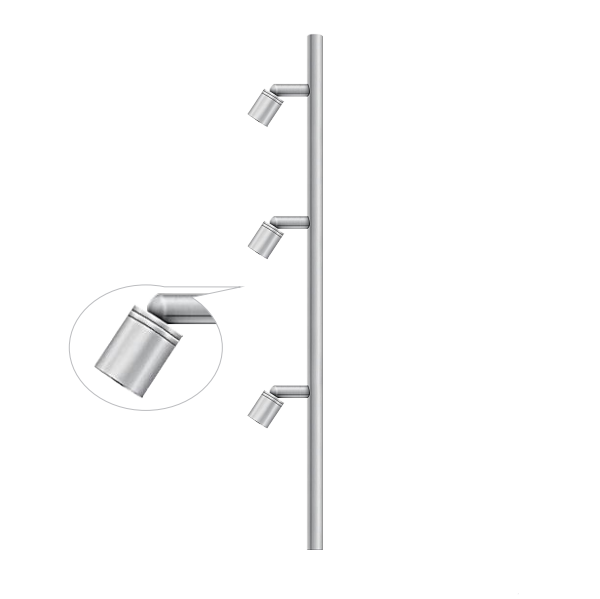
LED Showcase Gantry Light
Gantry lighting can integrate the light source into the supporting structure above or around a display cabinet.
This approach may be suitable for showcase manufacturers who want to coordinate lighting, cabinet design, wiring, and installation during production.
Explore LED Showcase Gantry Light for integrated jewelry showcase lighting.
For many jewelry displays, a combination of linear lighting and focused spotlights is worth evaluating. The final choice depends on the merchandise, viewing angles, cabinet dimensions, and desired lighting effect.
3. Select the Appropriate CRI for Jewelry Display Lighting
Color rendering index, or CRI, describes how a light source renders colors compared with a reference light source under specified conditions.
It is an important consideration for jewelry display lighting because customers need to see the appearance of gold, silver, gemstones, watch dials, and other merchandise.
A higher CRI generally indicates better color rendering under the CRI evaluation method. However, it does not guarantee that every color will look identical or that the light will be suitable for every product.
When choosing an LED cabinet light, consider the following:
Verify the actual CRI: Check the manufacturer's technical datasheet instead of relying on a product title alone.
Compare the merchandise under the light: Gold, diamonds, colored gemstones, and watches may respond differently to the same lighting conditions.
Check color consistency: For projects with multiple display cabinets, consistent color appearance across fixtures is important.
Request additional data if necessary: R9 or TM-30 information may be useful when color-critical applications require more detailed evaluation.
If color accuracy is a priority, start by comparing suitable high-CRI options and evaluating samples under realistic display conditions.
View High CRI LED Cabinet Light for product information.
4. Choose the Right Color Temperature: 3000K, 4000K, or 6000K?
Correlated color temperature, measured in kelvin (K), describes the visual appearance of white light.
It affects the atmosphere of a jewelry display and how merchandise appears alongside the cabinet materials and store interior.
3000K: Warm White
Warm white lighting can complement warm-toned interiors and some gold jewelry displays.
It is worth evaluating when a retailer wants a warm, welcoming appearance. However, the actual effect depends on the gold finish, gemstones, surrounding lighting, and the light source's color-rendering characteristics.
4000K: Neutral White
Neutral white lighting can provide a balanced appearance in many retail environments.
It may be suitable for displays containing a mixture of merchandise, particularly when the design requires a less warm visual tone.
6000K: Cool White
Cool white lighting produces a cooler visual appearance.
It may suit certain contemporary retail designs or specific display preferences, but it should be tested carefully to avoid an unwanted appearance or excessive contrast with the surrounding store lighting.
Which Color Temperature Is Best for Jewelry Displays?
There is no single best color temperature for every jewelry store.
The appropriate choice depends on the merchandise, brand presentation, interior design, and customer viewing conditions.
Before finalizing the specification, compare samples at the intended installation position and evaluate them with the actual products. For multi-store projects, document the selected CCT so the same specification can be repeated across locations.
5. Consider Brightness and Beam Angle Together
Wattage indicates electrical power consumption, not the complete lighting effect.
Two LED cabinet lights with similar wattage may produce different illumination because of differences in optical design, luminous output, beam angle, fixture position, and installation distance.
When assessing brightness, consider:
The size and depth of the display cabinet.
The distance between the light source and the jewelry.
The amount of ambient light in the store.
The required illumination and lighting uniformity.
The possibility of glare or reflections on glass and polished surfaces.
When Should You Use a Wider Beam?
A wider beam can help illuminate a larger area. It may be useful for general cabinet illumination, depending on the fixture position and the dimensions of the display.
When Should You Use a More Focused Beam?
A more focused beam may be suitable for highlighting individual products or selected display areas.
However, a narrow beam can create pronounced bright spots if the fixture is too close to the merchandise or the layout is poorly planned.
For this reason, evaluate the beam angle together with mounting distance and cabinet geometry. A sample test or lighting simulation can help identify potential dark areas and unwanted hotspots before installation.
6. Control Glare and Reflections in Glass Display Cabinets
Glare and reflections are common challenges in jewelry showcase lighting.
A display may appear bright while customers struggle to see the merchandise clearly because the glass reflects the light source or surrounding fixtures.
To improve visibility:
Position Fixtures Carefully
Consider where the light is installed relative to the glass, displayed products, and normal customer viewing angles.
A small change in mounting position or aiming direction can alter the reflections seen from the front of the cabinet.
Avoid Excessive Brightness
Increasing brightness does not always improve the display. Excessive contrast between illuminated merchandise and the surrounding environment may make viewing uncomfortable.
Combine Light Sources Thoughtfully
Linear lights can provide more continuous illumination, while spotlights can highlight selected items. Their combined output and positioning should be evaluated to avoid unnecessary glare or overlapping bright areas.
Test from the Customer's Viewing Position
Inspect the display from standing and seated viewing positions where relevant. Check whether reflections obscure the jewelry and whether all important merchandise remains visible.
For large retail projects, evaluate a complete cabinet mock-up before standardizing the lighting layout across the entire store.
7. Confirm Installation Dimensions and Power Requirements
Even a suitable light source can become difficult to use if it does not fit the cabinet or its electrical arrangement.
Before ordering, confirm the following technical requirements.
Fixture dimensions and mounting
Check the fixture's length, width, height, mounting depth, cutout requirements, and installation method. Confirm whether it can fit the cabinet structure without obstructing shelves, glass panels, or other components.
Input voltage and driver compatibility
Confirm the required input voltage, compatible driver or power supply, connection method, and any control requirements.
For example, an LED cabinet light designed for DC12V must use a suitable power arrangement. Do not assume that all cabinet lights operate at the same voltage.
Power supply capacity
Calculate the total connected load using the actual rated power of all fixtures. Then select a compatible power supply according to the manufacturer's guidance and applicable electrical requirements.
For long cabinet runs or multiple connected lights, confirm voltage drop, cable length, connection arrangements, and whether additional power feeds are required.
Heat management and maintenance
Consider heat dissipation, ventilation, access to wiring, and future replacement. The light should be integrated in a way that allows practical maintenance without unnecessary damage to the display cabinet.
Sample testing
For customized displays, new cabinet designs, or large orders, test a sample before mass production. Confirm dimensions, light appearance, wiring, installation, and the fit with the actual cabinet materials.
8. Use a Checklist Before Buying LED Cabinet Lights in Bulk
For jewelry retailers, showcase manufacturers, importers, and wholesalers, a structured procurement checklist helps reduce specification errors.
Before confirming an order, check the following:
Application: Gold jewelry, diamond jewelry, watches, accessories, or mixed merchandise.
Fixture type: Linear cabinet light, showcase spotlight, gantry light, or a combination.
Color rendering: Verified CRI specification and any additional color-rendering requirements.
Color temperature: Confirmed CCT for the intended display.
Optical performance: Beam angle, light distribution, and brightness requirements.
Electrical details: Rated power, input voltage, driver, wiring, and control requirements.
Mechanical details: Dimensions, mounting method, available space, and installation accessories.
Project quantity: Number of cabinets, fixtures per cabinet, and spare requirements.
Consistency: Whether the specification must be repeated across multiple production batches or stores.
Supplier documentation: Technical datasheets, installation drawings, warranty terms, and sample availability.
For large projects, share the cabinet drawings and required quantities with your lighting supplier before finalizing the bill of materials.
This makes it easier to check product compatibility and coordinate the lighting with cabinet production.
9. Why Work with a Specialized LED Cabinet Lighting Supplier?
A specialized display lighting supplier can help buyers compare fixture types and verify technical requirements before production.
For jewelry showcase manufacturers and retail project contractors, useful supplier support may include product selection, dimensional information, technical datasheets, sample evaluation, and customization discussions where available.
Always Lighting provides LED cabinet lighting solutions for jewelry showcases, retail displays, and commercial applications.
Depending on the selected model and project requirements, buyers can evaluate suitable linear cabinet lights, showcase spotlights, and gantry lighting options.
To help identify a suitable product, prepare the following information:
Cabinet drawings or dimensions.
Type of jewelry or merchandise.
Preferred color temperature and CRI requirements.
Required fixture length and installation method.
Estimated quantity and target delivery schedule.
Providing these details helps clarify the application and enables a more relevant technical discussion before quotation.
Explore the full range of Display Cabinet Lighting Solutions or contact Always Lighting to discuss your project requirements.
Frequently Asked Questions
1. What is the best LED cabinet lighting for jewelry display cabinets?
The best option depends on the cabinet design and merchandise. Linear LED cabinet lights can illuminate longer display sections, while showcase spotlights can emphasize selected products. Gantry lights may be suitable for integrated showcase designs. Evaluate the lighting effect with actual jewelry before selecting a final solution.
2. What CRI is recommended for jewelry display lighting?
CRI should be selected according to the color-rendering requirements of the merchandise. A higher CRI can improve color rendering under the CRI evaluation method, but the actual result depends on the complete lighting setup. Verify the manufacturer's datasheet and test the light with the products being displayed.
3. Is 3000K or 4000K better for gold jewelry display cabinets?
Both may be appropriate in different applications. 3000K produces a warmer appearance, while 4000K produces a more neutral appearance. The best choice depends on the gold finish, gemstones, store design, and desired presentation. Sample testing is recommended before bulk purchasing.
4. Are linear LED cabinet lights better than LED strip lights?
Not necessarily. Linear cabinet fixtures and LED strip systems can differ in construction, optics, mounting, heat management, wiring, and installation requirements. Compare the specifications and actual lighting results rather than assuming one type is always better. The appropriate solution depends on the cabinet design and project needs.
5. How can I prevent dark spots in jewelry display cabinets?
Check fixture spacing, mounting position, beam angle, cabinet dimensions, and the distance between the light source and displayed products. A suitable combination of linear lighting and accent spotlights may improve the overall result. Test the layout before completing large installations.
6. What voltage should I choose for LED cabinet lighting?
Choose a fixture and power arrangement that meet the cabinet design and electrical requirements. The required voltage depends on the particular product model. Confirm rated input voltage, compatible driver or power supply, wiring, total load, and any voltage-drop considerations before ordering.
7. What information should I provide when requesting a quotation for LED cabinet lights?
Provide the application, cabinet dimensions, required quantity, preferred fixture type, CCT, CRI, input voltage, mounting requirements, and project destination. Cabinet drawings or photographs are particularly helpful for customized or large-scale display projects.
8. Can LED cabinet lighting be customized for jewelry showcase manufacturers?
Customization depends on the selected product, manufacturing capability, technical requirements, and order quantity. Before confirming a custom design, discuss fixture dimensions, mounting, wiring, power requirements, color temperature, and sample approval with the supplier.
Conclusion
Choosing the right LED cabinet lighting for jewelry display cabinets requires balancing color rendering, color temperature, brightness, beam angle, glare control, installation dimensions, and electrical compatibility.
Linear cabinet lights, showcase spotlights, and gantry lights each have different strengths. The most suitable solution depends on the merchandise, cabinet design, viewing conditions, and overall store presentation.
For jewelry retailers, display cabinet manufacturers, wholesalers, and retail contractors, the best approach is to confirm the technical requirements early, evaluate samples when needed, and standardize the selected specifications before bulk ordering.
Looking for LED cabinet lighting for your jewelry display project? Contact Always Lighting with your cabinet drawings, required quantities, and lighting preferences to discuss suitable products and technical options.