
- 27 Oct 2026
LED Watch Display Cabinet Lighting Solutions | Always Lighting
LED Watch Display Cabinet Lighting Solutions for Retail Stores and Watch Boutiques
LED watch display cabinet lighting solutions help retailers, luxury watch boutiques and display cabinet manufacturers present watches clearly and attractively. The right lighting can highlight dial details, hands, indices, case finishes and strap materials while supporting a consistent appearance across the display.
For watch showcases, lighting selection depends on the cabinet dimensions, watch arrangement, glass reflections, mounting space, desired lighting effect and electrical requirements. LED cabinet linear lights can provide general illumination, while compact LED spotlights can create focused accents for individual watches or selected display areas.
Always Lighting provides LED cabinet lighting products for commercial display applications. For watch display projects, the appropriate lighting configuration should be selected according to the cabinet design, product presentation requirements and verified specifications of the chosen fixtures.
1. Where Is LED Watch Display Cabinet Lighting Used?
Watch display lighting is used in a variety of commercial environments, each with different display requirements.
Luxury Watch Boutiques
Luxury watch boutiques often use glass showcases to present watches individually or in carefully arranged collections. Compact spotlights can help emphasize selected watches, while linear lighting can provide a more consistent level of illumination across the cabinet.
The objective is to make the watch face and case details easy to see without creating distracting bright spots or reflections.
Watch Retail Stores and Shopping Malls
Retail watch counters may display multiple brands, collections and price categories in the same space. A coordinated lighting layout helps maintain visual consistency across different showcases.
The lighting design should consider viewing angles, cabinet height, shelf arrangement and the relationship between accent lighting and the store's ambient lighting.
Watch Display Cabinet Manufacturers
Cabinet manufacturers need lighting components that can be integrated into different cabinet structures. Important considerations include fixture dimensions, mounting methods, cable routing, power supply location and accessibility for maintenance.
Selecting the lighting during the cabinet design stage can help reduce installation difficulties and avoid unnecessary modifications during production.
Watch Brand Showrooms and Exhibition Displays
Brand showrooms and temporary exhibition displays may require compact fixtures, concealed wiring and adaptable lighting layouts. The final solution depends on whether the display uses fixed shelves, removable panels, individual compartments or freestanding showcases.
2. Common Lighting Challenges in Watch Display Cabinets
Watch display cabinets require more than simply adding light inside a glass case. Several design factors affect the final result.
Glass Reflections on Watch Faces
Watch crystals and cabinet glass can reflect nearby light sources. Depending on the viewing angle and fixture position, these reflections may obscure the dial or make certain watches difficult to inspect.
To reduce this problem, designers should evaluate fixture positions and beam directions from the customer's normal viewing angles. Testing a sample cabinet before mass production can help identify unwanted reflections.
Uneven Brightness Across Multiple Watches
A cabinet containing several watches may have bright areas directly beneath the fixtures and darker areas between them. This can make the overall presentation look inconsistent.
The solution depends on cabinet depth, spacing between watches, mounting height and the beam distribution of the selected light. Linear lighting, carefully positioned spotlights or a combination of both may be appropriate.
Showing Dial and Case Details Clearly
Watch faces contain small details, including hands, indices, markings and textured surfaces. Metal cases and bracelets may also reflect light differently from leather or fabric straps.
Color rendering, color consistency and light distribution should therefore be considered when choosing LED fixtures. A high color rendering index (CRI) can help products appear closer to their intended colors, although the final appearance also depends on the light source's spectral characteristics and the surrounding environment.
Limited Installation Space
Many display cabinets have narrow profiles, glass shelves and limited room for wiring or power supplies. The lighting fixture must fit the available space without interfering with the watches, shelf supports or cabinet doors.
Before choosing a fixture, confirm its dimensions, mounting requirements, cable exit direction and power supply compatibility.
3. Recommended LED Lighting Types for Watch Display Cabinets
Different lighting types serve different purposes. The best choice depends on the display design rather than on wattage alone.
LED Cabinet Linear Lights
LED cabinet linear lights are suitable for providing relatively continuous illumination along shelves or cabinet edges. They can help create a consistent presentation when multiple watches are displayed in a row.
Before installation, check the fixture length, light distribution, mounting position and whether additional diffusion is needed to achieve the desired appearance.
Recommended for: Long watch showcases, multi-watch display shelves and cabinet designs requiring continuous illumination.
Mini LED Showcase Spotlights
Mini LED showcase spotlights can provide focused illumination for individual watches or selected display sections. They may be useful when the design calls for more emphasis on particular models.
Beam angle, fixture position and mounting distance should be evaluated together. A narrow beam is not automatically better: the wrong beam angle or aiming position can create harsh highlights and uneven brightness.
Recommended for: Individual watch compartments, premium product displays and accent lighting within glass showcases.
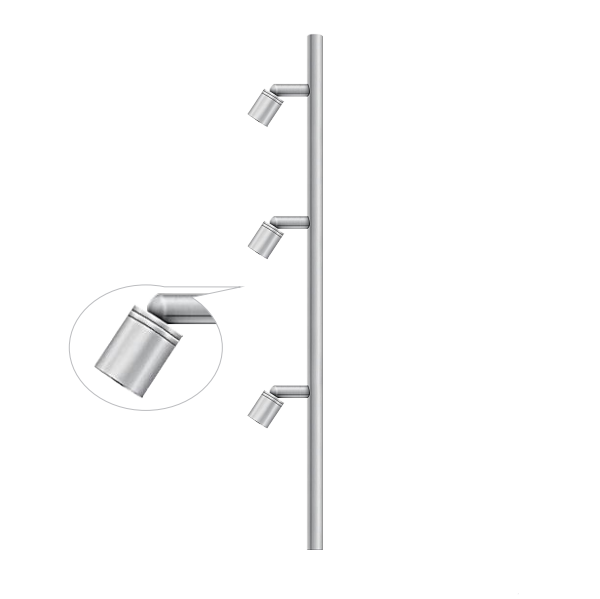
LED Showcase Gantry Lights
LED showcase gantry lights can be considered for cabinet designs that use a top-mounted bar or gantry structure. Depending on the product design, this arrangement may simplify the positioning of multiple light sources above the watches.
Check the gantry dimensions, mounting arrangement, adjustability and compatibility with the cabinet structure before specifying a product.
Recommended for: Watch display counters and showcase designs with a dedicated upper lighting structure.
Combining Linear Lighting and Spotlights
Some cabinets benefit from combining general illumination with accent lighting. Linear fixtures can provide a consistent base level of light, while spotlights add emphasis to selected products.
The balance should be tested using the actual watches, cabinet glass and interior finishes. Excessive contrast can make a display visually inconsistent, while excessive general illumination may reduce the intended emphasis on premium models.
4. How to Choose LED Lighting for a Watch Display Cabinet
For cabinet manufacturers, lighting contractors and retail project buyers, the following checks can help narrow down suitable products.
| Selection factor | What to check |
|---|---|
| Cabinet dimensions | Width, depth, height and available mounting space |
| Watch arrangement | Number of watches, shelf spacing and display orientation |
| Color rendering | Verified CRI and consistency between fixtures |
| Color temperature | Select according to the brand's visual requirements and surrounding lighting |
| Beam distribution | Evaluate coverage, uniformity and reflections on watch crystals |
| Fixture dimensions | Confirm that the product fits the available installation space |
| Electrical requirements | Verify input voltage, driver compatibility, wiring and dimming requirements |
| Maintenance | Consider access to fixtures, connections and replaceable components |
There is no single wattage, color temperature or beam angle that suits every watch display cabinet. These parameters should be selected based on the cabinet layout, target appearance and the verified specifications of the proposed fixtures.
For projects involving many cabinets, it is advisable to test a representative sample before confirming the final bill of materials.
5. Lighting Considerations for Watch Display Cabinet Manufacturers
For manufacturers producing watch showcases in batches, lighting integration should be considered early in the cabinet design process.
Confirm fixture dimensions before production. Check the required cutout, mounting clearance, cable routing and available space for drivers or power supplies.
Evaluate lighting with the actual cabinet materials. Glass shelves, mirrored backgrounds, metal trims and dark interior finishes can change the perceived brightness and reflections.
Standardize specifications across the project. Confirm color temperature, CRI, electrical configuration and fixture type to maintain consistency between cabinets.
Check installation and maintenance access. Ensure that the lighting can be installed and serviced without unnecessary disassembly of the showcase.
Validate the finished display. Inspect the cabinet from normal customer viewing angles, checking dial visibility, reflections, brightness distribution and overall appearance.
These steps help manufacturers and contractors select suitable lighting components and reduce the risk of costly changes after cabinet production.
6. LED Watch Display Cabinet Lighting from Always Lighting
Always Lighting offers LED cabinet lighting products for commercial display applications, including LED cabinet linear lights, showcase spotlights and showcase gantry lights.
For watch display cabinet projects, product selection should be based on the specific cabinet design and the lighting effect required. Relevant product details may include fixture dimensions, wattage, input voltage, color temperature, CRI, beam angle and mounting method, where applicable to the selected model.
Our team can review project requirements to help identify suitable product options for display cabinet manufacturers, retail lighting contractors, distributors and commercial project buyers.
To request a product recommendation, prepare the following information where available:
Cabinet drawings or dimensions
Photos of the display cabinet and the watches
Number of watches per cabinet
Preferred lighting effect and color temperature
Available power supply and installation space
Estimated quantity and project destination
This information helps establish a more accurate starting point for product selection and quotation.
7. Frequently Asked Questions
What type of LED lighting is best for a watch display cabinet?
LED linear lights are useful for continuous shelf illumination, while mini LED spotlights can emphasize individual watches. Gantry lights may suit cabinets with a dedicated upper lighting structure. The best option depends on cabinet dimensions, viewing angles and the desired lighting effect.
What color temperature should be used for watch showcase lighting?
The appropriate color temperature depends on the watch collection, interior finishes, brand guidelines and surrounding lighting. Neutral white may suit many contemporary retail displays, while warmer or cooler tones may be selected for specific design concepts. Test the proposed color temperature with the actual products before finalizing the specification.
Is high CRI important for LED watch display lighting?
High CRI can help watches and their materials appear closer to their intended colors. It is particularly relevant when the display includes colored dials, leather straps and different metal finishes. Buyers should compare verified CRI specifications and, where color accuracy is critical, consider additional spectral information.
How can reflections on watch glass be reduced?
Review the position and aiming direction of the fixtures from normal customer viewing angles. Adjusting the light source position, beam distribution or display geometry may reduce distracting reflections. A sample installation is recommended because the result depends on both the watch crystal and the cabinet glass.
Can LED cabinet lights be customized for watch showcase manufacturers?
Depending on the selected product and the manufacturer's capabilities, project requirements may involve fixture dimensions, mounting arrangements, wiring or other specifications. Confirm which options are available for the chosen model before placing a production order.
What information is needed to quote LED watch display cabinet lighting?
Useful information includes cabinet drawings, dimensions, lighting quantity, preferred color temperature, electrical requirements, installation details and estimated order quantity. Photos or a sample cabinet can also help clarify the required lighting effect.
8. Request an LED Watch Display Cabinet Lighting Solution
Are you a watch display cabinet manufacturer, lighting distributor, retail contractor or project buyer looking for LED cabinet lighting?
Contact Always Lighting with your cabinet drawings, project requirements or product specifications. We can review the application and help identify suitable lighting products for your project.
Contact Always Lighting to discuss your watch display cabinet lighting requirements and request a product quotation.