
- 21 Oct 2026
LED Jewelry Display Cabinet Lighting Solutions
LED Jewelry Display Cabinet Lighting Solutions
LED jewelry display cabinet lighting is essential for presenting rings, necklaces, bracelets, earrings and other jewelry products clearly and attractively. The right lighting can highlight product details, improve visual contrast and create a more consistent appearance across jewelry showcases.
Always Lighting provides LED lighting solutions for jewelry display cabinets, including mini LED spotlights, recessed cabinet spotlights, LED cabinet linear lights and LED showcase gantry lights. These lighting products can be evaluated for jewelry stores, gold shops, luxury retail displays and jewelry showcase manufacturing projects.
Choosing the right jewelry cabinet lighting requires more than selecting a fixture based on wattage. Cabinet dimensions, mounting space, beam angle, color temperature, color rendering, glass reflections and electrical requirements all influence the final lighting result.
This guide explains how to choose LED jewelry display cabinet lighting, compare different fixture types, reduce common lighting problems and select suitable products for commercial projects.
What Is LED Jewelry Display Cabinet Lighting?
LED jewelry display cabinet lighting refers to lighting systems designed to illuminate jewelry inside glass showcases, display counters, retail cabinets and jewelry presentation cases.
Unlike general store lighting, cabinet lighting focuses on the merchandise within a relatively limited space. It helps customers see the shape, finish, color and details of individual jewelry pieces.
Common lighting options include:
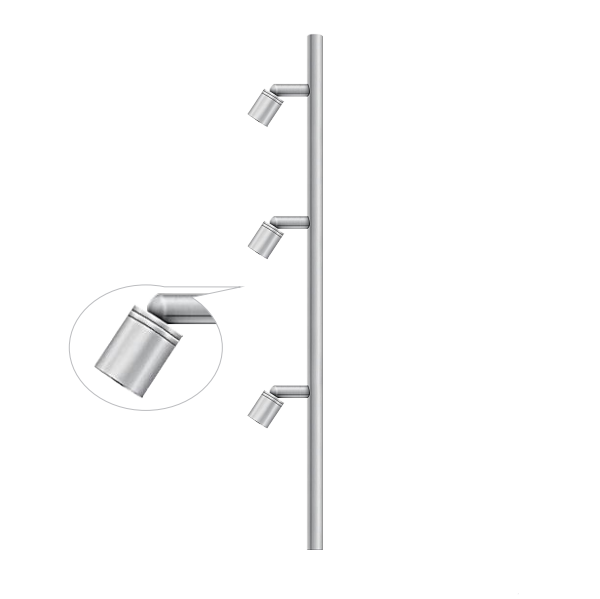
Mini LED spotlights: Used to highlight selected jewelry pieces or specific display areas.
Recessed LED cabinet spotlights: Designed for cabinets with compatible mounting holes and sufficient installation depth.
LED cabinet linear lights: Used to illuminate longer display sections, shelves and cabinet edges.
Adjustable LED spotlights: Suitable for applications that require directional lighting, provided the fixture supports the necessary adjustment.
LED showcase gantry lights: Designed for compatible display cabinets that use an integrated overhead lighting structure.
The appropriate lighting solution depends on the cabinet design, the jewelry being displayed, the desired visual effect and the available installation space.
For many jewelry display projects, a combination of focused accent lighting and more continuous cabinet illumination can provide greater flexibility than using only one type of fixture.
Why Is Proper Lighting Important for Jewelry Display Cabinets?
Jewelry often contains small details, reflective surfaces and distinctive colors. Lighting affects how these characteristics appear to customers.
A well-planned cabinet lighting system can help improve product visibility while maintaining a balanced appearance throughout the display.
1. Highlight Jewelry Details
Rings, necklaces, earrings and bracelets may contain polished metal surfaces, gemstones, textured finishes or intricate designs.
Mini LED spotlights can help draw attention to selected pieces by directing light toward specific display positions.
The final effect depends on the beam angle, mounting position, lighting distance and reflective characteristics of the jewelry.
2. Improve Color Appearance
Color appearance is important when displaying gold, silver, diamonds, colored gemstones and other jewelry.
Color temperature affects whether the lighting appears warmer or cooler, while color rendering characteristics influence how merchandise colors are perceived.
The appropriate combination should be selected according to the jewelry materials, cabinet interior and overall store lighting.
3. Reduce Uneven Illumination
Poorly positioned fixtures can create bright spots, dark areas or inconsistent brightness between adjacent display sections.
Fixture spacing, beam distribution, installation height and cabinet depth should be evaluated together when planning the lighting layout.
4. Create a Consistent Display Experience
Jewelry stores often use multiple display counters with similar structures.
Using compatible fixtures and consistent lighting specifications can help create a more coordinated appearance across different cabinets.
For chain stores and large retail projects, standardizing approved product models can also simplify purchasing and future replacement.
LED Jewelry Display Cabinet Lighting for Different Applications
Different jewelry display environments require different lighting arrangements. The following applications illustrate how LED cabinet lighting products can be evaluated for common commercial projects.
1. Gold Jewelry Display Cabinets
Gold jewelry is frequently displayed in glass counters with metal, fabric or neutral-colored cabinet interiors.
Warm white lighting, such as 3000K, may complement some gold displays, while neutral white lighting, such as 4000K, provides a different visual appearance.
The best choice depends on the gold finish, surrounding materials, ambient lighting and the retailer's preferred presentation.
Recommended lighting options:
Mini LED spotlights for selected rings, necklaces and bracelets.
Linear LED lights for longer display counters.
Compatible recessed spotlights for cabinets designed with suitable cutouts.
Before selecting lighting for a large gold shop, test samples with the actual jewelry and cabinet materials.
2. Diamond and Gemstone Display Cabinets
Diamond and gemstone displays often require carefully positioned accent lighting to emphasize the shape, cut and visual characteristics of individual pieces.
Focused lighting can help direct attention toward selected products, but excessively concentrated or poorly positioned light may create unwanted glare or uneven brightness.
Important selection factors include:
Beam angle and light distribution.
Distance between the light source and jewelry.
Position of the gemstone within the cabinet.
Color temperature and color rendering.
Reflections from glass and polished surfaces.
For high-value jewelry displays, evaluate the lighting from normal customer viewing positions before finalizing the installation.
3. Luxury Watch and Jewelry Displays
Luxury retail counters may display watches, rings, necklaces and other accessories within the same cabinet system.
These applications often combine glass, polished metal and reflective product surfaces.
Mini spotlights can be considered for accent lighting, while linear lights may provide more continuous illumination along longer display sections.
The lighting arrangement should balance product visibility with reflection control and consistency across the display.
4. Jewelry Store Display Counters
Jewelry store counters frequently contain several display sections with different merchandise and cabinet dimensions.
A coordinated lighting plan can help provide a consistent appearance while allowing individual products to receive appropriate accent lighting.
When planning lighting for multiple counters, consider:
Cabinet length, width and depth.
Available mounting positions.
Fixture spacing and light distribution.
Wiring and driver placement.
Access for installation and maintenance.
Consistency between different display sections.
These factors are especially important for new store openings and large-scale retail renovation projects.
5. Jewelry Showcase Manufacturing
For jewelry showcase manufacturers, LED cabinet lighting must fit the physical structure of the display cabinet.
Lighting selection should therefore be considered during the cabinet design stage rather than after manufacturing is complete.
Manufacturers should confirm the fixture dimensions, cutout requirements, mounting depth, wiring route and driver arrangement before approving a lighting solution.
For custom cabinets, drawings or sample sections can help the lighting supplier evaluate product compatibility.
How to Choose the Right LED Jewelry Cabinet Lights
Selecting the appropriate lighting involves balancing visual performance, cabinet design and technical requirements.
Step 1: Identify the Jewelry and Display Requirements
Start by identifying the type of merchandise being displayed.
Gold jewelry, silver jewelry, diamonds, colored gemstones and luxury watches may have different presentation requirements.
Determine whether the main goal is to highlight individual pieces, illuminate an entire shelf or create consistent lighting across multiple cabinets.
Step 2: Choose the Appropriate Fixture Type
Different LED cabinet lighting products serve different purposes.
| Lighting Type | Typical Application | Key Considerations |
|---|---|---|
| Mini LED Spotlight | Individual jewelry pieces and selected display areas | Beam angle, aiming direction and mounting position |
| Recessed LED Cabinet Spotlight | Cabinets with suitable mounting holes | Cutout diameter, mounting depth and driver access |
| LED Cabinet Linear Light | Long display counters and shelves | Length, mounting method and lighting distribution |
| Adjustable LED Spotlight | Displays requiring directional lighting | Adjustment range, beam angle and clearance |
| LED Showcase Gantry Light | Compatible gantry-style jewelry cabinets | Frame dimensions, integration and wiring |
The final selection should be based on actual cabinet dimensions and verified product specifications.
Step 3: Select a Suitable Color Temperature
Color temperature affects the overall appearance of jewelry and the surrounding display.
Common options include:
3000K warm white: May suit warm-toned displays and some gold jewelry applications.
4000K neutral white: Provides a more neutral appearance for a range of retail environments.
5000K–6000K cool white: May suit selected displays where a cooler appearance is preferred.
These are general starting points rather than universal recommendations. The best color temperature should be evaluated with the actual jewelry, cabinet materials and ambient lighting.
For projects with multiple display cabinets, maintaining consistent color temperature can help avoid visible differences between adjacent sections.
Step 4: Check Color Rendering Requirements
Color rendering is an important consideration when the appearance of gold, gemstones and other jewelry materials matters.
A higher CRI light source may be appropriate when accurate color appearance is a priority. Buyers should confirm the actual CRI specification of the selected LED fixture.
CRI alone does not determine the entire visual result. Color temperature, spectral characteristics, jewelry materials and the surrounding lighting environment can also influence appearance.
For demanding applications, sample testing with the actual merchandise is recommended.
Step 5: Select the Beam Angle and Lighting Position
Beam angle affects how light is distributed across the jewelry display.
Narrower beams can concentrate light on selected products, while wider distributions may cover a larger area.
The correct choice depends on fixture height, cabinet depth, product spacing and the desired balance between accent lighting and general illumination.
Incorrect positioning can produce bright spots, shadows or uneven brightness.
Whenever possible, test the selected fixture in a representative cabinet before confirming the final layout.
Step 6: Confirm Cabinet Dimensions and Installation Requirements
Before ordering LED jewelry cabinet lights, confirm:
Fixture length, diameter and overall dimensions.
Required cutout size and mounting depth.
Input voltage and driver requirements.
Wiring and connector arrangements.
Available installation and maintenance space.
Dimming or control compatibility, if required.
For recessed fixtures, the cabinet structure must provide sufficient space for the fixture and any required electrical components.
For linear lights, confirm the available installation length and mounting method.
Step 7: Evaluate Samples Before Bulk Purchasing
Sample evaluation is particularly useful for showcase manufacturers, distributors and jewelry retailers purchasing for multiple stores.
A sample can help confirm physical fit, lighting appearance, wiring compatibility and the interaction between the light source, glass and jewelry.
For large projects, approve the selected product model and specifications before production or installation begins.
How to Reduce Glare, Reflections and Dark Spots in Jewelry Showcases
Glass jewelry cabinets can present several lighting challenges, especially when the display contains reflective surfaces or has limited installation space.
Common Problem 1: Dark Spots Inside the Cabinet
Dark spots may occur when fixture spacing, beam distribution or mounting positions do not provide sufficient coverage.
Possible solutions:
Review the distance between adjacent fixtures.
Check whether the beam angle suits the cabinet dimensions.
Evaluate the mounting height and direction.
Consider whether linear lighting can improve coverage along longer sections.
Increasing wattage alone may not solve an uneven lighting layout.
Common Problem 2: Reflections on the Glass
Glass can reflect the light source, surrounding store lighting and other bright surfaces.
Possible solutions:
Evaluate fixture positions from normal customer viewing angles.
Review the aiming direction of spotlights.
Check the relationship between the light source and front glass.
Test the lighting arrangement under actual store conditions.
The result depends on the glass configuration, cabinet geometry and surrounding lighting.
Common Problem 3: Excessive Brightness on Jewelry
Highly reflective jewelry may produce bright highlights when exposed to concentrated light.
Possible solutions:
Review the beam angle and aiming direction.
Adjust fixture positions where the product design permits.
Evaluate the balance between accent lighting and general illumination.
Test the result with the actual merchandise.
The objective is to create an attractive and readable display rather than simply maximizing brightness.
Common Problem 4: Different Color Appearance Between Cabinets
Visible differences can occur when adjacent cabinets use lighting products with different color temperatures or color-rendering characteristics.
For multi-cabinet projects, specify the required lighting characteristics and verify product consistency before bulk purchasing.
Recommended LED Lighting Products for Jewelry Display Cabinets
Always Lighting offers different LED cabinet lighting product types that can be evaluated according to the application and cabinet structure.
LED Jewelry Showcase Lighting
LED jewelry showcase lighting products are intended for jewelry display applications where product visibility, installation space and visual appearance are important considerations.
Explore our LED Jewelry Showcase Lighting range to review the available options.
LED Cabinet Linear Light
Linear lighting can be considered for longer jewelry counters, shelves and display sections that require more continuous illumination.
Explore our LED Cabinet Linear Light products and confirm the available lengths and specifications for your project.
High CRI LED Cabinet Light
For displays where color appearance is important, review the CRI specifications of the selected lighting products.
Visit our High CRI LED Cabinet Light page for further product information.
LED Showcase Gantry Light
Gantry-style lighting may be suitable for jewelry display cabinets designed with a compatible supporting frame.
Explore our LED Showcase Gantry Light range to evaluate suitable options.
Product suitability depends on the cabinet dimensions, mounting arrangement and verified specifications of each model.
LED Jewelry Display Cabinet Lighting for B2B Projects
Always Lighting works with B2B buyers seeking LED lighting products for jewelry showcases, commercial displays and related cabinet applications.
Our products can be evaluated by:
Jewelry showcase manufacturers.
Gold shop and jewelry retail operators.
Jewelry store contractors.
Commercial lighting distributors.
Retail fit-out companies.
Importers and wholesalers.
For projects involving multiple cabinets or retail locations, confirming the product specifications before bulk purchasing can help improve consistency and simplify installation planning.
What Information Should You Provide When Requesting a Quote?
To help identify suitable LED jewelry display cabinet lighting products, please provide the following information.
1. Application
Specify whether the lighting is for gold jewelry, diamonds, gemstones, watches or general jewelry showcases.
2. Cabinet Dimensions
Provide the cabinet length, width, height, available mounting depth and any relevant cutout dimensions.
3. Lighting Requirements
Indicate your preferred color temperature, CRI, beam distribution and desired visual effect, if known.
4. Electrical Requirements
Specify the required input voltage, driver arrangement and any dimming or control requirements.
5. Quantity
Provide the estimated sample quantity and expected bulk order volume.
6. Drawings or Photographs
Cabinet drawings, installation photographs or existing fixture references can help assess product compatibility.
With these details, the appropriate product models and specifications can be reviewed before quotation.
Why Choose Always Lighting for Jewelry Display Cabinet Lighting?
Always Lighting supplies LED lighting products for cabinet and showcase applications.
We understand that jewelry display lighting projects involve both visual requirements and practical installation considerations.
For B2B projects, buyers can discuss the available fixture types, relevant technical specifications, installation dimensions and product options according to their requirements.
Before ordering, confirm the applicable product specifications, electrical compatibility, customization feasibility and warranty terms for the selected models.
Whether you are developing a new jewelry showcase, sourcing lighting for a gold shop or purchasing LED cabinet lights for multiple retail locations, clear project requirements help streamline product selection.
Frequently Asked Questions About LED Jewelry Display Cabinet Lighting
What is the best lighting for jewelry display cabinets?
The best lighting depends on the jewelry, cabinet dimensions and desired visual effect. Mini LED spotlights can highlight individual pieces, while linear LED lights can provide more continuous illumination along shelves and counters. Some cabinets benefit from a combination of both.
What color temperature is best for gold jewelry display cabinets?
Warm white lighting, such as 3000K, may complement some gold displays, while 4000K provides a more neutral appearance. The best choice depends on the gold finish, cabinet materials, ambient lighting and preferred presentation. Testing samples with actual jewelry is recommended.
Is high CRI important for jewelry display lighting?
High CRI can be important when accurate color appearance is a priority. However, CRI should be considered alongside color temperature, light distribution, the spectral characteristics of the light source and the materials being displayed. Confirm the actual CRI specification of the selected fixture.
Should I use LED spotlights or linear lights for jewelry showcases?
Spotlights are generally suitable for highlighting selected products, while linear lights can provide more continuous illumination along display sections. The choice depends on the cabinet structure, merchandise arrangement and required lighting effect.
How can I prevent dark spots in jewelry display cabinets?
Review fixture spacing, beam angle, mounting position and cabinet depth. Dark spots may indicate gaps in light distribution or unsuitable fixture placement. Testing the complete lighting arrangement in a representative cabinet can help identify the appropriate solution.
How can I reduce glass reflections in jewelry showcases?
Evaluate the lighting arrangement from normal customer viewing positions. Adjusting the fixture position or aiming direction may help reduce distracting reflections. The final result depends on the glass configuration, surrounding lighting and cabinet geometry.
What should jewelry showcase manufacturers consider when selecting LED cabinet lights?
Manufacturers should check fixture dimensions, cutout size, mounting depth, wiring, driver placement, input voltage, color temperature and CRI requirements. Confirming these details during cabinet design can help prevent installation issues.
Can LED jewelry display cabinet lighting be customized?
Customization depends on the selected product, required dimensions, electrical specifications, order quantity and manufacturing feasibility. Provide the cabinet drawings and technical requirements so the available options can be reviewed.
Can I request samples before placing a bulk order?
Sample evaluation can help confirm physical fit, lighting appearance and electrical compatibility before a larger purchase. Contact Always Lighting with your required product type, specifications and estimated quantity to discuss sample availability.
Request a Quote for LED Jewelry Display Cabinet Lighting
Looking for LED lighting for jewelry showcases, gold shop counters or custom jewelry display cabinets?
Contact Always Lighting with your cabinet drawings, required lighting specifications and estimated quantity.
Our team can help review suitable LED cabinet spotlights, linear lights and other available lighting options according to your project requirements.
Request a quotation, technical datasheets or sample information for your jewelry display cabinet lighting project.