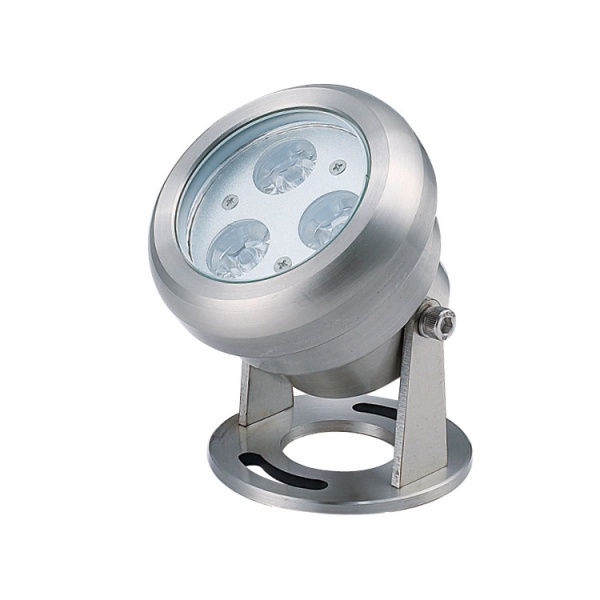

When choosing an LED Underwater Light for fountains, swimming pools, ponds or architectural water features, many project buyers focus on wattage, beam angle and IP rating.
But there is another important specification that should not be overlooked:
Housing material.
The two common choices are:
Stainless Steel
Aluminum
So, which is better?
The answer is:
Neither material is automatically better for every underwater lighting project.
The right choice depends on the water environment, installation depth, corrosion exposure, thermal requirements, mechanical strength, project budget and expected service life.
For example, stainless steel can be an excellent choice when corrosion resistance and a premium appearance are important, while aluminum can offer advantages in weight, heat dissipation and cost.
This guide compares Stainless Steel vs Aluminum LED Underwater Lights and explains which material may be more suitable for different outdoor water-feature projects.
An underwater LED light operates in a much more demanding environment than a normal outdoor fixture.
The housing may be exposed to:
Continuous water
Water pressure
Humidity
Temperature changes
Chemicals
Chlorinated water
Saltwater
Cleaning agents
Mechanical impact
The housing needs to protect:
LED components
PCB
Driver
Wiring
Internal connections
Optical components
At the same time, the housing also needs to transfer heat away from the LED.
Therefore, material selection affects both:
Durability
and
Thermal performance.
This is why material should be considered together with:
IP Rating + Cable + Sealing + LED + Heat Dissipation + Installation Environment.
Stainless steel is widely used for underwater lighting where corrosion resistance, strength and appearance are important.
For premium fountain, pool and architectural water-feature projects, stainless steel can provide a robust housing solution.
Excellent mechanical strength
Good corrosion resistance
Premium appearance
Suitable for demanding environments
Good resistance to impact
Suitable for many long-term outdoor applications
A stainless steel housing can also provide a clean and professional appearance, which is particularly attractive for high-end landscape and architectural projects.
Aluminum is another common material for LED lighting housings.
One of its major advantages is:
Excellent heat dissipation relative to its weight.
Aluminum is lightweight and has good thermal conductivity, making it useful for LED fixtures where heat management is important.
Typical advantages include:
Lightweight construction
Good heat dissipation
Easy handling
Lower material weight
Efficient manufacturing
Potentially lower cost
For large landscape lighting projects where hundreds of fixtures may need to be installed, lower fixture weight can make transportation and installation easier.
However, aluminum underwater fixtures require appropriate surface treatment, sealing and corrosion protection for the specific environment.
| Feature | Stainless Steel | Aluminum |
|---|---|---|
| Corrosion Resistance | Excellent depending on grade | Good with suitable treatment |
| Weight | Heavier | Lightweight |
| Heat Dissipation | Good | Excellent |
| Mechanical Strength | Excellent | Good |
| Impact Resistance | Excellent | Good |
| Installation | Heavier | Easier |
| Appearance | Premium | Modern / technical |
| Cost | Usually higher | Usually lower |
| Saltwater Application | Grade-dependent | Requires careful protection |
| Pool Application | Excellent with suitable grade | Suitable with proper treatment |
| Fountain Application | Excellent | Excellent with proper treatment |
| Large Projects | Higher weight | Lower weight |
| Premium Projects | Excellent | Good |
| Thermal Management | Good | Excellent |
The table is a general comparison. Actual performance depends heavily on the specific alloy, stainless-steel grade, surface treatment, wall thickness, sealing design and product construction.
This is one of the most important questions for underwater lighting.
The answer depends on the specific material.
Not all stainless steel is the same.
Different grades provide different levels of corrosion resistance.
For underwater applications, the manufacturer should clearly identify the stainless-steel grade used in the fixture.
For demanding environments, higher corrosion-resistant grades may be preferred.
Aluminum can also be used for outdoor and underwater lighting, but it generally requires appropriate protection such as:
Anodizing
Powder coating
Protective coatings
Proper sealing
Suitable alloy selection
Therefore:
Do not compare "stainless steel" and "aluminum" without knowing the actual material specification and surface treatment.
Swimming pools are a special application.
Pool water may contain:
Chlorine
Salt
Cleaning chemicals
pH-adjusting chemicals
The lighting housing must therefore be selected according to the water chemistry.
Stainless steel can be an excellent choice for premium pool lighting, especially when an appropriate corrosion-resistant grade is selected.
Aluminum can also be used, but the coating and corrosion-protection system become particularly important.
For swimming pool projects, ask the supplier about:
Housing material
Stainless-steel grade or aluminum alloy
Surface treatment
IP68 conditions
Maximum installation depth
Cable material
Connector
Chemical/environmental compatibility
For fountain lighting, both materials can be suitable.
The better choice depends on the fountain environment and project requirements.
Good for:
Premium hotels
Luxury resorts
High-end commercial plazas
Architectural fountains
Long-term installations
Projects where appearance is important
Good for:
Large landscape projects
Cost-sensitive projects
Lightweight installations
Projects where thermal management is important
Applications with suitable protective treatment
For a commercial fountain, the housing material should be evaluated together with:
IP68 + Beam Angle + Wattage + Voltage + RGB/RGBW + DMX512.
Landscape ponds are often less chemically aggressive than swimming pools, but long-term immersion still requires careful product selection.
For a pond project, consider:
Freshwater
Sediment
Algae
Water temperature
Cleaning
Installation depth
Maintenance access
Can provide excellent durability and a premium appearance.
Can be a practical option when the fixture has suitable corrosion protection and the project environment is appropriate.
For permanent underwater installation, the IP68 rating and actual immersion specification are also important.
Saltwater is one of the most demanding environments for underwater lighting.
If the project is located near:
The ocean
Coastal resorts
Marine facilities
Saltwater pools
material selection becomes even more important.
Stainless steel can be advantageous, but the specific stainless-steel grade matters.
Aluminum can also be used in certain marine applications, but requires an appropriate alloy and protective treatment.
Therefore:
For saltwater projects, don't simply ask whether the fixture is stainless steel or aluminum. Ask for the exact material specification and corrosion-protection system.
LEDs produce heat.
If heat is not effectively removed, LED performance and lifetime can be affected.
Aluminum is well known for its thermal conductivity and is widely used in LED heat sinks.
This makes aluminum attractive when:
High-power LEDs are used
Compact housings are required
Thermal management is important
The fixture operates for long periods
Stainless steel generally has lower thermal conductivity than aluminum.
However, underwater lighting has an important advantage:
Water can help remove heat from the fixture.
Therefore, the complete thermal design should consider:
LED power
PCB
Housing thickness
Internal thermal path
Water temperature
Fixture geometry
Installation conditions
A well-designed stainless steel underwater light can still achieve reliable thermal performance.
Stainless steel generally provides excellent mechanical strength and impact resistance.
This can be useful when the fixture may experience:
Accidental impact
Maintenance activity
Installation stress
Water-feature equipment movement
Aluminum is lighter and can still provide sufficient strength for many applications.
For normal landscape fountains, properly designed aluminum housings can perform well.
For high-impact or premium installations, stainless steel may offer additional mechanical robustness.
Here, aluminum has a clear advantage:
Weight.
A stainless steel underwater light can be significantly heavier than an equivalent aluminum fixture.
This matters when a project contains:
50 fixtures
100 fixtures
200 fixtures
500+ fixtures
For large projects, lower fixture weight can simplify:
Transportation
Handling
Installation
Maintenance
This is one reason aluminum can be attractive for large landscape lighting projects.
In general, stainless steel underwater lights tend to have a higher material and manufacturing cost than comparable aluminum fixtures.
The final price depends on:
Material grade
Housing size
LED quantity
Wattage
Lens
Beam angle
IP68 construction
Cable
Connector
RGB/RGBW
DMX512
Surface treatment
Therefore:
Stainless Steel = potentially higher initial cost
Aluminum = potentially lower initial cost
But purchase price should not be the only consideration.
For commercial projects, also evaluate:
Service Life + Maintenance + Corrosion Risk + Installation Cost.
If you are designing lighting for a premium hotel, resort or architectural fountain, stainless steel can provide several advantages.
It offers:
Premium appearance
Strong construction
Good corrosion resistance
High-end product perception
Excellent mechanical durability
It can be particularly suitable for projects where the fixtures may be visible to visitors.
For example:
Luxury Hotel Fountain
Resort Swimming Pool
High-End Landscape Water Feature
Architectural Plaza Fountain
Aluminum can be attractive when a project requires a large number of fixtures.
For example:
100–500 underwater lights
may require significant transportation and installation effort.
The lower weight of aluminum can help reduce handling requirements.
Aluminum can also provide excellent heat dissipation for LED lighting.
However, the fixture should have an appropriate protective finish and sealing system for the actual underwater environment.
Both matter.
But they solve different problems.
Primarily addresses:
Water and dust ingress protection under specified test conditions.
Affects:
Corrosion resistance
Mechanical strength
Heat transfer
Weight
Appearance
Long-term environmental performance
Therefore:
An IP68 rating does not automatically make a fixture suitable for every water environment.
A good underwater light should combine:
Appropriate IP68 protection
Suitable housing material
Correct cable and connector
Reliable sealing
Suitable electrical system
This combination is particularly attractive for demanding underwater projects.
For example:
Stainless Steel
IP68
DC24V
RGBW
DMX512
can create a professional solution for commercial fountain lighting.
Potential applications include:
Hotels
Resorts
Shopping malls
Public plazas
Musical fountains
Landscape projects
Architectural water features
However, the exact stainless-steel grade and IP68 immersion conditions should always be confirmed with the manufacturer.
Aluminum can also be used to create IP68 underwater lighting products.
A typical configuration may include:
Aluminum Housing
Surface Treatment
IP68 Sealing
LED
Waterproof Cable
This can provide a lightweight solution for:
Landscape fountains
Ponds
Water features
Architectural projects
Large commercial installations
Again, the material and coating should be selected according to the actual water environment.
RGB underwater lights are increasingly used for decorative fountains and landscape water features.
For RGB projects, material selection should not be considered separately from the complete system.
A typical RGB underwater light may include:
RGB LEDs
Controller
Waterproof housing
IP68 sealing
DC24V
Waterproof cable
For larger projects, DMX512 RGB/RGBW underwater lights can be used to create:
Color changing
Color gradients
Chasing effects
Scene control
Music synchronization
Both stainless steel and aluminum housings can be designed for RGB underwater applications.
Here is a simple decision guide.
Corrosion resistance is a major priority
The project is premium or architectural
Mechanical strength is important
The fixture is visible
The environment is demanding
A premium appearance is required
Long-term durability is a major consideration
Low weight is important
Heat dissipation is important
A large quantity of fixtures is required
Installation efficiency matters
Budget is a major consideration
The environment is suitable for properly protected aluminum
| Project | Recommended Starting Option |
|---|---|
| Hotel Fountain | Stainless Steel |
| Luxury Resort Pool | Stainless Steel |
| Premium Architectural Water Feature | Stainless Steel |
| Large Landscape Fountain | Aluminum / Stainless Steel |
| Small Garden Pond | Either |
| Freshwater Pond | Either |
| Saltwater Application | Corrosion-resistant Stainless Steel / Specialized Aluminum |
| Large Quantity Project | Aluminum |
| High-Power LED Fixture | Aluminum can offer thermal advantages |
| Premium Visible Fixture | Stainless Steel |
| Cost-Sensitive Project | Aluminum |
| Long-Term Submerged Application | Either, if properly engineered |
This table is a starting guide rather than a universal specification.
Before purchasing, ask the manufacturer:
What stainless-steel grade is used?
What aluminum alloy is used?
What surface treatment is applied?
Is the fixture IP68?
What is the tested immersion depth?
What is the specified immersion duration?
Is DC24V available?
What is the power consumption?
What cable specification is used?
What beam angles are available?
What is the LED brand?
What is the luminous output?
Is RGB available?
Is RGBW available?
Does it support DMX512?
What is the recommended installation depth?
What cable length is available?
What type of connector is used?
These questions can help project buyers compare suppliers more accurately.
Always Lighting provides LED lighting solutions for architectural and landscape projects, including underwater and fountain lighting applications.
The underwater lighting range can be configured for different project requirements, including:
Stainless Steel Underwater Light
IP68 Underwater Light
DC24V Underwater Light
RGB Underwater Light
RGBW Underwater Light
DMX512 Underwater Light
Different beam angles
Different wattages
Different cable lengths
These products can be considered for:
Fountains
Swimming Pools
Landscape Ponds
Waterfalls
Architectural Water Features
Commercial Landscape Projects
For project inquiries, customers can provide the water depth, fountain dimensions, installation environment, desired beam angle, power requirement and control system.
This allows the manufacturer to recommend the appropriate housing material and underwater lighting configuration.
So, Stainless Steel vs Aluminum Underwater Light — which is better?
There is no universal winner.
is generally attractive when you prioritize:
Corrosion resistance + strength + premium appearance + demanding environments.
is attractive when you prioritize:
Light weight + heat dissipation + easy installation + cost efficiency.
For professional underwater lighting projects, the best material depends on:
Water Environment
Corrosion Exposure
LED Power
Installation Depth
Project Budget
Expected Service Life
Maintenance Requirements
Most importantly, don't evaluate housing material alone.
A professional LED Underwater Light should be evaluated as a complete system:
Housing + IP68 + Sealing + Cable + Connector + LED + Thermal Design + Electrical System
For permanent underwater applications, always confirm the manufacturer's IP68 immersion conditions, material specification and environmental suitability before installation.
Not always. Stainless steel can offer excellent corrosion resistance and mechanical strength, while aluminum is lighter and generally offers better thermal conductivity. The best choice depends on the project environment.
Both can be suitable. Stainless steel is often attractive for premium fountains, while properly protected aluminum can be practical for large landscape projects.
A suitable stainless-steel grade can be an excellent choice for pool environments, but water chemistry and the exact material specification should be considered.
Yes. Aluminum can be used in IP68 underwater lighting when the housing, surface treatment and sealing system are properly designed for the intended environment.
Aluminum generally has better thermal conductivity and is widely used for LED heat-sink applications. However, underwater conditions and the complete fixture design also affect thermal performance.
Saltwater requires careful material selection. Corrosion-resistant stainless steel or specially protected aluminum may be used depending on the application. The exact material grade and environmental specification should be confirmed.
Generally, stainless steel fixtures can have a higher initial cost than comparable aluminum products, although final pricing depends on the complete product specification.
Yes. Stainless steel housing can be combined with RGB, RGBW and DMX512 control depending on the product design.
Yes. Aluminum underwater lights can be designed for DC24V operation depending on the product.
For a commercial fountain, consider the complete specification: housing material, IP68 protection, beam angle, wattage, DC24V, RGB/RGBW and DMX512 control. Stainless steel is often attractive for premium projects, while aluminum can be useful for large installations where weight and cost matter.
https://www.always-lighting.com/Applications/swimming-pool-underwater-lighting-solutions/