
- 24 Aug 2026
LED Wall Washer Lighting for Hotel Facades: Design Guide
LED Wall Washer Lighting for Hotel Facades: Design Guide
Hotel facade lighting plays an important role in creating the first impression of a hotel at night.
A well-designed lighting system can highlight the architectural structure, entrance, columns and decorative elements while creating a comfortable and attractive nighttime atmosphere.
LED wall washers are widely used for hotel exterior lighting because they can provide controlled illumination across vertical surfaces and are available with different beam angles, lumen outputs, color temperatures and control options.
However, choosing the right LED wall washer is only the first step.
A successful hotel facade lighting design should consider beam angle, mounting distance, fixture spacing, lumen output, color temperature, IP rating, glare control and lighting control.
This guide explains how to use LED wall washers for professional hotel facade lighting projects.
1. Start With the Hotel Architecture
Before selecting LED wall washers, analyze the hotel's architectural design.
Consider:
Building height
Facade width
Columns
Windows
Balconies
Entrance
Roofline
Decorative structures
Wall materials
Installation locations
Different architectural elements may require different lighting techniques.
For example, a hotel with large flat walls may require uniform wall washing, while columns and entrance structures may require narrow-beam accent lighting.
The goal should be to enhance the architecture rather than simply make the building brighter.
2. Define the Hotel Lighting Design Objective
The first question should be:
What should the hotel look like at night?
Common objectives include:
Elegant and Warm
Suitable for:
Luxury hotels
Resorts
Boutique hotels
Historical hotels
Warm white LED wall washers can create a comfortable and premium appearance.
Modern and Clean
Suitable for:
Business hotels
Modern hotels
City hotels
Neutral white lighting can emphasize clean architectural lines.
Dynamic and Colorful
RGB or RGBW LED wall washers can be used for:
Special events
Holidays
Hotel branding
Entertainment areas
Landmark hotels
DMX512 can provide programmable lighting scenes when supported by the system.
3. Choose the Right Beam Angle
Beam angle is one of the most important factors in hotel facade lighting.
Common LED wall washer beam angles include:
10°
15°
20°
30°
45°
60°
A general starting guide is:
| Beam Angle | Hotel Facade Application |
|---|---|
| 10°–15° | Columns and narrow architectural details |
| 20°–30° | Medium facade areas |
| 45° | Wider walls |
| 60° | Broad surfaces and short mounting distances |
For example, a 10° beam may be suitable for highlighting a hotel column, while a 30° beam may be better for illuminating a larger facade section.
Beam angle should always be considered together with installation distance and building height.
4. Consider Installation Distance
The distance between the LED wall washer and the hotel facade affects the final lighting effect.
A fixture installed close to the wall can create strong illumination on the lower section.
Moving the fixture farther away can allow the light to spread across a larger area.
For example:
Narrow Beam + Longer Distance = Concentrated Architectural Lighting
Wide Beam + Shorter Distance = Broader Wall Washing
The correct distance depends on the LED wall washer optics and hotel architecture.
For large hotel projects, a lighting simulation or sample installation is recommended.
5. Plan Fixture Spacing
Fixture spacing is critical for achieving uniform hotel facade lighting.
If the spacing is too large:
Dark areas may appear between fixtures.
If the spacing is too small:
Excessive overlap and hot spots may occur.
Spacing should be determined according to:
Beam angle
Lumen output
Mounting distance
Facade height
Wall material
Desired uniformity
Do not determine spacing based only on the physical length of the fixture.
The actual photometric distribution should be considered.
6. Select the Correct Lumen Output
Lumen output determines how much visible light the LED wall washer produces.
A general starting point may be:
500–2,000 lm → small architectural details
2,000–4,000 lm → medium facade areas
4,000–6,000+ lm → large structures
These are only preliminary ranges.
The actual lumen requirement depends on the hotel facade, mounting distance, beam angle, surface reflectance and ambient lighting.
More lumens do not always mean better hotel lighting.
Excessive brightness can create glare and reduce visual comfort.
7. Choose the Right Color Temperature
Color temperature strongly influences the atmosphere of a hotel.
2700K–3000K Warm White
A warm color temperature can create a welcoming and luxurious atmosphere.
It is suitable for:
Luxury hotels
Resorts
Boutique hotels
Hotel entrances
Historical architecture
4000K Neutral White
Neutral white can create a clean and modern appearance.
It is suitable for:
Business hotels
Modern hotels
Commercial hotel buildings
RGB/RGBW
RGB and RGBW are suitable when the hotel requires dynamic facade lighting.
They can create:
Color changing
Gradient effects
Festival lighting
Event lighting
Brand colors
8. Use RGBW for Flexible Hotel Facade Lighting
RGBW LED wall washers provide an advantage for hotels that require both white light and dynamic colors.
For example:
Normal Night → Warm White
Weekend Event → Blue
Holiday → Red and Gold
Special Event → Dynamic Gradient
With DMX512 control, lighting scenes can be programmed according to hotel events and schedules.
This allows the facade to have different appearances without changing the physical fixtures.
9. Control Glare
Hotel lighting should look attractive not only from a distance but also from nearby streets and entrances.
Excessive glare can negatively affect:
Hotel guests
Pedestrians
Drivers
Nearby buildings
When installing LED wall washers, consider:
Fixture orientation
Beam angle
Mounting height
Optical design
Installation position
Avoid directing high-intensity light toward windows or pedestrian eye level.
10. Consider Hotel Windows
Windows are an important part of hotel facade lighting.
If LED wall washers are pointed directly into hotel rooms, they can cause uncomfortable glare for guests.
Lighting designers should carefully control:
Beam direction
Mounting distance
Fixture spacing
Brightness
Light spill
In some cases, architectural details can be illuminated while reducing direct light toward windows.
This is especially important for hotels located in urban areas.
11. Select the Correct IP Rating
Hotel exterior lighting fixtures are exposed to rain, humidity and dust.
Common choices include:
IP65
Suitable for many standard outdoor facade applications.
IP66
Provides stronger protection against powerful water jets and can be suitable for demanding outdoor environments.
IP67
Provides protection against temporary immersion under specified test conditions and may be considered for locations where water accumulation is possible.
The IP rating should be selected according to the actual installation environment.
12. DC24V vs AC220V for Hotel Facade Lighting
Both DC24V and AC220V LED wall washers can be used for hotel facade lighting.
DC24V
Can be suitable for:
RGB/RGBW systems
DMX512 applications
Low-voltage architectural lighting
Projects requiring suitable centralized power supplies
For long cable runs, voltage drop should be carefully considered.
AC220V
Can be suitable for:
Large-scale hotel projects
Long-distance power distribution
Projects with existing AC infrastructure
The final voltage should be selected according to the project's electrical design and local regulations.
13. Consider the Hotel Facade Material
Different materials reflect light differently.
For example:
White stone → high reflectance
Light-colored concrete → good reflectance
Dark stone → lower reflectance
Dark metal → lower reflectance
A dark hotel facade may require higher light output or more carefully controlled optics.
Therefore, the same LED wall washer may produce different results on different hotel facades.
14. Combine Wall Washers With Other Lighting Fixtures
LED wall washers do not need to illuminate every part of a hotel.
A professional hotel facade lighting design can combine:
LED wall washers
LED linear lights
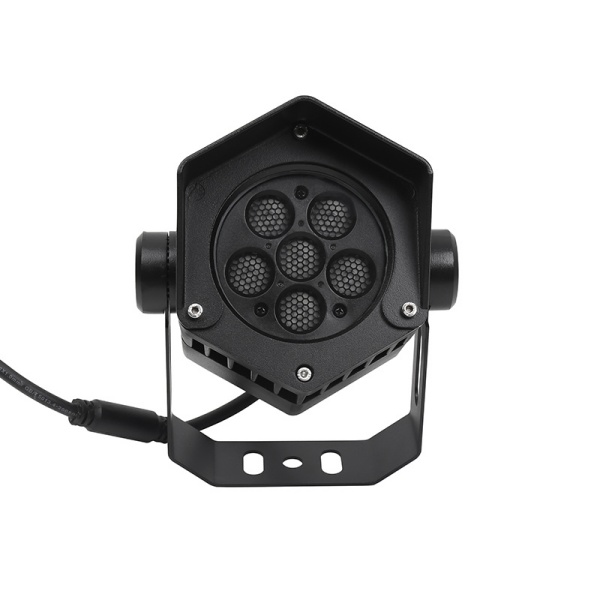
LED flood lights
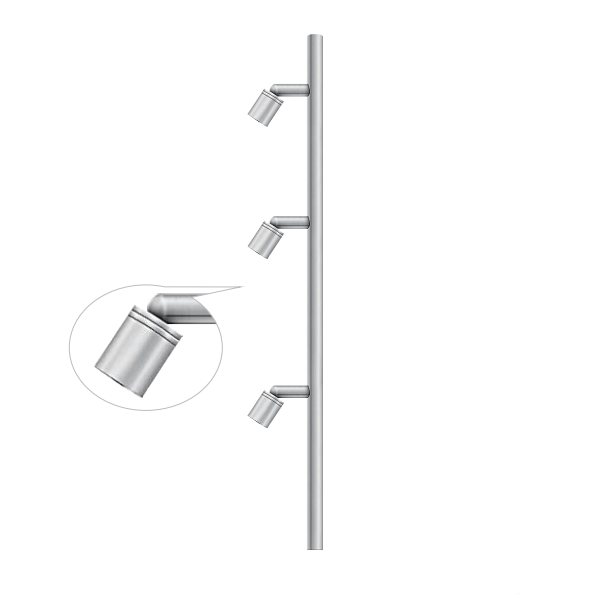
LED spotlights
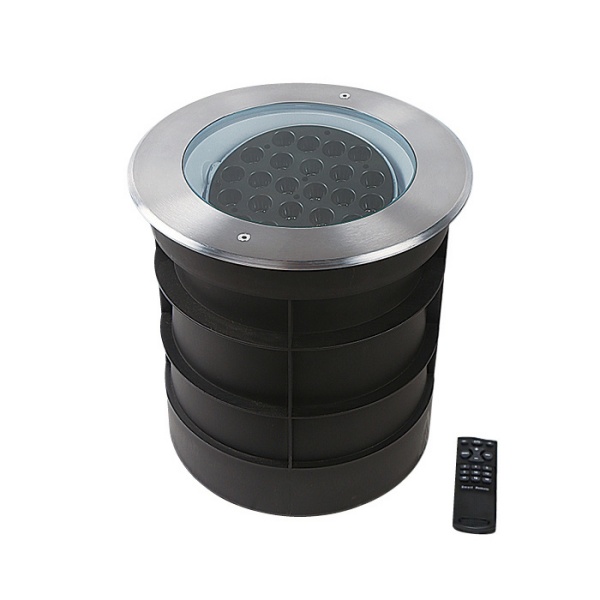
LED inground lights
LED pixel lights
For example:
Wall Washer → Main facade illumination
Linear Light → Roofline or building outline
Spotlight → Architectural details
Inground Light → Entrance or landscape
This creates a layered lighting effect and avoids making the entire building uniformly bright.
15. Create Different Lighting Layers
A professional hotel facade lighting design often uses three basic layers.
Layer 1: General Lighting
Use LED wall washers to provide overall facade illumination.
Layer 2: Accent Lighting
Use narrow-beam fixtures to highlight columns, entrances and architectural features.
Layer 3: Decorative Lighting
Use RGB/RGBW, linear lights or pixel lighting for special visual effects.
This approach creates more depth and visual hierarchy.
16. Consider Energy Efficiency
Hotel facade lighting may operate for many hours every night.
Therefore, energy efficiency is important.
Consider:
LED luminous efficacy
Appropriate lumen output
Lighting control
Dimming
Operating schedule
Fixture spacing
Avoid using excessive wattage simply to increase brightness.
A well-designed optical system can provide the required lighting effect with less wasted light.
17. Use Lighting Simulation Before Installation
For large hotels, lighting simulation can help determine the correct:
Beam angle
Fixture quantity
Fixture spacing
Mounting distance
Lumen output
Color temperature
A sample installation should also be considered.
Testing a small section of the hotel facade before mass installation can help identify problems early.
18. Hotel Facade Lighting by Building Area
Different areas of a hotel may require different lighting solutions.
Main Entrance
Use comfortable lighting to create a welcoming appearance.
Columns
Narrow beam angles such as 10°–15° can highlight vertical structures.
Main Facade
20°–45° wall washers can be considered depending on the facade dimensions.
Roofline
LED linear lights can be used together with wall washers.
Landscape Area
LED inground lights and landscape lighting can complement the facade lighting.
Hotel Signage
Lighting should highlight the hotel brand without creating excessive glare.
Common Hotel Facade Lighting Mistakes
Using Too Many Fixtures
More fixtures do not necessarily create a better result.
Using Excessive Brightness
Overly bright facades can create glare and visual discomfort.
Ignoring Windows
Direct light toward hotel rooms can negatively affect guests.
Choosing Beam Angle Without Considering Distance
Beam angle and mounting distance must be designed together.
Using One Specification for the Entire Building
Different architectural elements may require different beam angles and lumen outputs.
No Lighting Test
Always test a representative facade section before completing the entire installation.
Hotel Facade LED Wall Washer Selection Checklist
Before purchasing LED wall washers, check:
Building height
Facade width
Installation distance
Beam angle
Lumen output
Fixture spacing
Color temperature
CRI
IP rating
Voltage
RGB/RGBW requirement
DMX512 control
Operating temperature
Power supply
Cable length
Voltage drop
Glare control
Final Recommendation
The best LED wall washer for hotel facade lighting is not simply the fixture with the highest wattage.
A successful hotel lighting project should balance:
Architecture + Beam Angle + Lumens + Mounting Distance + Spacing + Color + IP Rating + Control
For a warm and elegant hotel facade, 2700K–3000K can create a comfortable appearance.
For modern hotel architecture, 4000K can provide a clean and contemporary effect.
For dynamic hotel facades, RGB/RGBW + DMX512 can provide flexible color-changing and scene control.
Always Lighting provides LED wall washer solutions for hotel facade lighting, with different beam angles, lumen outputs, IP ratings, voltages, color temperatures and RGB/RGBW control options.
For a hotel lighting project, provide the building height, facade width, installation distance, facade material, desired color and control system, and the appropriate LED wall washer specification can be selected.
FAQ
What is the best LED wall washer for hotel facade lighting?
The best fixture depends on the hotel facade, mounting distance, beam angle, lumen requirement and desired lighting effect. There is no single specification suitable for every hotel.
What beam angle is best for hotel facade lighting?
10°–15° can be suitable for columns and narrow structures, 20°–30° for medium facade areas, and 45°–60° for broad surfaces.
What color temperature is best for hotel exterior lighting?
2700K–3000K is suitable for warm and luxurious hotel lighting, while 4000K can provide a modern and clean appearance.
Can RGB wall washers be used on hotels?
Yes. RGB and RGBW LED wall washers can be used to create dynamic facade lighting for hotels, events and holidays.
Is DMX512 necessary for hotel facade lighting?
DMX512 is not necessary for simple single-color lighting, but it is useful when RGB/RGBW fixtures require color-changing, dimming and programmable lighting scenes.
What IP rating should hotel exterior wall washers have?
IP65 can be suitable for many outdoor hotel facades. IP66 or IP67 may be considered for more demanding environments depending on water exposure.
How do I avoid glare from hotel facade lighting?
Control the beam direction, mounting position and brightness. Avoid directing high-intensity light toward hotel windows, pedestrian areas and drivers.
Should hotel facade lighting use DC24V or AC220V?
Both can be used. DC24V can be suitable for RGB/RGBW and low-voltage systems, while AC220V can be practical for some large-scale projects. The final choice should follow the project's electrical design.