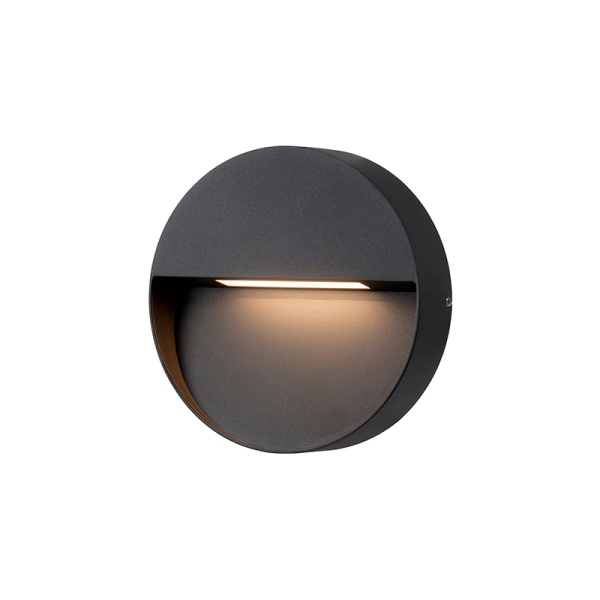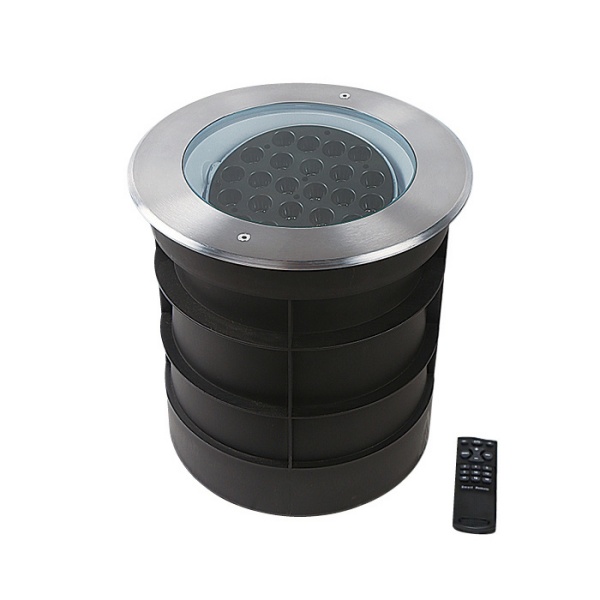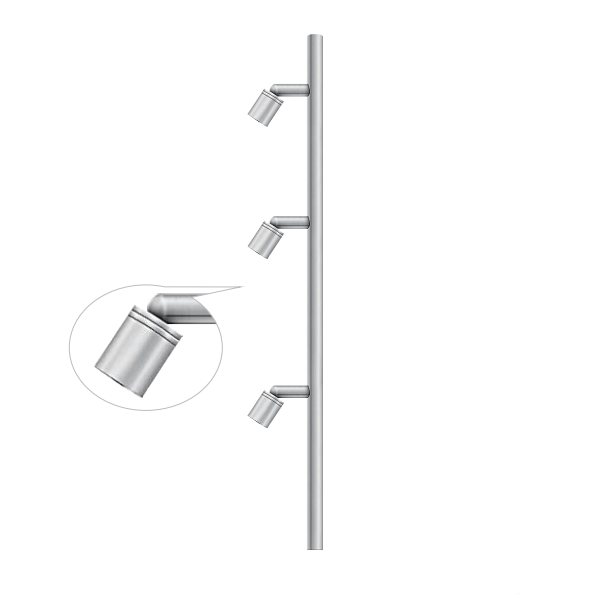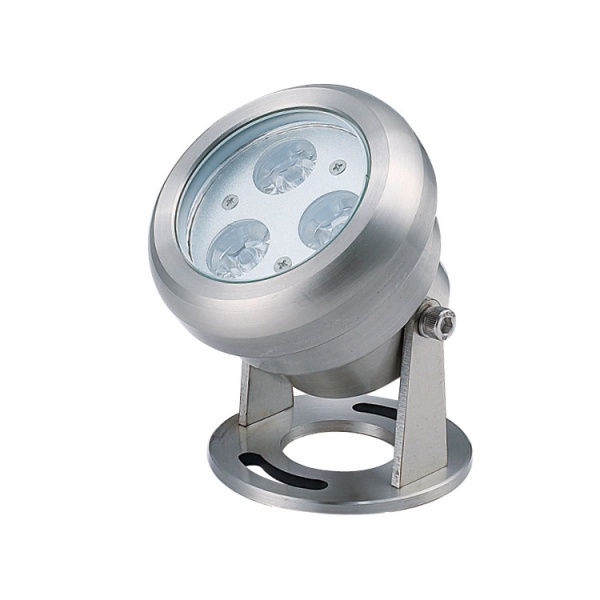

When selecting an LED Underwater Light for a fountain, swimming pool, pond or landscape water feature, waterproof protection is one of the first specifications that should be checked.
Two ratings are frequently compared:
IP67 and IP68.
Both provide dust-tight protection, but they are not designed for exactly the same type of water exposure.
The most important difference is immersion.
IP67 is designed for temporary immersion under defined test conditions, while IP68 is intended for continuous immersion under conditions specified by the manufacturer. Under IEC 60529, IP67 involves immersion up to 1 meter for 30 minutes; IP68 requires protection for continuous immersion, with the actual depth and duration specified by the manufacturer.
So which one should you choose?
For permanently submerged fountain, pool and pond lighting, IP68 is generally the more appropriate starting specification.
For outdoor lighting that may experience rain, splashing or occasional temporary immersion but is not intended to remain underwater, IP67 may be sufficient.
This guide explains the difference between IP67 and IP68 LED Underwater Lights and how to select the right protection level for your project.
The first number in IP67 is "6".
This means the enclosure provides the highest level of protection against dust ingress in the IP code system.
The second number is "7".
This refers to protection against temporary immersion in water under specified test conditions.
Under IEC 60529, the IP67 immersion test is performed at up to approximately 1 meter for 30 minutes.
IP6 = Dust-tight
IP7 = Temporary immersion
Therefore:
IP67 is designed for temporary immersion, not automatically for permanent underwater operation.
This distinction is important when specifying lighting for fountains, pools and ponds.
IP68 also has a first digit of "6", meaning dust-tight protection.
The second digit is "8", indicating protection against continuous immersion under manufacturer-specified conditions.
Unlike IP67, IP68 does not have one universal immersion depth and duration that applies to every product.
The manufacturer must specify the conditions under which the product meets IP68. These can include:
Maximum water depth
Immersion duration
Installation conditions
Cable entry conditions
Connector requirements
Therefore, you should never assume:
"IP68 means every product can be installed at any depth."
Always check the manufacturer's actual IP68 test or application specification.
| Feature | IP67 | IP68 |
|---|---|---|
| Dust Protection | Dust-tight | Dust-tight |
| Water Protection | Temporary immersion | Continuous immersion under specified conditions |
| Standard Test | Up to 1m / 30 min | Manufacturer-specified depth & duration |
| Permanent Underwater Use | Generally not the intended application | Designed for continuous immersion when specified |
| Fountain Lighting | Limited / application-dependent | Recommended for permanent underwater installation |
| Swimming Pool | Generally unsuitable for permanent submersion | More appropriate |
| Landscape Pond | Depends on installation | Suitable when product is specified for the environment |
| Waterfall Splash Zone | Often suitable | Also suitable |
| Installation Cost | Usually lower | Usually higher |
| Best Use | Wet/outdoor/temporary immersion | Permanent underwater applications |
The important point is that IP68 is not simply "a little more waterproof" than IP67. The ratings represent different immersion test requirements.
Not necessarily.
This is an important point for lighting buyers.
If a fixture is installed:
Under an outdoor roof
Beside a fountain
In a garden
Near a pool
In an area exposed to rain
In a location where water may occasionally splash
you may not need an IP68 fixture.
An IP67 product may be appropriate if the fixture is not intended for continuous underwater operation and its application specification supports the installation.
However, if the fixture is:
Permanently underwater
Inside a fountain basin
Inside a swimming pool
Installed inside a pond
Submerged in a water feature
then IP68 is generally the more appropriate specification to investigate.
The key question is not:
"Which IP rating is higher?"
It is:
"Will the fixture remain underwater during normal operation?"
IP67 can be considered for applications where the fixture may experience rain, splashing or temporary immersion but is not designed for permanent submersion.
Typical applications can include:
Fixtures installed in areas exposed to rain but not normally underwater.
Lighting installed outside the water basin.
Fixtures installed around the pool rather than inside the water.
Locations where temporary flooding or water exposure may occur.
Applications where accidental immersion may happen but continuous underwater operation is not required.
The actual product datasheet and installation instructions should always be checked before specification.
IP68 is the more relevant choice when the fixture is designed to remain underwater.
Typical applications include:
Underwater fountain fixtures can be exposed to continuous water pressure.
Pool fixtures may remain submerged for long periods.
Pond lighting can involve continuous immersion.
Fixtures installed directly inside water can require higher immersion protection.
Architectural water walls and decorative water features may require permanent underwater operation.
For these applications, don't just ask:
"Is it IP68?"
Also ask:
"What is the specified maximum installation depth?"
This is one of the most important points for buyers.
An IP68 rating does not automatically mean:
"The fixture can be installed at any depth."
IP68's exact immersion conditions are specified by the manufacturer. One IP68 product may be tested for one depth and duration, while another product may have a different specification.
Therefore, when buying an IP68 underwater light, request:
IP68 test conditions
Maximum installation depth
Recommended operating depth
Cable specification
Connector specification
Installation instructions
For example, a manufacturer may specify:
IP68 – Max. 3m underwater
That is much more useful information than simply saying:
IP68 Waterproof
A common mistake is to think that:
IP68 = completely safe and suitable for every underwater project.
It is not that simple.
An underwater lighting system also depends on:
Housing material
Cable quality
Cable gland
Waterproof connector
Sealing structure
Lens
O-ring
Power supply
Installation method
Water chemistry
Water depth
A fixture can have a strong IP rating but still perform poorly if the cable connection or installation is incorrect.
This is why the complete lighting system needs to be considered.
Fountains are one of the most common applications for IP68 underwater lighting.
A fountain light may be continuously exposed to:
Water
Water pressure
Splashing
Humidity
Chemicals
Temperature changes
For permanent underwater fountain installations, an IP68 fixture is generally the appropriate specification to investigate.
However, the correct product also depends on:
Fountain depth
Water jet height
Beam angle
Wattage
Color
Control system
For example:
IP68 + DC24V + RGB + 30° beam
can be considered for a dynamic RGB fountain application.
For a commercial fountain:
IP68 + RGBW + DMX512
can provide more advanced color and scene control.
Swimming pools create a different environment from decorative fountains.
The fixture can be exposed to:
Continuous immersion
Water pressure
Chlorinated water
Cleaning chemicals
Temperature changes
Therefore, product selection should consider both IP protection and material compatibility.
For pool projects, ask the manufacturer about:
IP68 rating
Maximum depth
Housing material
Lens material
Cable
Connector
Chemical/environmental compatibility
Applicable local electrical requirements
IP68 should be treated as one part of the overall specification, not the entire safety assessment.
Landscape ponds can have different requirements.
If the light is installed:
Above the water
IP67 may be sufficient depending on exposure.
If the light is installed:
Permanently underwater
IP68 is generally more appropriate.
For ponds, also consider:
Freshwater environment
Algae
Sediment
Water clarity
Cleaning requirements
Fixture accessibility
A good pond lighting design should provide both visual quality and practical maintenance access.
Waterfalls are slightly more complicated.
A fixture installed:
Beside the waterfall
may only require protection against rain and splash.
A fixture installed:
Directly inside the water
will have a different requirement.
Therefore, don't specify all waterfall lighting as IP67 or all waterfall lighting as IP68.
First determine the fixture's exact position.
Generally, a product engineered and tested for continuous underwater operation may cost more than a comparable fixture intended only for temporary immersion or splash exposure.
This can be related to:
Housing design
Sealing
Cable entry
Waterproof connectors
Testing
Materials
Manufacturing process
However, choosing IP68 simply because it is "better" may not be the most cost-effective solution.
The correct approach is:
Application → Required Protection → Product Specification → Cost
rather than:
Highest IP rating → Highest price → Automatically best product
A simple decision process is:
Yes → IP67 may be sufficient, depending on the exposure and product specification.
Yes → IP67 may be considered if the temporary immersion conditions are suitable.
Yes → Choose an IP68 product specified for continuous immersion.
Yes → Check the manufacturer's specified IP68 depth before ordering.
Yes → Check housing material, cable, seals and environmental compatibility in addition to IP rating.
When comparing suppliers, don't only ask:
"Is your light IP68?"
Ask more detailed questions.
Ask for the test depth and duration.
This is especially important for fountains and pools.
For example:
Stainless steel
Aluminum
Brass
Ask about:
Cable specification
Cable length
Waterproof construction
The connector should be appropriate for the underwater installation.
This may be useful for low-voltage landscape lighting systems.
Important for decorative fountains and architectural water features.
Important for commercial and programmable fountain projects.
For many landscape water-feature projects, buyers may also compare:
IP68 + DC24V
with other electrical configurations.
DC24V underwater lighting can be considered when the project's electrical design calls for a low-voltage lighting system.
A typical system may be:
AC Power
↓
DC24V Power Supply
↓
Controller
↓
IP68 LED Underwater Lights
For RGB/RGBW projects, the control system can be integrated into the overall lighting architecture.
However, the final voltage, power supply, cable sizing and protection must comply with the project's applicable electrical requirements.
For a commercial fountain, IP68 protection is only one part of the solution.
A typical dynamic lighting system could include:
IP68 Underwater Light
RGB/RGBW
DC24V
DMX512
This configuration can allow the lighting designer to create:
Color changing
Color gradients
Fading
Sequential effects
Zone control
Event scenes
Music-synchronized effects
The IP rating protects the fixture from water ingress under its specified conditions.
The RGB/RGBW system determines the color capability.
DMX512 determines how compatible fixtures are controlled.
These are different specifications and should not be confused.
| Project Requirement | IP67 | IP68 |
|---|---|---|
| Outdoor Rain | ✓ | ✓ |
| Water Splash | ✓ | ✓ |
| Temporary Immersion | ✓ | ✓ |
| Permanent Underwater Installation | Usually not intended | ✓ |
| Fountain Basin | Application-dependent | Recommended |
| Swimming Pool | Generally not for permanent submersion | ✓ |
| Landscape Pond | Depends on location | ✓ |
| Waterfall Splash Zone | ✓ | ✓ |
| Deep Water Feature | ✕ | ✓* |
| RGB | Product-dependent | Product-dependent |
| DMX512 | Product-dependent | Product-dependent |
| DC24V | Product-dependent | Product-dependent |
* Always verify the manufacturer's specified IP68 immersion depth and duration.
IP67 is intended for temporary immersion under its defined test conditions. It should not automatically be treated as a permanent underwater rating.
IP68 conditions are manufacturer-specified.
Always check the actual depth and duration.
Cable, connector, housing and installation quality also matter.
Pool chemicals and saltwater can affect material selection.
A light installed beside a fountain has different requirements from one permanently submerged inside the fountain.
For professional fountain, pool and landscape water-feature projects, IP68 can provide the appropriate starting protection level when fixtures are designed for continuous underwater operation.
At Always Lighting, underwater lighting configurations can be selected according to project requirements, including:
IP68 protection
DC24V
RGB
RGBW
DMX512
Stainless steel housing
Different beam angles
Different wattages
Different cable lengths
These configurations can be considered for:
Landscape fountains
Hotel fountains
Resort water features
Swimming pools
Landscape ponds
Waterfalls
Commercial plazas
Architectural water features
For project quotations, customers can provide:
Water depth + Fountain dimensions + Installation location + Beam angle + Required color + Voltage + Control system
This allows the manufacturer to recommend a more suitable configuration.
So, IP67 vs IP68 Underwater Light — which one should you choose?
The answer depends on how the fixture will be used.
The fixture is primarily exposed to rain or splash.
Temporary immersion may occur.
The fixture is not intended for permanent underwater operation.
The fixture will remain underwater.
It is installed inside a fountain basin.
It is used as a swimming pool underwater light.
It is installed in a pond or permanent water feature.
Continuous immersion is part of the normal application.
But remember:
IP68 does not mean unlimited underwater depth.
Always check the manufacturer's specified immersion depth, duration and installation conditions.
For professional landscape lighting, the best approach is to evaluate:
IP Rating + Water Depth + Housing Material + Cable + Connector + Voltage + Beam Angle + Lighting Control
rather than choosing a fixture based on the IP number alone.
For most permanently submerged LED fountain, pool and landscape lighting applications, an appropriately specified IP68 LED Underwater Light is the more suitable choice.
IP67 provides protection against temporary immersion under defined test conditions. It should not automatically be specified for permanent underwater operation.
For permanently submerged fountain lights, IP68 is generally the more appropriate rating because it is intended for continuous immersion under manufacturer-specified conditions.
Both provide dust-tight protection. IP67 covers temporary immersion under defined conditions, while IP68 is for continuous immersion under conditions specified by the manufacturer.
For permanent underwater installation, IP67 is generally not the appropriate specification. A properly specified IP68 fixture should be considered, together with applicable local pool electrical requirements.
Yes, IP68-rated fixtures specifically designed for continuous underwater use are commonly considered for fountain applications.
Not automatically. The manufacturer must specify the actual immersion conditions for its IP68 product.
Not necessarily. Saltwater also requires appropriate housing, sealing, cable and corrosion-resistant materials. Check the manufacturer's environmental specification.
Yes. DC24V configurations can be designed for suitable underwater lighting systems, depending on the product and project requirements.
Yes. Compatible IP68 RGB/RGBW fixtures can be integrated with DMX512 control systems for commercial fountain and architectural water-feature projects.
Check maximum installation depth, test conditions, housing material, cable, connector, power supply, beam angle, wattage and compatibility with the actual water environment.
https://www.always-lighting.com/led-underwater-light/led-underwater-light/
https://www.always-lighting.com/led-underwater-light/ip68-submersible-led-light/
Related Application
https://www.always-lighting.com/Applications/swimming-pool-underwater-lighting-solutions/