
- 12 Aug 2026
IP65 vs IP67 LED Wall Light: Which One Is Better for Outdoor Projects?
IP65 vs IP67 LED Wall Light: Which One Is Better for Outdoor Projects?
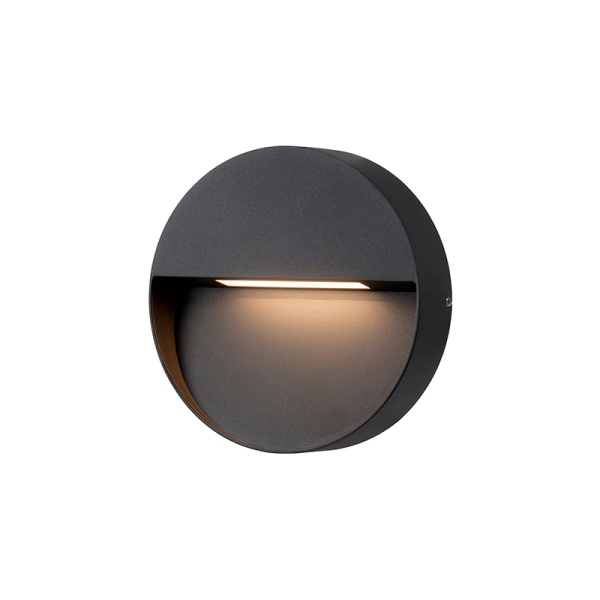
Choosing the right waterproof rating is an important step when selecting an Outdoor LED Wall Light for an architectural project.
For building facades, hotels, villas, commercial buildings, and outdoor public spaces, IP65 and IP67 LED Wall Lights are two common options.
But is IP67 always better than IP65?
Not necessarily. The better choice depends on the installation environment, water exposure, maintenance requirements, and project design.
Understanding the difference between IP65 and IP67 can help architects, lighting designers, contractors, and project developers choose the right Exterior LED Wall Light for each application.
What Does IP65 and IP67 Mean?
IP stands for Ingress Protection. The IP code classifies the protection provided by an enclosure against solids and water under defined test conditions.
The first number indicates protection against solid particles.
Both IP65 and IP67 start with 6, meaning they are dust-tight.
The difference is the second number:
| Rating | Dust Protection | Water Protection | Typical Application |
|---|---|---|---|
| IP65 | Dust-tight | Protection against water jets | General outdoor applications |
| IP67 | Dust-tight | Protection against temporary immersion | More demanding outdoor environments |
Under the IEC 60529 classification, IP65 and IP67 therefore represent different water-protection tests, rather than a simple “good vs better” scale.
IP65 LED Wall Light: When Is It Suitable?
An IP65 LED Wall Light provides dust-tight protection and protection against water jets.
It can be suitable for many outdoor architectural applications where the fixture is exposed to normal rain and water spray but is not expected to be temporarily submerged.
Typical applications include:
Building exterior walls
Hotel entrances
Villa facades
Commercial buildings
Restaurants
Covered outdoor areas
Architectural accent lighting
For many standard exterior wall lighting projects, IP65 can provide an appropriate balance between protection, product design, and project requirements.
IP67 LED Wall Light: When Should You Choose It?
An IP67 LED Wall Light provides the same dust-tight protection as IP65 but is tested for temporary immersion under the applicable IP classification conditions.
IP67 can be considered when the fixture has a greater risk of:
Temporary water exposure
Water accumulation
Heavy rain
Low-level exterior installation
More demanding outdoor environments
For example, IP67 may be a better choice when an architectural wall light is installed in a location where water could temporarily collect around the fixture.
However, IP67 should not automatically be treated as a replacement for every IP65 application.
IP65 vs IP67 LED Wall Light: Key Differences
The biggest difference is the water protection test, not the dust protection.
IP65
Best suited for:
Standard exterior wall lighting
Building facades
Hotel entrances
Covered outdoor spaces
General architectural lighting
IP67
Better suited for:
More exposed exterior locations
Areas where water may accumulate
Low-level installations
Projects requiring temporary immersion protection
The right choice should be based on the actual project environment rather than simply selecting the highest IP number.
Which Is Better for Building Facade Lighting?
For Building Facade Lighting, there is no universal answer.
Choose IP65 when:
The LED wall light is installed on a normal exterior wall with good drainage and no realistic risk of temporary immersion.
Consider IP67 when:
The installation location has greater exposure to water or there is a possibility of temporary water accumulation around the fixture.
For architects and lighting designers, the IP rating should be considered together with:
Installation height
Wall structure
Drainage
Weather conditions
Fixture orientation
Cable entry
Connector protection
Maintenance access
This is particularly important for large commercial and hotel projects.
IP Rating Is Not the Only Factor for Outdoor LED Wall Lights
A common mistake is to choose an outdoor wall light based only on its IP rating.
For professional architectural lighting, you should also evaluate:
1. Housing Material
Aluminum housing can provide mechanical durability and assist with heat dissipation.
For coastal environments, corrosion resistance and surface treatment should also be considered.
2. Heat Dissipation
A higher IP rating does not automatically mean better thermal performance.
Outdoor LED wall lights should have an appropriate thermal design to help maintain stable LED and driver performance.
Consider:
Aluminum housing
Heat dissipation structure
LED efficiency
Driver quality
Ambient temperature
3. Installation Environment
Before choosing IP65 or IP67, consider:
Is the fixture directly exposed to rain?
Is it installed under an eave?
Can water accumulate around the fixture?
Is it installed close to the ground?
Is the project located in a humid or coastal climate?
The answers can help determine the appropriate protection level.
IP65 vs IP67 for Hotel Exterior Lighting
Hotels often combine different types of exterior lighting.
For example:
Hotel Facade
→ LED Linear Light
→ LED Wall Washer
→ Exterior LED Wall Light
→ Up Down LED Wall Light
→ Architectural Flood Light
For a wall-mounted LED fixture positioned on a well-drained facade, IP65 may be sufficient depending on the product and project specification.
For more exposed locations or areas with potential water accumulation, IP67 may provide additional protection against temporary immersion.
The final selection should be based on the actual installation environment and project specification.
IP65 vs IP67 for Villa Facade Lighting
Modern villas often use LED wall lights around:
Entrance doors
Garages
Terraces
Garden walls
Balconies
For covered locations, IP65 may be appropriate.
For directly exposed exterior locations or areas where water can collect, IP67 may be considered.
In addition to waterproof protection, villa projects should also consider the visual effect.
For example:
Warm White + Up & Down Beam
can create a sophisticated and comfortable architectural atmosphere.
IP65 vs IP67 for Commercial Buildings
Commercial buildings often require reliable exterior lighting for long operating periods.
The selection should consider:
Building height
Fixture location
Weather exposure
Maintenance access
Lighting control
Expected operating hours
For larger projects, IP rating should be part of the overall lighting specification rather than the only purchasing criterion.
How to Choose Between IP65 and IP67 LED Wall Light?
Use this simple checklist:
Choose IP65 if:
✔ The fixture is exposed to normal rain and water spray
✔ The location has good drainage
✔ There is no realistic risk of temporary immersion
✔ The project is a standard exterior facade application
Consider IP67 if:
✔ The fixture is installed in a more exposed location
✔ Water may temporarily accumulate around the fixture
✔ The fixture is installed close to ground level
✔ The project environment requires additional immersion protection
Important: IP67 Does Not Mean “Better in Every Way”
One important point for project buyers is that IP67 is not simply a higher version of IP65.
IP65 and IP67 use different water-ingress test conditions. In particular, the “7” in IP67 indicates temporary immersion protection, while the “5” in IP65 indicates protection against water jets.
Therefore, when selecting an Outdoor LED Wall Light, do not assume:
Higher IP number = automatically better product.
Instead, choose the IP rating that matches the actual installation environment.
Also check the complete lighting system, including:
Fixture
Cable entry
Connector
Driver
Junction box
Installation method
A highly rated fixture cannot compensate for poorly protected connections or incorrect installation.
Why Choose Always Lighting for Outdoor LED Wall Light Projects?
Always Lighting provides Outdoor LED Wall Light and Architectural Facade Lighting Solutions for international B2B projects.
Our outdoor lighting solutions can be used for:
Building Facade Lighting
Hotel Exterior Lighting
Villa Facade Lighting
Commercial Building Lighting
Landscape Lighting
Architectural Accent Lighting
Depending on the product model and project requirements, solutions can include different:
IP protection levels
Beam angles
Color temperatures
Housing finishes
LED configurations
RGB/RGBW options
Lighting control systems
Always Lighting works with architects, lighting designers, contractors, distributors, and project developers to provide project-based outdoor LED lighting solutions.
FAQ
Is IP67 better than IP65 for outdoor LED wall lights?
Not always. IP67 provides temporary immersion protection, while IP65 is tested against water jets. The appropriate rating depends on the installation environment.
Is IP65 suitable for outdoor wall lights?
Yes. IP65 can be suitable for many outdoor wall lighting applications where the fixture is exposed to rain and water spray but not temporary immersion.
When should I choose an IP67 LED Wall Light?
Consider IP67 when the fixture has greater exposure to water or there is a possibility of temporary water accumulation or temporary immersion.
Are IP65 and IP67 both dustproof?
Yes. Both ratings begin with “6,” indicating dust-tight protection under the IP classification system.
What IP rating is best for building facade lighting?
There is no single best IP rating for every facade. The appropriate rating depends on installation location, water exposure, drainage, fixture design, and project specifications.
Conclusion
So, IP65 vs IP67 LED Wall Light — which one is better?
The answer depends on your project.
IP65 can be a suitable choice for many standard exterior wall lighting applications, while IP67 is worth considering where temporary immersion or greater water exposure is possible.
For architects, lighting designers, and contractors, the best approach is to evaluate the actual environment, drainage, installation position, beam angle, thermal design, materials, and complete electrical connection system before selecting an Outdoor LED Wall Light.
The right IP rating is not necessarily the highest one—it is the one that matches the project's real requirements.
Looking for IP65 or IP67 LED Wall Light solutions for your next building facade project? Contact Always Lighting for professional outdoor architectural lighting support.