
- 18 Aug 2026
How to Control RGB Underwater Lights with DMX512?
How to Control RGB Underwater Lights with DMX512?
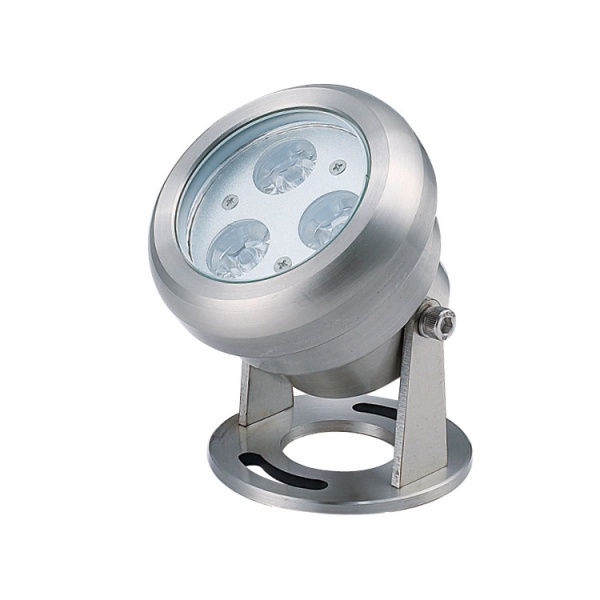
RGB underwater lights are widely used for fountains, swimming pools, ponds, waterfalls and architectural water features.
For a small project, a simple remote controller may be enough.
However, when a project contains many RGB underwater lights and requires individual colors, smooth transitions, programmed scenes or music synchronization, DMX512 control provides a much more flexible solution.
A typical professional system consists of:
DMX512 Controller
↓
DMX Signal Cable
↓
RGB Underwater Light
Power Supply
The DMX controller sends digital lighting commands to the fixtures. Each fixture is assigned a DMX start address so it knows which channels it should respond to. A DMX universe contains up to 512 channels, with each channel using values from 0 to 255.
This guide explains how to design and control an RGB DMX512 underwater lighting system for fountain and landscape projects.
What Is DMX512?
DMX512 is a digital communication protocol used to control lighting equipment.
In simple terms:
The DMX controller tells each light what color and brightness to produce.
A DMX system uses channels to send control information.
For a basic RGB fixture, three channels are commonly used:
Channel 1 = Red
Channel 2 = Green
Channel 3 = Blue
Each channel can be controlled from 0 to 255.
This allows the controller to adjust the intensity of each RGB color independently.
For example:
Red = 255
Green = 0
Blue = 0
produces red.
Another combination:
Red = 0
Green = 255
Blue = 255
produces cyan.
The actual color result depends on the fixture's LED characteristics and optical design.
What Do You Need to Control RGB Underwater Lights with DMX512?
A basic DMX512 RGB underwater lighting system normally requires:
1. RGB Underwater Lights
The fixtures must support DMX512 directly or work with a compatible DMX decoder.
2. DMX512 Controller
The controller generates the DMX lighting commands.
3. DMX Signal Cable
The control signal travels through the DMX communication line.
4. Power Supply
For a low-voltage system, this may be a:
DC24V Power Supply
5. DMX Terminator
A terminator is normally installed at the end of a DMX daisy chain to reduce signal reflections.
6. DMX Splitter
For larger installations, a DMX splitter/repeater may be required to create additional branches and regenerate the signal.
The exact system depends on the fixture specification, project size and control architecture. DMX guidance commonly recommends proper DMX cable, daisy-chain wiring, termination and avoiding direct Y-splitting of the signal.
Basic DMX512 RGB Underwater Light System
A simplified system looks like this:
DMX512 Controller
↓
DMX Cable
↓
RGB Underwater Light 1
↓
RGB Underwater Light 2
↓
RGB Underwater Light 3
↓
RGB Underwater Light 4
↓
DMX Terminator
The underwater lights also receive power from the appropriate power-supply system.
For example:
AC Input
↓
DC24V Power Supply
↓
RGB Underwater Lights
while:
DMX Controller
↓
DMX Signal
↓
RGB Underwater Lights
In other words:
Power supplies the light.
DMX controls the light.
They are two different functions.
DMX512 vs Power Supply: What Is the Difference?
This is an important point for project buyers.
DC24V is an electrical power specification.
DMX512 is a control protocol.
They are not alternatives.
A professional RGB underwater lighting system can use both.
For example:
DC24V + DMX512 + RGB + IP68
means:
DC24V = operating voltage
DMX512 = control protocol
RGB = LED color system
IP68 = ingress protection rating
This combination can be suitable for many appropriately designed fountain and landscape water-feature applications.
How Does DMX512 Control RGB Colors?
The controller sends values to the RGB channels.
A basic RGB fixture might use:
| DMX Channel | Function |
|---|---|
| Channel 1 | Red |
| Channel 2 | Green |
| Channel 3 | Blue |
For example:
Red
R = 255
G = 0
B = 0
Green
R = 0
G = 255
B = 0
Blue
R = 0
G = 0
B = 255
Purple
R = 255
G = 0
B = 255
White-like RGB Mix
R = 255
G = 255
B = 255
However, the final white appearance from RGB mixing is not necessarily equivalent to a dedicated white LED in an RGBW fixture.
How to Set DMX Address for RGB Underwater Lights?
Each DMX fixture needs a start address.
This tells the fixture which channels belong to it.
For a simple 3-channel RGB fixture:
Light 1
Start Address:
1
Channels:
1–3
Light 2
Start Address:
4
Channels:
4–6
Light 3
Start Address:
7
Channels:
7–9
Light 4
Start Address:
10
Channels:
10–12
And so on.
The next fixture should start after the previous fixture's complete channel range. For multi-channel fixtures, overlapping addresses can cause unexpected behavior.
Can Two RGB Underwater Lights Use the Same DMX Address?
Yes.
If two fixtures use the same start address and the same DMX mode, they can respond identically.
For example:
Light 1 → Address 1
Light 2 → Address 1
Both lights can then display the same RGB commands.
This can be useful when you want a group of lights to behave as one lighting zone.
For example:
Zone 1 = Fountain Left
Zone 2 = Fountain Center
Zone 3 = Fountain Right
Instead of controlling every light individually, the designer can group lights according to the fountain layout.
Individual Control vs Group Control
DMX512 gives lighting designers two useful approaches.
Individual Control
Every underwater light has a different address.
For example:
Light 1 → 1
Light 2 → 4
Light 3 → 7
Light 4 → 10
This allows individual color programming.
Group Control
Several lights share the same address.
For example:
Light 1 → 1
Light 2 → 1
Light 3 → 1
Light 4 → 1
All four lights respond together.
This can simplify the programming of large fountains.
The best approach depends on the desired lighting effect.
How to Create Color-Changing Effects with DMX512?
Once the RGB channels are correctly addressed, the controller can create different scenes.
For example:
Scene 1
All lights = Blue
Scene 2
Blue → Purple
Scene 3
Purple → Red
Scene 4
Red → Orange
Scene 5
Orange → Green
Scene 6
Green → Blue
The controller can automatically change the RGB values over time.
This creates:
Color fading
Color transitions
Dynamic effects
Scene changes
Sequential effects
Higher-resolution DMX control can also provide smoother transitions where supported by the fixture and controller.
How to Create a Gradient Effect with RGB Underwater Lights?
Gradient lighting is particularly attractive for large fountains.
For example:
Light 1 = Blue
Light 2 = Blue + Purple
Light 3 = Purple
Light 4 = Purple + Pink
Light 5 = Pink
The result is a gradual color transition across the fountain.
This type of effect is much easier to achieve when the fixtures can be individually addressed.
For architectural water features, the lighting designer can use the fountain geometry to determine the DMX grouping and color sequence.
How to Control a Large Fountain with DMX512?
Consider a fountain with:
60 RGB Underwater Lights.
Instead of controlling all 60 fixtures simultaneously, the designer can divide the fountain into zones.
For example:
Zone A
Lights 1–15
Zone B
Lights 16–30
Zone C
Lights 31–45
Zone D
Lights 46–60
Each zone can have its own lighting scene.
This can create more organized visual effects.
For larger systems, channel capacity and network architecture need to be planned carefully. A DMX universe contains up to 512 channels; larger systems can use multiple universes.
How Many RGB Underwater Lights Can One DMX Universe Control?
This depends on the fixture's channel mode.
A basic RGB fixture may use:
3 channels
Therefore, the theoretical channel calculation is:
512 ÷ 3 = 170 RGB fixtures
But this is only a channel-capacity calculation.
The actual project may require fewer fixtures per DMX line because of:
Cable length
Network topology
Device loading
Signal distribution
Controller limitations
Additional fixture channels
For example, if an RGB fixture uses:
5 channels
then the theoretical channel calculation becomes:
512 ÷ 5 = 102 fixtures
Therefore:
Always calculate the required DMX channels based on the actual fixture's DMX mode.
RGBW Underwater Lights Need More DMX Channels
If you use RGBW instead of RGB, there is usually one additional color channel.
A basic RGBW configuration may use:
Red
Green
Blue
White
Therefore:
RGB = commonly 3 channels
RGBW = commonly 4 channels
Some fixtures use additional channels for dimming, strobe or preset effects.
For example, a fixture may have:
RGB + Dimmer + Strobe
or
RGBW + Dimmer + Effects
The actual channel configuration should always come from the product DMX manual.
DMX512 Wiring for RGB Underwater Lights
A typical DMX installation uses a daisy-chain topology.
Example:
Controller
↓
Light 1
↓
Light 2
↓
Light 3
↓
Light 4
↓
Terminator
Avoid making an uncontrolled Y-shaped split in the DMX signal line.
For larger systems, use a suitable DMX splitter or repeater.
ENTTEC recommends using proper DMX/data cable rather than ordinary microphone/audio cable and recommends termination at the end of a daisy-chain.
Why Is a DMX Terminator Important?
The last fixture on a DMX line should normally be terminated according to the system design.
The terminator helps reduce signal reflections that can cause communication problems.
A typical DMX terminator uses a resistor across the data pair.
For a professional fountain installation, correct termination is a small but important detail.
If the system experiences:
Random color changes
Flickering
Unresponsive fixtures
Unstable control
check:
Addressing + Cable + Polarity + Termination + Controller Configuration.
What DMX Cable Should You Use?
Use cable designed for DMX/RS-485 communication.
A typical DMX system uses balanced twisted-pair data transmission.
Do not automatically assume that any two-core cable will provide reliable DMX communication.
For underwater fountain projects, also consider:
Outdoor installation
Water exposure
Cable protection
Connector sealing
Cable length
Electromagnetic interference
The DMX signal cable should be separated appropriately from high-power electrical wiring according to the project design.
DMX512 and IP68 Underwater Lights
The underwater fixture itself needs appropriate waterproof protection.
For permanently submerged applications, IP68 is commonly specified, but IP68 is not a universal statement of unlimited depth or immersion.
The manufacturer should specify the actual test conditions and intended application.
Therefore, when purchasing an RGB DMX512 underwater light, check:
IP rating
Maximum immersion depth
Housing material
Cable specification
Connector
Sealing method
Operating voltage
Operating temperature
A professional system needs both:
Reliable waterproofing
and
Reliable DMX communication.
DMX512 + DC24V RGB Underwater Light
A common project configuration can be:
IP68 RGB Underwater Light
DC24V
DMX512
This combination separates power and control.
The power system provides stable DC voltage to the fixture.
The DMX system controls:
RGB color
Brightness
Scene
Transition
Dynamic effect
For large projects, the power distribution should also be calculated carefully.
The installer needs to consider:
Total Wattage + Cable Length + Voltage Drop + Power Supply Capacity.
How to Synchronize RGB Underwater Lights with Music?
DMX512 can also be integrated into more advanced fountain-control systems.
A simplified concept is:
Music
↓
Control Software
↓
DMX Controller
↓
RGB Underwater Lights
At the same time, the fountain-control system can manage:
Pumps + Valves + Nozzles + Lighting
This can create synchronized musical fountain shows.
A computer-based DMX system can also use audio information to generate lighting commands for sound-reactive effects.
For a commercial musical fountain, the final control architecture should be designed as a complete system rather than treating the lighting as an isolated component.
DMX512 Troubleshooting for RGB Underwater Lights
If the RGB underwater lights do not respond correctly, check the following.
Problem 1: Light Does Not Turn On
Check:
Power supply
DC voltage
Cable connection
Fixture wiring
Problem 2: Light Turns On but Color Is Wrong
Check:
RGB channel order
DMX mode
Start address
Controller patch
Problem 3: Several Lights Change Together
Check whether they have:
The same DMX address.
If this is intentional, it is normal.
If not, assign unique addresses.
Problem 4: Lights Flicker
Check:
DMX cable
Signal polarity
Termination
Cable routing
Splitter/repeater
Electrical interference
Problem 5: Only Some Lights Respond
Check:
DMX daisy chain
Address configuration
Cable continuity
Fixture mode
DMX signal distribution
Common DMX512 Mistakes in Fountain Projects
Mistake 1: Wrong DMX Address
Two fixtures may accidentally overlap channels.
Mistake 2: Using the Wrong Cable
Ordinary audio cable may cause communication problems.
Mistake 3: No Terminator
The end of the DMX line may experience signal reflections.
Mistake 4: Incorrect Signal Polarity
Data+ and Data− must match the fixture's specification.
Mistake 5: Direct Y-Splitting
Use a suitable DMX splitter rather than making an uncontrolled signal branch.
Mistake 6: Ignoring Power Distribution
A DMX signal can be correct while the lighting power system is inadequate.
Mistake 7: Not Checking Fixture DMX Mode
An RGB fixture may have multiple DMX personalities.
Always check the product manual.
How to Design a DMX512 RGB Fountain Lighting System?
Before ordering the fixtures, determine:
Step 1: Fountain Size
Measure:
Length
Width
Height
Water depth
Step 2: Determine Number of Lights
Consider:
Jet height
Fixture spacing
Beam angle
Desired brightness
Step 3: Select RGB or RGBW
Choose RGB when color effects are the priority.
Choose RGBW when independent white light is also required.
Step 4: Select Voltage
For example:
DC24V
depending on the fixture and project electrical design.
Step 5: Select DMX Mode
Determine:
3-channel RGB
or a more advanced multi-channel mode.
Step 6: Calculate DMX Channels
Use:
Number of Fixtures × Channels per Fixture
Step 7: Design the DMX Network
Determine:
Cable routes
DMX branches
Splitters
Terminators
Controller location
Step 8: Design Power Distribution
Calculate:
Total fixture wattage + power-supply capacity + cable voltage drop.
This should be done before installation.
Example: 30 RGB Underwater Lights
Let's take a simple example.
A fountain uses:
30 RGB Underwater Lights
Each fixture uses:
3 DMX channels
Then:
30 × 3 = 90 DMX channels
This fits comfortably within one 512-channel DMX universe.
The fixtures could be addressed:
| Fixture | Start Address |
|---|---|
| Light 1 | 1 |
| Light 2 | 4 |
| Light 3 | 7 |
| Light 4 | 10 |
| ... | ... |
| Light 30 | 88 |
The final fixture would use channels:
88–90
This leaves additional DMX channels available for other compatible fixtures or functions.
Example: 100 RGB Underwater Lights
For:
100 RGB fixtures
with:
3 channels per fixture
the basic channel requirement is:
100 × 3 = 300 channels
So the channel count fits within one 512-channel universe.
However, the physical DMX network still needs to be designed correctly for cable length, device loading and branching.
For larger projects, DMX splitters/repeaters and multiple universes may be used as required.
DMX512 for Hotel and Commercial Fountain Projects
DMX512 is especially useful when the fountain is part of a larger architectural lighting scheme.
For example:
Hotel Fountain
Normal mode:
Warm White / Blue
Event mode:
RGB Color Effects
Special event:
Programmed Scenes
Commercial Plaza
Daytime:
Static Lighting
Night:
Color Changing
Festival:
Dynamic RGB Effects
This makes DMX512 useful not only for musical fountains but also for architectural and commercial water features.
What Should You Ask an RGB Underwater Light Manufacturer?
Before purchasing, ask the supplier:
Product
Is the fixture RGB or RGBW?
Is DMX512 integrated?
What is the wattage?
What beam angles are available?
What LED brand is used?
Electrical
Is DC24V available?
What is the operating current?
What power supply is recommended?
Waterproofing
Is it IP68?
What is the maximum immersion depth?
What are the IP68 test conditions?
DMX
How many channels does each fixture use?
What is the DMX address range?
What DMX modes are available?
Is a decoder required?
What is the DMX wiring method?
Installation
Cable length
Connector type
Housing material
Mounting accessories
Having this information before quotation can prevent many problems during installation.
Why Choose Always Lighting for DMX512 RGB Underwater Lights?
Always Lighting provides LED lighting solutions for architectural and landscape applications, including underwater and fountain lighting.
For professional fountain projects, RGB underwater lighting can be configured according to project requirements, including:
RGB
RGBW
DMX512
DC24V
IP68
Stainless steel housing
Different wattages
Different beam angles
Different cable lengths
These solutions can be considered for:
Fountains
Swimming Pools
Landscape Ponds
Waterfalls
Hotel Water Features
Commercial Plazas
Architectural Water Features
Musical Fountain Projects
For a project quotation, provide:
Fountain dimensions + water depth + number of lights + wattage + beam angle + RGB/RGBW + control system.
This allows the lighting manufacturer to help determine the appropriate fixture and control configuration.
Conclusion
Controlling RGB underwater lights with DMX512 is not simply a matter of connecting a controller to the first light.
A reliable system should be designed around:
RGB Underwater Light
DMX512 Controller
Correct DMX Address
Proper DMX Cable
DMX Terminator
Power Supply
Correct Power Distribution
For a simple fountain, only a few RGB fixtures may be needed.
For a commercial or musical fountain, DMX512 can provide much greater control over individual fixtures, zones, colors and lighting scenes.
The key is to design the lighting fixtures, DMX network and power system together.
For professional fountain projects, the most important specifications to confirm are:
IP68 + RGB/RGBW + DC24V + DMX512 + Beam Angle + Wattage + Housing Material + Cable Specification
With the right combination, RGB underwater lights can create smooth color transitions, gradients, dynamic scenes and synchronized architectural water-feature lighting.
FAQ
Can RGB underwater lights be controlled with DMX512?
Yes. If the underwater light has built-in DMX512 functionality or is compatible with a DMX decoder, it can be controlled through a DMX512 system.
How many DMX channels does an RGB underwater light use?
A basic RGB fixture commonly uses three channels: Red, Green and Blue. Some fixtures use additional channels for dimming, strobe or other functions.
How do I set the DMX address of an RGB underwater light?
Set the fixture's start address according to its DMX mode. For a 3-channel RGB fixture, if the first light starts at address 1, the next can start at address 4, then 7, and so on.
Can multiple RGB underwater lights have the same DMX address?
Yes. Fixtures with the same address and compatible DMX mode can respond together. This is useful for creating lighting zones.
Can DMX512 control each underwater light individually?
Yes, provided each fixture has its own DMX address and the controller supports the required number of channels.
Can DC24V and DMX512 be used together?
Yes. DC24V provides electrical power, while DMX512 provides the control signal.
Does an IP68 underwater light automatically support DMX512?
No. IP68 describes ingress protection under specified test conditions. DMX512 is a separate control feature. The product specification should explicitly state whether DMX512 is supported.
Can DMX512 RGB underwater lights create gradient effects?
Yes. Individual addressing allows different RGB fixtures or groups to display different colors, creating gradient and sequential effects.
Can DMX512 RGB underwater lights synchronize with music?
Yes. A suitable lighting-control system can convert audio or programmed show data into DMX commands. This can be used for musical fountain projects.
Do I need a DMX terminator?
For a conventional DMX daisy chain, the final device should normally be terminated according to the system design. Proper termination helps reduce signal reflections.
Can I use ordinary electrical cable for DMX512?
It is better to use cable suitable for DMX/RS-485 communication. Proper cable impedance and construction help maintain reliable communication, particularly on longer installations.
Related product
https://www.always-lighting.com/led-underwater-light/rgb-underwater-led-light-manufacturer/
https://www.always-lighting.com/led-underwater-light/dmx512-underwater-light-manufacturer/
Related Application
https://www.always-lighting.com/Applications/musical-fountain-lighting/