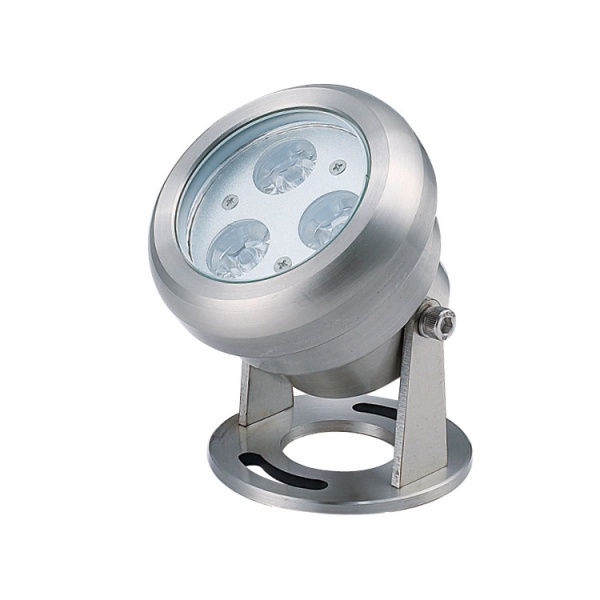

When choosing RGB Underwater Lights for a fountain, swimming pool, pond or landscape water feature, the lighting fixture itself is only part of the system.
The control method is equally important.
Two common options are:
Remote Control
and
DMX512 Control.
Remote control is simple and convenient. It can be a good solution for small fountains, private pools and simple landscape applications.
DMX512, on the other hand, is designed for more advanced lighting control. It can assign different addresses to fixtures and control multiple lighting channels from a centralized controller. A standard DMX universe provides up to 512 control channels, with each channel using 256 levels of control.
So, which system should you choose?
The answer depends mainly on:
Number of lights
Fountain size
Required lighting effects
Whether individual lights need to be controlled
Music synchronization
Project budget
Future expansion
For a small decorative water feature, remote control may be enough.
For a commercial fountain or architectural water feature, DMX512 is usually the more flexible solution.
A remote-control RGB underwater light typically uses a wireless controller or receiver to change lighting modes.
Depending on the product design, users may be able to control:
On/off
Brightness
Color
Color-changing modes
Speed
Preset effects
The main advantage is simplicity.
There is usually no need to program individual DMX addresses or build a complex lighting-control network.
For a small project, this can make installation and daily operation easier.
DMX512 is a digital lighting-control protocol widely used for stage, entertainment and architectural lighting.
A DMX system sends control data from a controller to lighting fixtures.
Each fixture can be assigned an address and a group of channels.
For RGB lighting, three channels are commonly used:
Red
Green
Blue
Each DMX channel provides 256 control values, allowing precise adjustment of intensity.
Depending on the fixture's DMX mode, additional channels can also be used for:
Master dimming
Strobe
Preset programs
Speed
Other lighting functions
This makes DMX512 particularly suitable for projects where multiple RGB underwater lights need coordinated control.
| Feature | Remote Control | DMX512 |
|---|---|---|
| Installation | Simple | More complex |
| Operation | Very easy | Requires controller/programming |
| Individual Fixture Control | Usually limited | Yes, if fixture is addressable |
| Multiple Light Control | Basic | Advanced |
| Color Control | Yes | Yes |
| Brightness Control | Yes | Yes |
| Dynamic Effects | Basic | Advanced |
| Scene Programming | Limited | Excellent |
| Music Synchronization | Limited | Excellent |
| Large Fountain | Not ideal | Excellent |
| Small Fountain | Excellent | Possible |
| Swimming Pool | Good | Excellent for commercial systems |
| Commercial Project | Limited | Excellent |
| Initial Cost | Lower | Higher |
| Scalability | Limited | High |
The exact capabilities of a remote-control system vary by manufacturer, so buyers should always check the actual control range and supported functions.
Remote control is often a good choice when the lighting system is relatively simple.
For example:
If there are only a few RGB underwater lights and the owner simply wants to change colors, a remote control can be practical.
A homeowner may only need:
Blue
Green
Red
White
Color changing
Brightness adjustment
A complicated DMX system may not be necessary.
If all lights need to display the same color and effect, remote control can reduce system complexity.
Users can change lighting modes without learning DMX programming.
A basic wireless control system may require fewer control components.
For small projects, remote control can reduce the cost of controllers and control infrastructure.
If the entire fountain only needs one lighting zone, remote control can be sufficient.
Homeowners can easily change the lighting effect using a handheld remote.
Remote control becomes less attractive when the project becomes larger.
Potential limitations include:
Limited individual fixture control
Limited programming
Limited synchronization
Wireless range limitations
Less suitable for complex fountain shows
More difficult to integrate with professional lighting systems
For example, imagine a fountain with:
50 RGB underwater lights.
If the owner wants every light to have a different color sequence, a basic remote control system may not provide the required level of control.
This is where DMX512 becomes much more useful.
DMX512 is particularly suitable when you need:
Multiple fixtures + Individual control + Dynamic effects + Scene programming.
Typical applications include:
Musical fountains
Hotel fountains
Resort water features
Commercial plazas
Architectural water features
Theme parks
Large landscape projects
Public fountains
A DMX controller can send commands to multiple fixtures over the lighting network.
This makes it possible to create coordinated lighting scenes rather than simply changing the color of all lights at the same time.
One of the biggest advantages of DMX512 is individual addressing.
For example:
Light 1 → Red
Light 2 → Blue
Light 3 → Green
Light 4 → Purple
Light 5 → White
At the same time, other lights can gradually change color.
This creates much more sophisticated visual effects.
However, this requires the actual underwater fixture and controller to support the appropriate DMX addressing and channel configuration.
Consider a commercial fountain with:
100 RGB Underwater Lights.
The lighting designer may want:
All lights blue.
Blue → Purple → Pink.
Lights change from the center outward.
Left side → center → right side.
Color changes synchronized with music.
A DMX512 control system can be programmed for these types of sequences.
DMX is commonly used for multi-channel lighting control and can support multiple universes when a single 512-channel universe is insufficient.
For musical fountains, control requirements are more complicated.
The system may need to coordinate:
Music
Water Jets
Pumps
Valves
RGB Underwater Lights
The lighting system can be programmed to change according to the fountain choreography.
For example:
Music Beat
↓
Water Jet Movement
↓
RGB Color Change
↓
Brightness Change
↓
Next Scene
This creates a synchronized visual experience.
This is one of the strongest reasons to choose DMX512 for professional fountain projects.
Hotels often need different lighting scenes depending on the time and event.
Warm or blue lighting.
Soft color transitions.
Purple and pink.
Dynamic RGB effects.
Programmed lighting show.
A remote control may be sufficient for simple changes.
However, DMX512 provides much greater flexibility when the lighting system becomes part of the overall architectural design.
For a residential swimming pool, remote control can be convenient.
The owner may only want:
Blue → Green → Purple → Color Changing.
For a commercial hotel pool, however, the requirements may be more advanced.
The lighting may need to integrate with:
Building lighting
Landscape lighting
Event lighting
Architectural control systems
In such cases, a professional control protocol such as DMX512 may be more appropriate.
An RGB fixture commonly uses three channels:
Channel 1 → Red
Channel 2 → Green
Channel 3 → Blue
This allows independent adjustment of the three color components.
Some fixtures use additional channels for functions such as master dimming, strobe or preset effects.
For example:
| Channel | Function |
|---|---|
| 1 | Red |
| 2 | Green |
| 3 | Blue |
| 4 | Master Dimmer |
| 5 | Strobe / Effect |
The actual channel layout depends on the fixture's DMX personality, so the manufacturer's DMX manual should always be checked before programming.
This is a common question.
A DMX universe provides up to:
512 control channels.
If an RGB fixture uses three channels, a theoretical maximum can be calculated from the available channels.
However, the practical number of fixtures depends on the actual DMX channel mode.
For example:
RGB = 3 channels
while a more advanced fixture may use:
RGB + Dimmer + Strobe + Effects
and therefore require more channels.
For large installations, multiple DMX universes can be used.
Therefore, when quoting a large fountain project, don't calculate only the number of lights.
You should also calculate:
Number of fixtures × DMX channels per fixture = Required DMX channels.
Yes.
Compared with a simple remote-control system, DMX512 generally requires more planning.
A typical system may include:
DMX Controller
↓
DMX Signal Cable
↓
RGB Underwater Light 1
↓
RGB Underwater Light 2
↓
RGB Underwater Light 3
↓
RGB Underwater Light 4
Fixtures are normally configured with addresses so the controller knows which channels each fixture should respond to.
Proper cable routing, addressing and termination are important for reliable DMX communication.
For large projects, DMX splitters or other network infrastructure may also be required depending on the system design.
Generally, yes.
A professional DMX system may require:
DMX controller
DMX cables
Signal distribution
DMX decoder or compatible fixtures
Programming
Professional installation
A basic remote-control system can be much simpler.
Therefore:
Remote Control → Better Cost Efficiency
DMX512 → Better Control and Scalability
The cheapest system is not necessarily the best system.
The correct system should be selected based on the project's actual control requirements.
DC24V is commonly used in low-voltage outdoor and landscape lighting systems.
But it is important to understand:
DC24V = Electrical Voltage
DMX512 = Control Protocol
They are not alternatives.
They can work together.
For example:
AC Power
↓
DC24V Power Supply
↓
RGB Underwater Lights
DMX512 Controller
The DC24V power supply provides electrical power, while DMX512 provides the lighting-control signal.
The exact wiring architecture depends on the fixture and controller design.
For a professional fountain project, a typical specification might include:
IP68 RGB Underwater Light
DC24V
DMX512
Stainless Steel Housing
Multiple Beam Angles
This combination can be suitable for applications such as:
Commercial fountains
Hotel water features
Resort fountains
Landscape ponds
Architectural water features
Musical fountains
However, the IP68 rating should always be evaluated against the manufacturer's actual test conditions and intended immersion environment.
If your priority is:
Simple operation
→ Remote Control
If your priority is:
Professional control
→ DMX512
If your priority is:
Individual fixture control
→ DMX512
If your priority is:
Lowest initial cost
→ Remote Control
If your priority is:
Large fountain
→ DMX512
If your priority is:
Music synchronization
→ DMX512
If your priority is:
Small residential fountain
→ Remote Control
Use this quick guide when selecting an RGB underwater light control system.
You have fewer lights.
All lights can run the same effect.
You don't need individual addressing.
The project is residential.
The fountain is small.
Budget is limited.
Simple operation is the priority.
You have many RGB underwater lights.
Individual fixture control is required.
You need programmed scenes.
You need complex color transitions.
You have a musical fountain.
The project is commercial.
The lighting must synchronize with other systems.
Future expansion is expected.
| Project | Recommended Control |
|---|---|
| Small Garden Fountain | Remote Control |
| Residential Pool | Remote Control |
| Small Pond | Remote Control |
| Villa Water Feature | Remote Control / DMX512 |
| Hotel Fountain | DMX512 |
| Resort Fountain | DMX512 |
| Shopping Mall Fountain | DMX512 |
| Commercial Plaza | DMX512 |
| Musical Fountain | DMX512 |
| Landmark Fountain | DMX512 |
| Large Landscape Project | DMX512 |
| Complex RGB Show | DMX512 |
This is a starting recommendation. The final control architecture should be based on the actual fixture quantity, channel mode and show requirements.
Before purchasing, ask the manufacturer:
Not every RGB underwater light is DMX-compatible.
This is important for calculating the controller capacity.
This is critical for complex fountain effects.
Some fixtures support both basic remote operation and professional DMX control.
Ask for the wiring diagram.
The actual installation requirements depend on the system and cable specification.
Some products have integrated DMX electronics, while others require an external decoder.
For example:
DC24V RGB Underwater Light
For submerged applications, confirm the actual IP68 test conditions.
The supplier should provide the appropriate technical documentation.
Always Lighting provides LED lighting solutions for architectural and landscape applications, including underwater and fountain lighting.
Depending on project requirements, RGB underwater lighting can be configured with:
RGB
RGBW
DMX512
DC24V
IP68
Stainless steel housing
Different wattages
Different beam angles
Different cable lengths
These solutions can be considered for:
Fountain Lighting
Landscape Underwater Lighting
Swimming Pool Lighting
Hotel Water Features
Commercial Plaza Fountains
Resort Projects
Architectural Water Features
For a project quotation, buyers can provide:
Number of lights + fountain dimensions + water depth + desired beam angle + wattage + RGB/RGBW + control method.
This information allows the lighting supplier to recommend a more suitable underwater lighting and control configuration.
So, DMX512 vs Remote Control for RGB Underwater Lights — which one is better?
There is no universal answer.
is better when you need:
Simple + Convenient + Low Cost + Small Project
is better when you need:
Professional + Individual Control + Programmable Scenes + Large Project
For a small garden fountain, remote control may be all you need.
For a commercial fountain, hotel project or musical fountain, DMX512 provides much greater control and scalability.
The most important thing is to select the control system together with the underwater light specification.
A professional fountain lighting system should consider:
RGB/RGBW
IP68
DC24V
DMX512
Beam Angle
Wattage
Housing Material
Fountain Design
By selecting the right combination, lighting designers and contractors can create more flexible, reliable and visually impressive water-feature lighting.
For large or professional projects, DMX512 is generally more flexible because it can provide individual addressing, multi-channel control and programmed scenes. Remote control is often more suitable for small and simple projects.
Yes, if the fixture is specifically designed for DMX512 control or is compatible with a suitable DMX decoder.
Yes. Some RGB underwater lights are designed with wireless remote-control systems. The available functions depend on the product.
A remote-control RGB underwater light can be a practical choice when all lights can operate together and advanced programming is not required.
DMX512 is generally the better choice for professional musical fountains because it supports multi-channel lighting control and programmed sequences.
Yes, provided the fixtures support individual DMX addressing and are configured with appropriate channel addresses.
It depends on the number of DMX channels required by each fixture. A DMX universe provides up to 512 control channels, while larger systems can use multiple universes.
DMX512 allows independent control of RGB channels and can provide precise color and brightness adjustments. The actual result also depends on the LED fixture and controller.
Yes. DC24V provides power to the fixture, while DMX512 provides the control signal. They perform different functions.
It requires more planning than a basic remote-control system, particularly for addressing, signal wiring and larger installations. Professional installation is recommended for commercial fountain projects.
Both can support DMX512. RGBW provides an additional white channel and therefore more lighting possibilities, but it also requires more control channels.