
- 17 Aug 2026
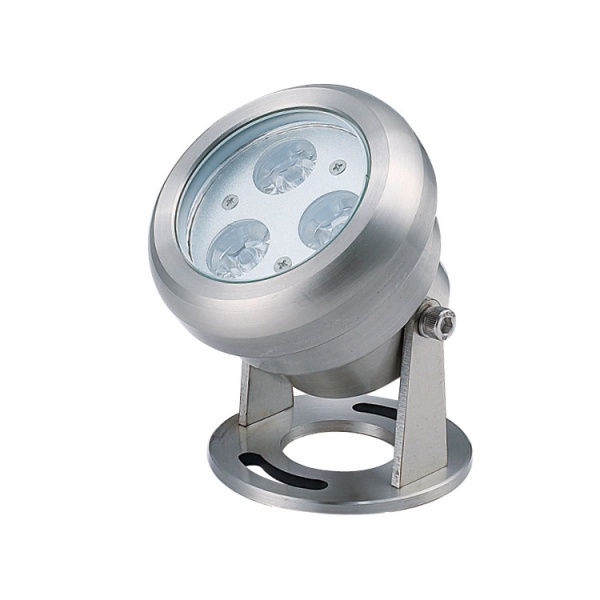
Why DC24V LED Underwater Lights Are Safer for Outdoor Water Features
Why DC24V LED Underwater Lights Are Safer for Outdoor Water Features?
Outdoor water features are becoming an important part of modern landscape and architectural projects.
Hotels, resorts, villas, commercial plazas, public spaces, swimming pools, fountains, ponds, and water walls often use underwater LED lighting to create attractive nighttime environments.
However, combining electricity and water requires careful electrical design.
This is why DC24V LED Underwater Lights are often considered for suitable outdoor water-feature applications.
A DC24V system operates at a much lower voltage than conventional mains-voltage lighting. When correctly designed with an appropriate power supply, protection devices, waterproof fixtures, suitable cables, and compliant installation methods, a low-voltage system can help reduce electrical risk within the lighting circuit.
IEC 60364-7-702 specifically addresses electrical installations for swimming pools and fountains, while IEC 60598-2-18 specifies requirements for fixed luminaires used in water or in contact with water, including swimming pools, fountains, and garden pools.
So, for landscape lighting professionals, the question is not simply “Which underwater light is brighter?”
It is also:
“Which electrical configuration is more appropriate for the water-feature environment?”
What Is a DC24V LED Underwater Light?
A DC24V LED Underwater Light is an LED fixture designed to operate from a 24V DC power supply.
Instead of supplying mains voltage directly to the underwater lighting circuit, the system typically uses a suitable power supply to convert the incoming AC electricity to DC24V.
A simplified system can look like this:
AC Power → DC24V Power Supply → Controller → Underwater LED Lights
Depending on the project, the system may include:
DC24V power supply
Waterproof underwater LED lights
Waterproof cables
RGB/RGBW controller
DMX512 controller
Circuit protection
Appropriate junction boxes and connectors
The exact system design should be determined by a qualified electrical professional according to local regulations and the installation environment.
Why Is DC24V Considered Safer for Water Features?
The main advantage is the lower operating voltage.
DC24V is an extra-low-voltage lighting configuration. IEC 60364-7-715 addresses extra-low-voltage lighting installations and covers lighting systems supplied from sources with maximum rated voltage of 50V AC or 120V DC.
Compared with a mains-voltage circuit, a properly designed 24V DC lighting circuit can reduce the electrical potential present at the underwater fixture and its low-voltage wiring.
However, this does not mean that DC24V underwater lighting is automatically safe.
Safety still depends on:
Correct power supply
Proper insulation
Suitable waterproof enclosure
Appropriate cables
Correct grounding and bonding where required
Circuit protection
Installation method
Product compliance
Local electrical regulations
For water-feature projects, the complete electrical system is more important than voltage alone.
DC24V vs AC220V for Underwater Lighting
One of the most common questions from landscape contractors and project engineers is whether to choose DC24V or AC220V.
| Feature | DC24V Underwater Light | AC220V Underwater Light |
|---|---|---|
| Operating Voltage | 24V DC | 220V AC |
| Electrical Risk | Lower-voltage circuit | Mains-voltage circuit |
| Power Supply | Requires DC24V PSU | Direct mains supply where permitted |
| Control | Easy to integrate | Depends on fixture |
| RGB/RGBW | Excellent | Available |
| DMX512 | Excellent | Available |
| Water Feature Use | Very suitable when compliant | Requires careful installation |
| Wiring | Low-voltage distribution | Mains-voltage distribution |
| Project Design | Flexible | Requires greater mains-voltage precautions |
The important point is that DC24V does not replace proper electrical protection.
For professional water-feature projects, the lighting designer and electrical contractor should select the system based on applicable standards, installation zones, product ratings, cable specifications, and project requirements.
DC24V Underwater Lights for Fountains
Fountains are one of the most suitable applications for DC24V underwater lighting systems.
A fountain may contain:
Water jets
Pumps
Electrical equipment
Underwater lighting
Control systems
Metal structures
Using a properly designed low-voltage lighting circuit can simplify the electrical architecture around the lighting fixtures.
DC24V underwater lights can be used for:
Hotel entrance fountains
Resort fountains
Garden fountains
Commercial plaza fountains
Decorative fountains
Public landscape fountains
Musical fountains
For larger projects, DC24V RGB or RGBW lights can also be integrated with compatible control systems.
DC24V LED Underwater Lights for Swimming Pools
Swimming pool environments require particularly careful electrical design because people may be in direct contact with the water.
IEC 60364-7-702 specifically covers swimming pools and fountains, including the surrounding zones.
IEC 60598-2-18 also specifically applies to fixed luminaires intended for use in water or in contact with water in applications such as swimming pools, fountains, paddling pools, and garden pools.
For suitable pool lighting applications, DC24V can provide a low-voltage approach.
However, project engineers must still consider:
Installation location
Fixture specification
Waterproof rating
Power supply location
Cable routing
Protective devices
Applicable local requirements
The lighting fixture should never be selected based only on its voltage.
DC24V for Landscape Ponds and Water Features
Garden ponds, artificial lakes, waterfalls, and decorative water features can also benefit from low-voltage underwater lighting.
Typical applications include:
Landscape ponds
Garden waterfalls
Water walls
Decorative streams
Resort landscapes
Villa gardens
Commercial landscape projects
DC24V can be especially useful when the project uses multiple low-voltage landscape lighting products.
A landscape lighting system may combine:
DC24V Underwater Lights + LED Inground Lights + LED Linear Lights + Garden Lights
This can create a coordinated low-voltage lighting concept across the landscape.
DC24V RGB Underwater Lights for Color-Changing Effects
DC24V is not limited to single-color underwater lighting.
It can also be used for suitable:
RGB underwater lights
RGBW underwater lights
Color-changing fountain lights
Programmable landscape lighting
For example, an RGB underwater lighting system can create:
Blue → Purple → Red → Green → Cyan
Different lighting scenes can be programmed according to the project.
This makes DC24V RGB underwater lighting suitable for:
Hotels
Resorts
Commercial plazas
Entertainment venues
Landscape projects
Decorative fountains
DC24V + DMX512 for Professional Water Features
For large architectural water features, DC24V and DMX512 can work together.
A typical system can be:
AC Power
↓
DC24V Power Supply
↓
DMX512 Controller
↓
RGB/RGBW Underwater Lights
This architecture can provide centralized control for multiple fixtures.
Depending on the controller and fixture configuration, designers can create:
Color changing
Color gradients
Smooth transitions
Synchronized effects
Sequential effects
Programmable scenes
DMX512 is particularly useful for:
Musical fountains
Large hotel projects
Resort landscapes
Commercial plazas
Public fountains
Architectural water features
Does DC24V Mean the Underwater Light Is Waterproof?
No.
This is an important point for project buyers.
DC24V describes the electrical operating voltage.
It does not describe waterproof performance.
An underwater light still needs appropriate waterproof construction and product specifications.
For suitable underwater applications, IP68 is commonly considered.
IEC notes that IP ratings classify the degree of protection provided by enclosures against ingress of solids and liquids, and that IP68 may be appropriate for LED lights intended to operate underwater depending on the application and regulations.
Therefore:
DC24V = electrical voltage
IP68 = enclosure protection rating
They solve different problems.
What Should You Check Besides DC24V?
When purchasing DC24V LED underwater lights for a project, do not look at voltage alone.
1. IP Rating
Confirm whether the fixture is suitable for the intended underwater environment.
2. Installation Depth
Check the manufacturer's specified maximum installation depth.
3. Housing Material
Stainless steel can be considered for applications where durability and corrosion resistance are important.
4. Cable
The cable must be suitable for the intended wet or underwater environment.
5. Power Supply
The DC24V power supply must have sufficient capacity and appropriate protection.
6. Beam Angle
Choose the beam angle according to:
Installation distance
Water depth
Fountain size
Desired lighting effect
7. Control System
For simple projects:
ON/OFF
For color-changing projects:
RGB/RGBW Controller
For professional projects:
DMX512
DC24V Underwater Lighting for Middle East Projects
DC24V underwater lighting can also be considered for outdoor water-feature projects in the Middle East.
Projects in Dubai, Abu Dhabi, Riyadh, Doha, and other regions may face:
High ambient temperatures
Strong sunlight
Dust
Outdoor exposure
Large landscape areas
Hotel and resort water features
Typical applications include:
Luxury hotel fountains
Resort swimming pools
Villa pools
Commercial fountains
Landscape ponds
Architectural water features
For these projects, the lighting designer should evaluate the complete system, including the power supply, enclosure, fixture thermal management, waterproofing, cable protection, and local electrical requirements.
Why DC24V Can Be a Good Choice for Landscape Contractors
For landscape contractors, a DC24V underwater lighting system can provide several practical advantages.
Lower Voltage Lighting Circuit
The lighting circuit operates at 24V DC rather than mains voltage.
Flexible Control
DC24V can be used with suitable RGB, RGBW, and DMX512 systems.
Easy Integration
It can be integrated into broader low-voltage landscape lighting systems where appropriate.
Suitable for Different Applications
The same basic electrical architecture can support:
Pools
Fountains
Ponds
Waterfalls
Water walls
Landscape water features
Better Project Planning
Separating mains power conversion from the underwater lighting circuit can make system design easier to organize.
Is DC24V Better Than AC220V for Every Project?
Not necessarily.
There is no universal answer.
DC24V can be an excellent choice for many underwater and landscape lighting applications, but the best solution depends on:
Project size
Cable length
Fixture quantity
Power requirements
Voltage drop
Control system
Installation environment
Local regulations
Maintenance requirements
For long cable runs, the electrical designer must also calculate voltage drop and cable sizing.
For large projects, the power distribution architecture may need to be designed specifically for the site.
Therefore, the correct approach is not:
“DC24V is always better.”
It is:
“DC24V can provide a lower-voltage approach that is well suited to many water-feature lighting applications when the complete system is correctly designed and installed.”
How to Choose DC24V LED Underwater Lights?
Before purchasing, ask your lighting supplier for the following information:
Product Specification
Power
Voltage
IP rating
Housing material
LED brand
Beam angle
Color temperature
RGB/RGBW
Cable length
Electrical Information
Recommended power supply
Maximum connected wattage
Cable requirements
Voltage drop considerations
Control method
Installation Information
Maximum installation depth
Mounting method
Cable entry
Connector specification
Recommended installation environment
Project Information
Provide the supplier with:
Number of fixtures
Pool/fountain dimensions
Installation depth
Cable distance
Desired brightness
Desired beam angle
Lighting color
Control requirements
This allows the manufacturer to recommend a more suitable configuration.
Why Choose Always Lighting for DC24V Underwater Lighting?
Always Lighting focuses on professional outdoor LED lighting solutions for architectural, landscape, hotel, resort, and commercial projects.
For underwater lighting applications, the product range can include:
DC24V Underwater Lights
IP68 Underwater Lights
Stainless Steel Underwater Lights
RGB Underwater LED Lights
RGBW Underwater Lights
DMX512 Underwater Lights
LED Fountain Lights
Swimming Pool Lighting
Landscape Underwater Lighting
For B2B projects, customers can discuss:
Power
DC24V configuration
Beam angle
Color temperature
RGB/RGBW
DMX512
Cable length
Housing material
Installation depth
Project quantity
This makes the product suitable for cooperation with:
Landscape contractors
Lighting designers
Architects
Electrical contractors
Lighting distributors
Hotel project companies
Resort developers
Commercial construction companies
Conclusion
DC24V LED Underwater Lights can be a safer and practical choice for many outdoor water-feature applications when the complete electrical system is correctly designed and installed.
The main advantage is the lower operating voltage of the underwater lighting circuit.
However, voltage alone does not determine safety.
A professional system should combine:
DC24V + Appropriate IP Rating + Suitable Cable + Correct Power Supply + Circuit Protection + Proper Installation + Applicable Local Standards
For fountains, swimming pools, ponds, waterfalls, hotels, resorts, and landscape projects, this approach can provide a reliable foundation for professional underwater lighting.
For projects requiring dynamic effects, DC24V + RGB/RGBW + DMX512 can also provide designers with significant flexibility.
FAQ
Is DC24V underwater lighting safer than AC220V?
A correctly designed DC24V circuit operates at a much lower voltage than a 220V AC circuit and can reduce electrical risk in the low-voltage portion of the system. However, safety depends on the complete installation, not voltage alone.
Is DC24V suitable for swimming pool lighting?
DC24V can be used for suitable pool-lighting applications, provided the fixture, power supply, installation method, and complete electrical system meet applicable local requirements.
Does DC24V mean the underwater light is waterproof?
No. DC24V refers to operating voltage. Waterproof performance depends on the product's enclosure design and IP rating.
Is IP68 required for underwater LED lights?
IP68 is commonly used for suitable underwater applications, but the actual installation depth and product specification must be checked.
Can DC24V underwater lights be RGB?
Yes. DC24V configurations can be used for suitable RGB and RGBW underwater lighting systems.
Can DC24V underwater lights use DMX512?
Yes. Compatible RGB/RGBW DC24V underwater lights can be integrated with DMX512 control systems.
Are DC24V underwater lights suitable for fountains?
Yes. They are commonly considered for suitable fountain and water-feature lighting systems.
Can DC24V underwater lights be used in landscape ponds?
Yes, suitable low-voltage underwater lights can be used for ponds and other landscape water features when installed according to the product and local requirements.
What is the difference between DC24V and IP68?
DC24V describes electrical voltage, while IP68 describes protection against ingress of dust and water under specified test conditions. They are two different specifications.